Why Los Angeles traffic can spread for miles
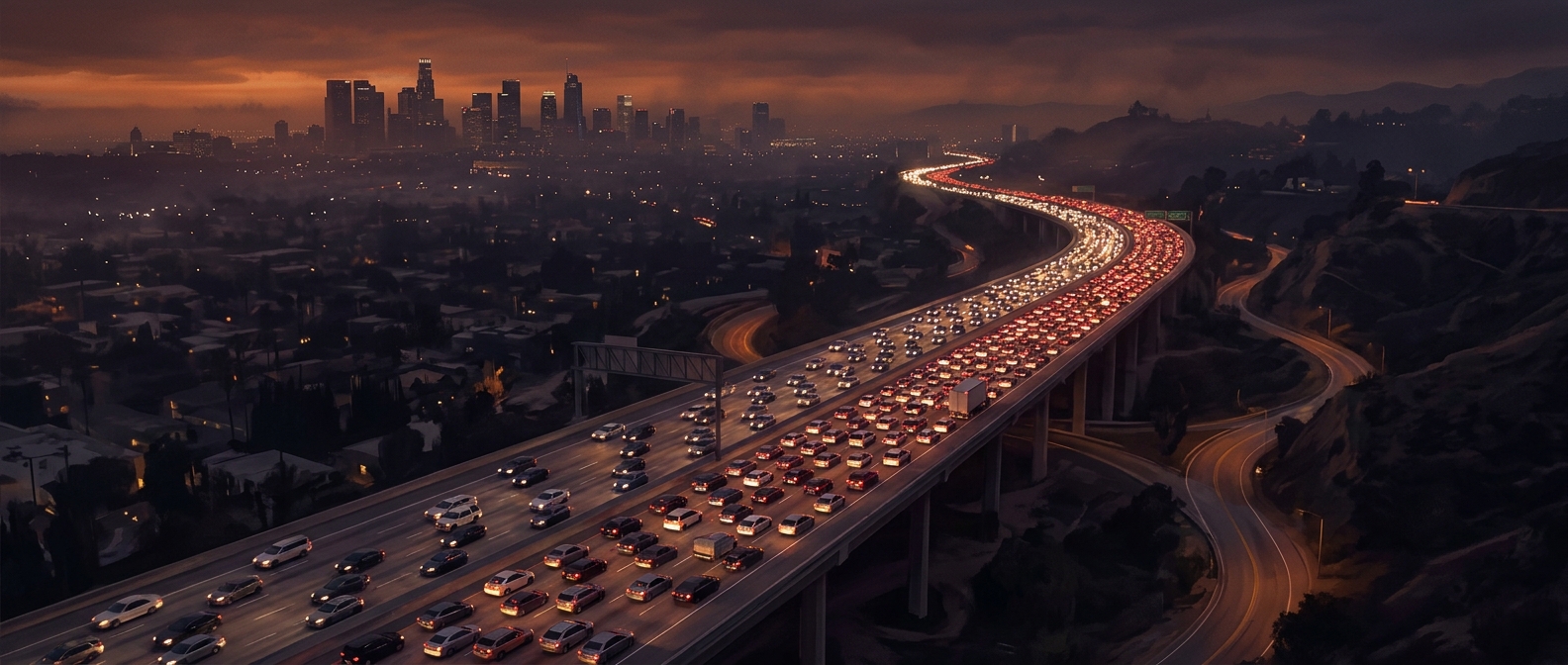
Los Angeles is built around long trips between widely separated homes, jobs, and destinations. Freeways make those trips possible, but they also funnel large numbers of drivers onto the same corridors at similar times. A route that looks short on a map may cross several busy interchanges, where traffic from different directions has to merge into limited road space.
How a slowdown becomes a jam
A freeway carries traffic smoothly only while vehicles can keep moving at a steady pace. As demand approaches the road’s capacity, drivers have less room to adjust. One vehicle braking can make the car behind it brake harder; that disturbance can travel backward through the line, even after the original cause is gone.
Merging traffic, lane changes, a stalled vehicle, or a collision can make the slowdown worse. When even a small section loses capacity, cars accumulate behind it. On a heavily used route, the queue can extend for miles and affect connecting roads as drivers try to find another way through.
Why a short drive can take hours
A ten-mile trip is not just ten miles of uninterrupted freeway. Its time depends on whether the route passes through a bottleneck, how much traffic is already there, and whether another incident disrupts the flow. Because many destinations are spread across a broad urban area, avoiding one jam may mean taking another crowded road rather than a truly empty alternative.
That is why distance alone can be a poor guide to travel time in Los Angeles: a brief disruption at a busy interchange can turn a manageable drive into a long wait.