Why a motorcade can stop traffic beyond its route
A motorcade is not just a line of vehicles moving through ordinary traffic. To keep the group together and its route clear, police may temporarily control intersections, close freeway on-ramps, or hold vehicles at other access points. An on-ramp closure prevents new cars from entering the roadway just as the motorcade passes; intersection controls keep cross traffic from cutting through the route.
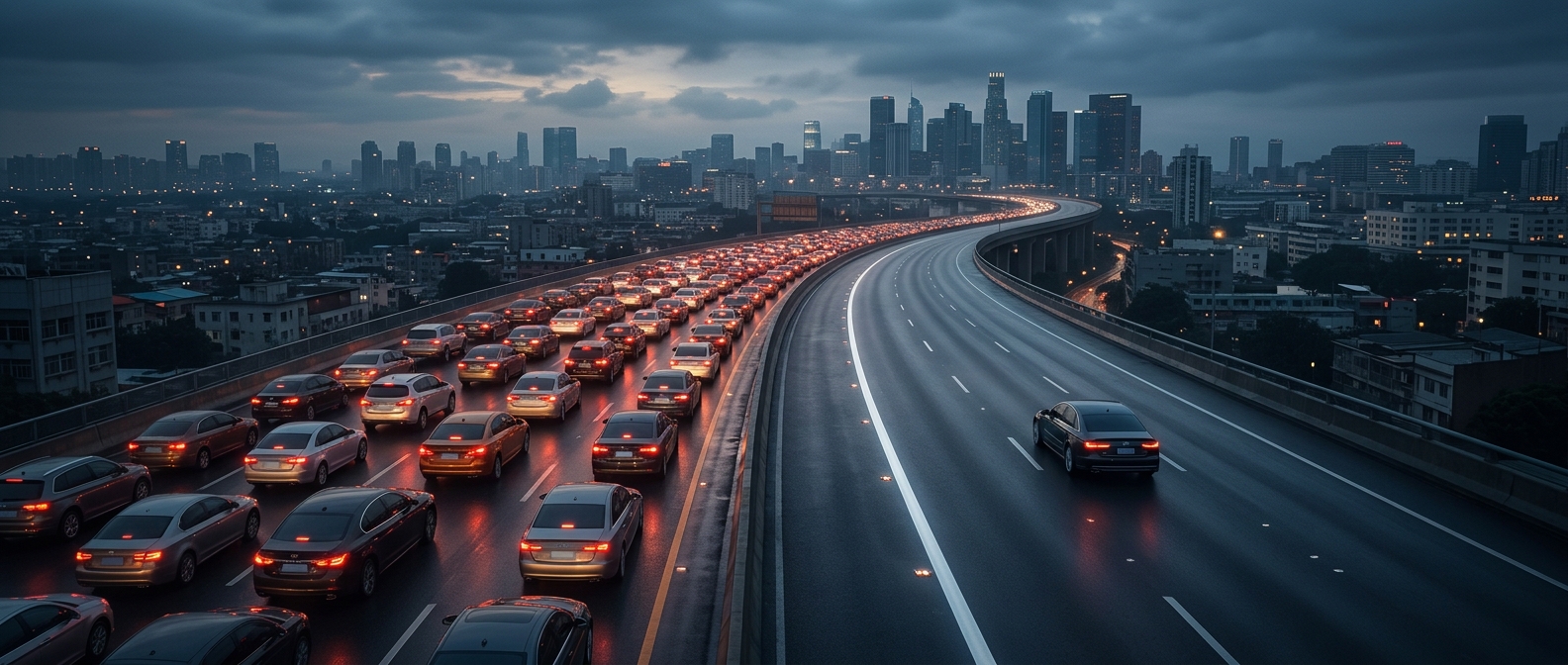
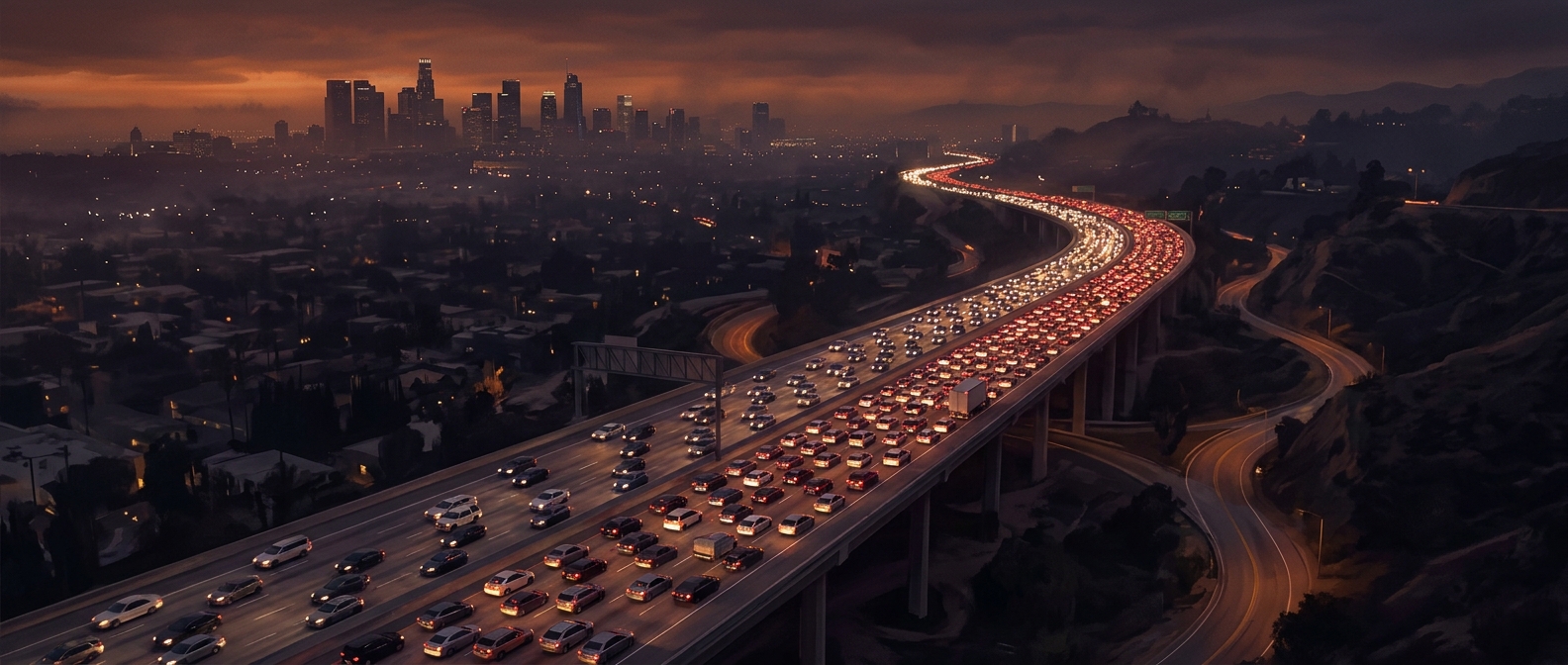
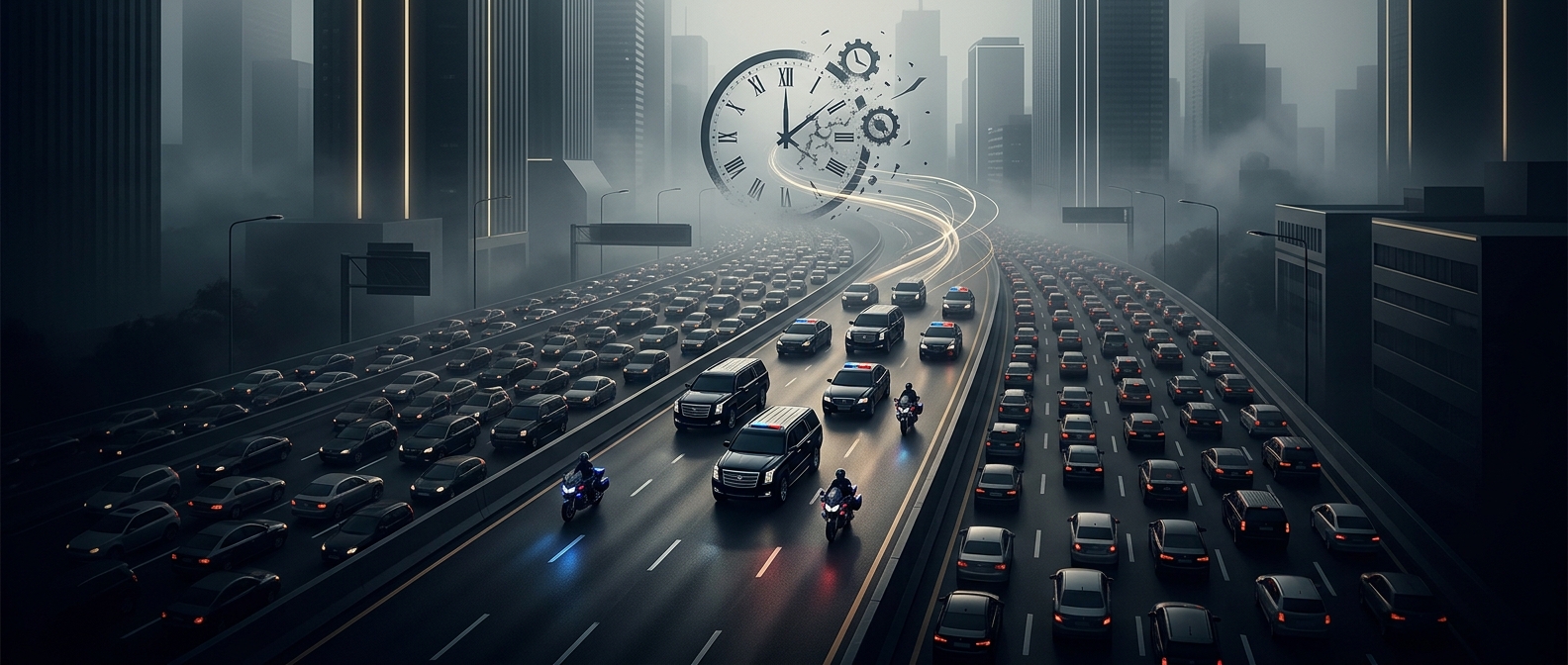
Those short holds can affect far more drivers than the people directly behind the barriers. Cars continue arriving at a closed ramp or signal, forming a queue. Once traffic is released, that queue has to merge into the same stream as vehicles already on the road. The resulting slowdown can travel backward, reaching other intersections or ramps even after the motorcade has gone.
Why the delay can outlast the passage
Traffic does not instantly return to normal when the last security vehicle passes. Drivers need time to move through accumulated queues, and a brief interruption can leave a busy road temporarily carrying more cars than it can smoothly absorb. The effect is especially noticeable where several routes feed into one another, such as near a freeway interchange.
The disruption is therefore a matter of timing and capacity: a motorcade may occupy a route briefly, while the traffic held back for it takes longer to clear.