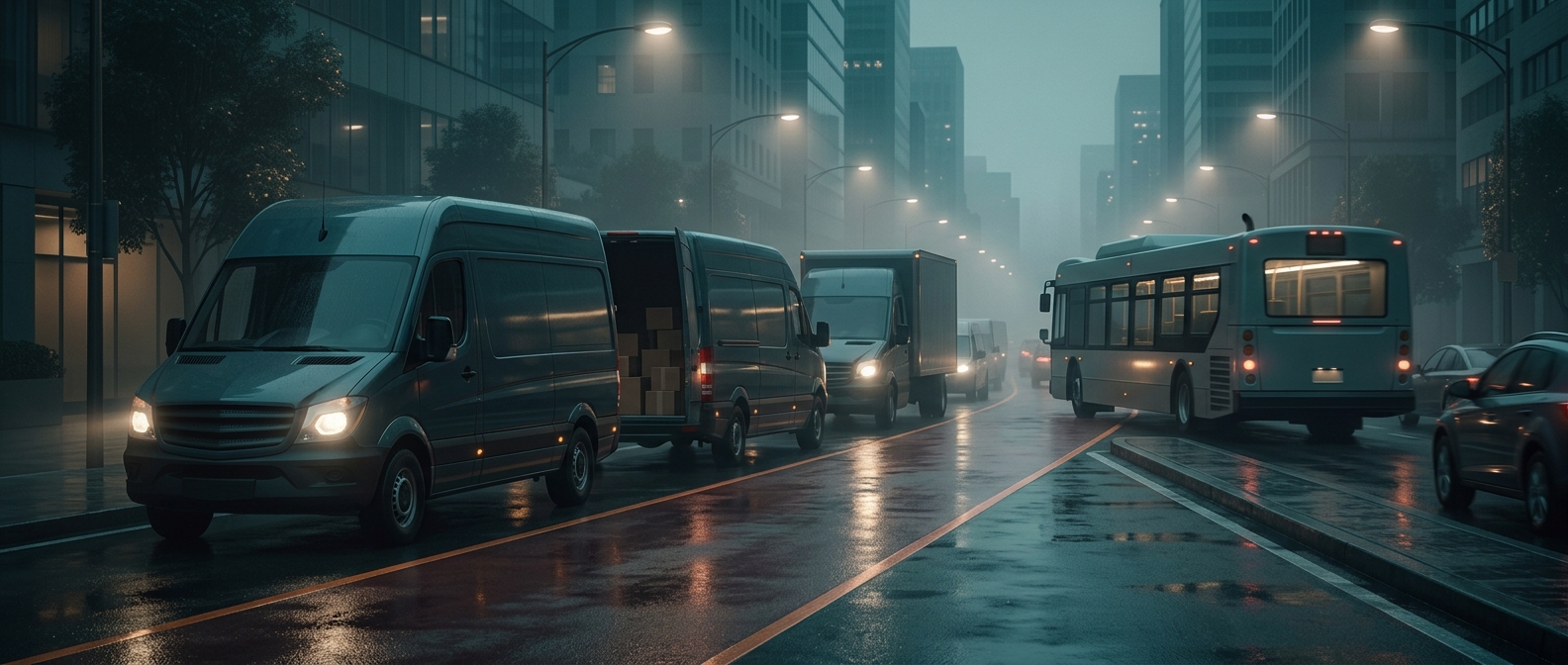
Why a Parked Delivery Van Can Slow a Bus
A bus lane works best as an uninterrupted path. When a delivery vehicle blocks it, the bus usually cannot pass through the obstruction: it must merge into a general-traffic lane, wait for a gap, or stop behind the vehicle. Even a short blockage can turn a smooth stretch into a delay at exactly the point where the lane is supposed to keep buses moving.
The Curb Is Where Routes Collide
Deliveries need a place to unload close to shops, restaurants, and other customers. If a street has no convenient loading space—or the available space is already occupied—a driver may stop in the bus lane because it is the nearest usable curb. The choice can make sense for completing one delivery, but it transfers the cost to everyone riding behind the blocked lane.
The problem is especially awkward on busy streets. A bus carrying passengers is large and cannot weave around a stopped van as easily as a car can. Moving out and back into traffic takes space and time, and other vehicles may not leave a gap. One obstruction can therefore delay several buses, not just the one that arrives first.
A Small Blockage Can Undo a Dedicated Lane
Bus lanes are intended to make service more reliable, not merely to give buses a different color of pavement. Their benefit depends on buses being able to use them consistently. Repeated interruptions make travel times less predictable, which can disrupt the spacing between buses: one bus falls behind while the next catches up, leaving passengers with longer or less even waits.
That is why delivery access and bus priority are linked street-design problems. Loading areas give drivers somewhere practical to stop; clear lane markings and enforcement help keep the bus path open. Without both, a lane meant to carry many passengers efficiently can become a temporary loading space—and a single van can force a full bus back into the queue.