A game built around a shared challenge
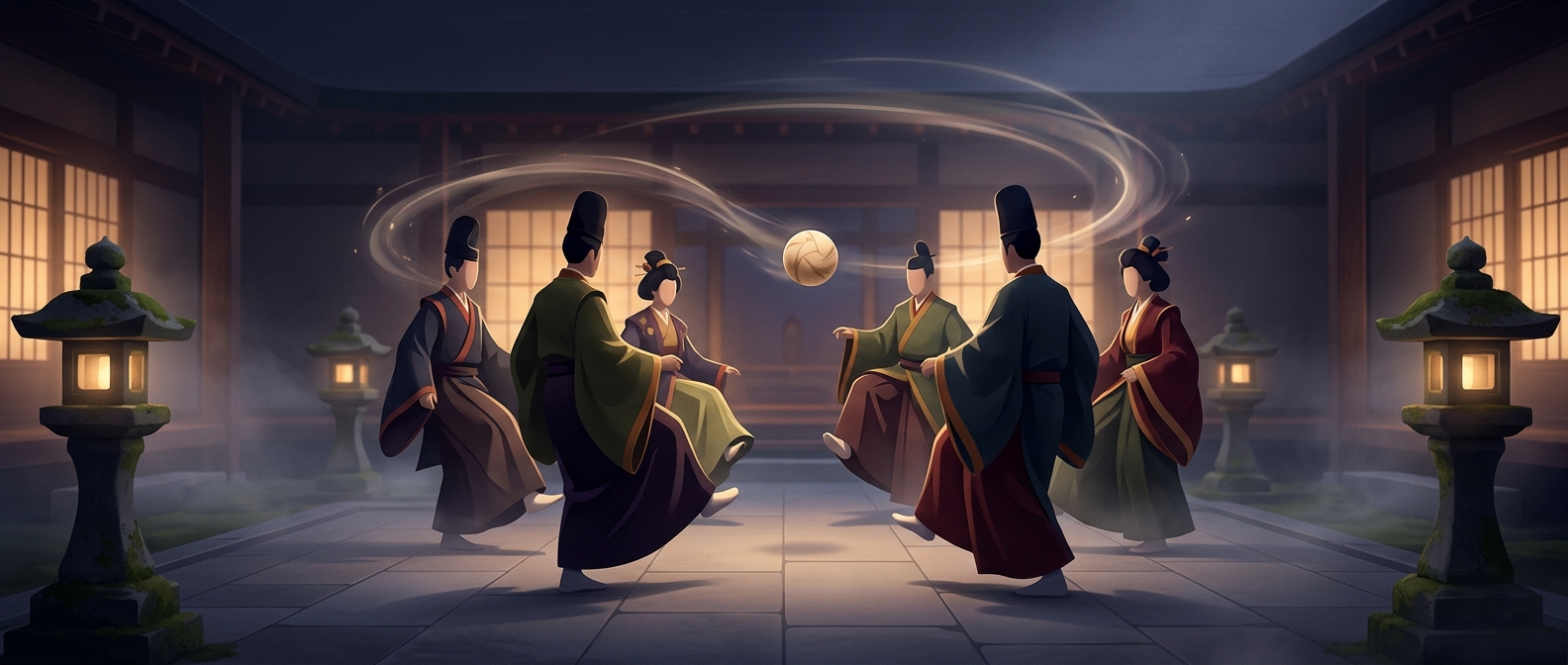
Kemari shifts the contest away from defeating another side. The difficult part is keeping a light ball moving smoothly among several players, each of whom must guide it onward rather than seize control of the play. A good touch gives the next person a workable chance; a poor one can send the ball beyond reach and end the rally. The group’s skill is measured by how gracefully it sustains that exchange.
That design makes attention as important as footwork. Players have to track the ball, anticipate where it will fall, and adjust their kicks to the people around them. There is no opposing team to disrupt the pattern. The challenge comes from coordinating a sequence of individual touches without letting it collapse.
From courtly pastime to living tradition
Kemari came to Japan from China in antiquity and became a pastime among the aristocracy. Its cooperative format suited a game valued not just for athletic ability but also for practiced control and display: the play could be watched as a shared performance, rather than as a struggle for a winner.
The contrast with most modern ball games is striking. In Kemari, a player’s success is visible in the next person’s opportunity. The rally lasts only because everyone keeps making room for someone else to continue it.