Why viewers read the image as evidence
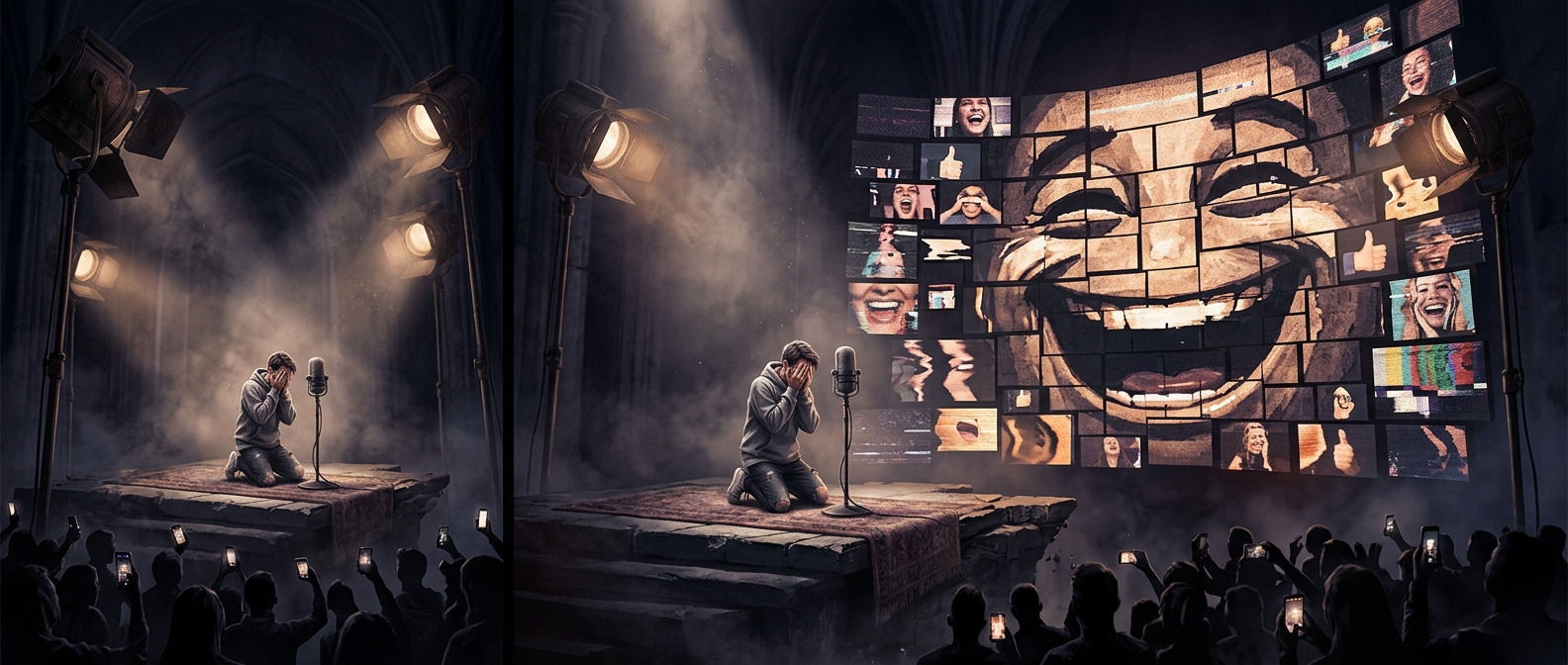
An apology video asks viewers to judge an inner state—remorse—from an edited, public performance. Because they cannot directly observe what the speaker feels, they rely on visible cues: posture, facial expression, voice, setting, and delivery. These cues do not prove sincerity. They give viewers material to interpret.
A subdued presentation can fit the story of someone who understands the harm and feels its weight. A cheerful tone or polished, promotional look may seem inconsistent with that story. The discomfort comes from the mismatch: viewers are not only hearing an apology but also checking whether the person’s manner seems appropriate to it.
The performance problem
That creates a narrow target. A speaker who looks too relaxed may seem indifferent; one who appears intensely distressed may seem to be acting for sympathy. Even a carefully plain setting can draw attention to the fact that the apology was staged and recorded. Viewers may then judge not just the emotion on display, but the effort spent producing it.
This is why apology videos can become exercises in managing impressions. The speaker has control over the camera, background, and timing, but not over how each choice will be read. A bowed head might suggest shame to one viewer and calculated humility to another. The same visible cue can support opposite conclusions because the audience is inferring motive from limited evidence.
What the camera cannot settle
A miserable appearance can make regret easier to recognize, but it cannot establish that regret is genuine. Nor does a composed appearance necessarily mean the person feels nothing. The image shapes the first impression; what the person takes responsibility for, and what they do afterward, gives viewers more to judge than the lighting or posture ever can.