How the nervous system learns to stay on guard
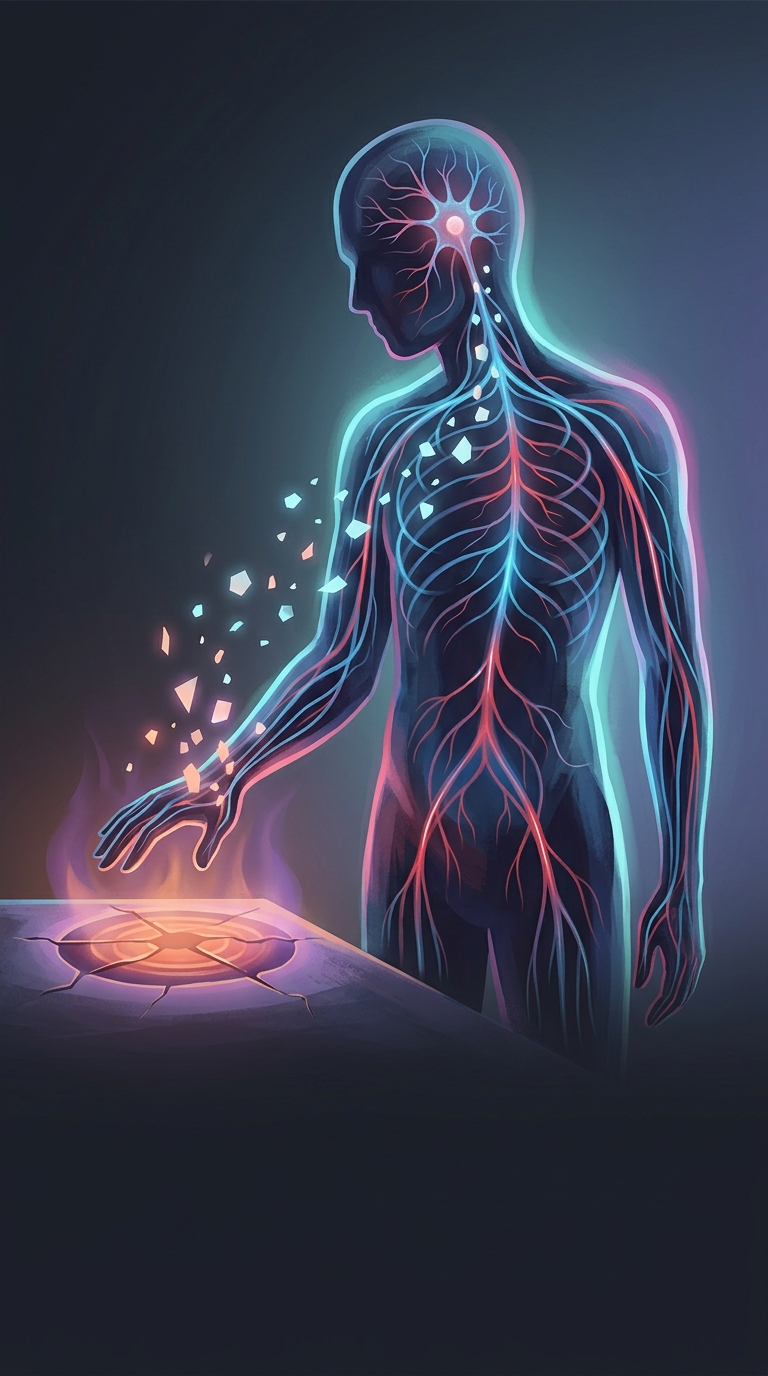
A painful signal is not simply a message traveling from an injured spot to the brain. The brain weighs that signal alongside context: Is the body safe? Is the sensation familiar? Could it mean danger? Childhood trauma can shape those expectations while the nervous system is still developing. When stress repeatedly demands vigilance, the body may become quicker to detect possible threats and slower to settle after them.
That does not mean pain is invented. It means the brain and spinal cord help determine how strongly a real signal is experienced. Attention, fear, and stress can amplify pain; in safer conditions, the brain can also dampen some incoming signals.
Why an ordinary ache can feel unusually intense
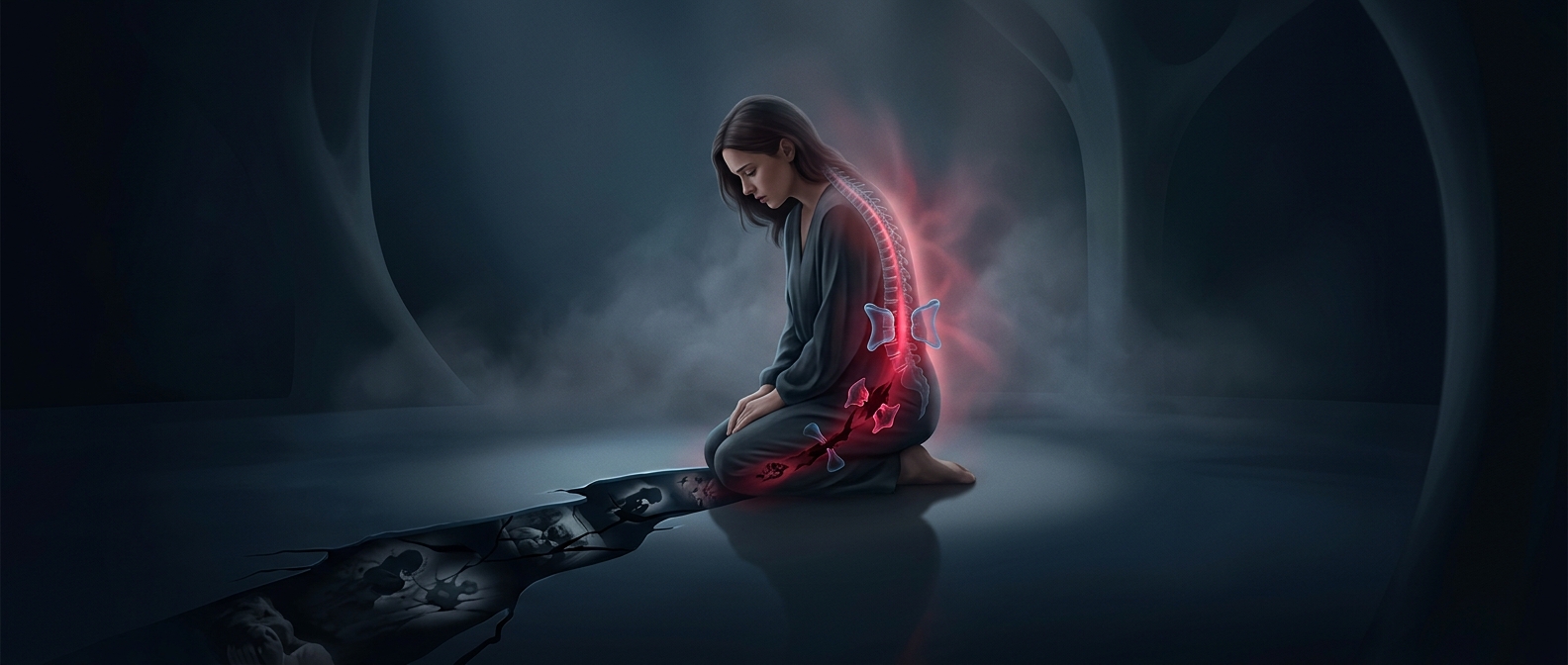
Imagine a sore back after a long day. In a settled state, the brain may treat it as a temporary strain and let attention move elsewhere. In a system primed for danger, the same sensation may hold attention, feel more alarming, and trigger muscle tension or stress responses. Those reactions can make movement harder and keep the area feeling sensitive, creating a feedback loop between discomfort and vigilance.
Researchers use terms such as pain sensitization for changes in how the nervous system responds to signals. Trauma is one influence among many; it does not determine that someone will develop chronic pain, and pain intensity cannot reveal a person’s history. The practical consequence is that persistent pain may need care that addresses both the body and the nervous system’s sense of safety—not just the original site of the ache.