Why a sneeze can load the ribs
A sneeze is a rapid reflex, not just air drifting out of the nose. The body draws in air, briefly narrows the passage at the back of the throat, then drives air outward in a forceful burst. During that sequence, the diaphragm and muscles between the ribs contract sharply to move and stabilize the chest.
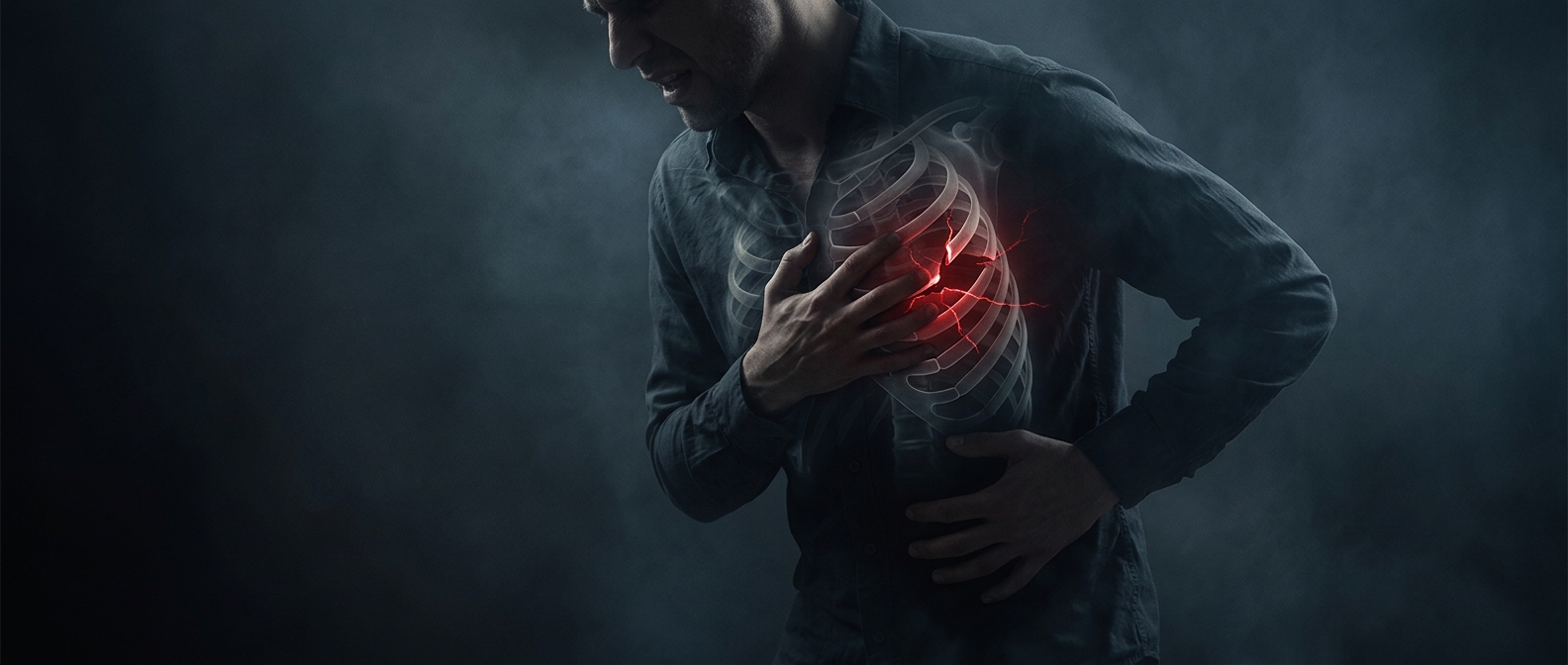
Those muscles attach to the ribs, so a sudden, unusually strong contraction can pull hard on the chest wall. The ribs also bend slightly as the chest moves. If the force is concentrated on a vulnerable spot, the bone can crack—much as it can under other abrupt strains.
Why it happens to some people
A healthy rib usually tolerates ordinary sneezes. A fracture is more plausible when the sneeze is exceptionally forceful or when the bone is weakened, as can happen with osteoporosis or with age. Repeated coughing or sneezing can also keep stressing the same area, rather than giving it time to recover.
A small crack may not be obvious at first. Rib injuries commonly hurt with deep breaths, coughing, or twisting because those actions make the chest wall move. The key point is that a sneeze does not need to strike the body from outside: the muscles generating the burst can transmit enough force through their attachments to strain the ribs from within.