A reading made touch part of the ritual
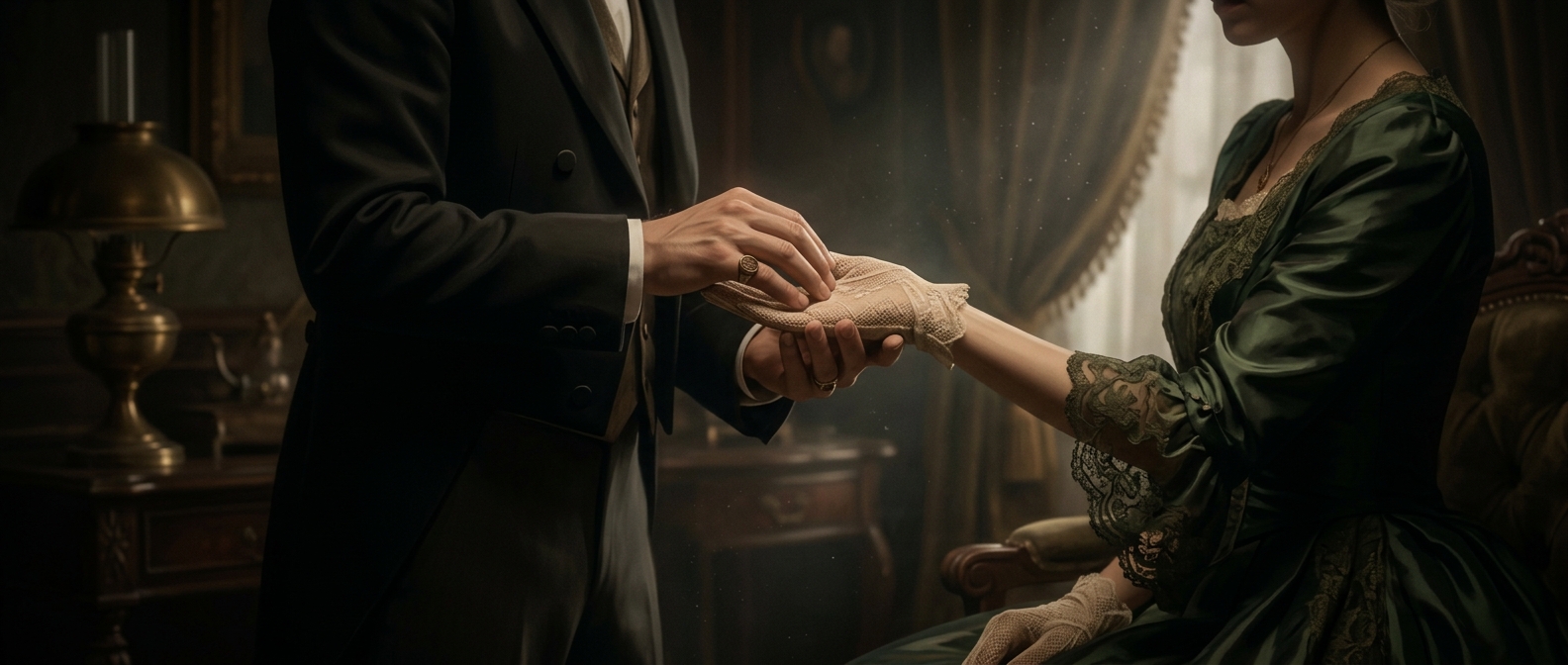
Palmistry offered a fortune-teller a practical reason to examine someone’s hand. To trace the palm’s lines, a reader might take the hand, turn it toward the light, or hold it steady. In a nineteenth-century social setting where direct physical contact between unmarried men and women could be constrained by etiquette, that contact could feel more permissible when presented as part of a reading.
The appeal was not just the prediction. The ritual created a brief, focused encounter: one person studied the other’s hand and described what its marks supposedly revealed. For aristocrats and their guests, palmistry could turn an ordinary social interaction into something intimate without openly breaking the rules of respectable behavior.
Flattery made the performance work
A palm reader did not need to make a frightening prophecy. A favorable interpretation—such as calling a line a sign of intelligence—could make the exchange entertaining and affirming. The hand supplied a prop, while the reading gave both people a script: the reader could offer a personal-sounding observation, and the guest could accept it as playful conversation rather than a direct compliment.
That combination helps explain why palmistry could thrive as parlor entertainment. Its social usefulness depended less on whether a prediction came true than on what the reading allowed people to do in the moment. The fortune was the occasion; holding someone’s hand was part of the performance.