How Tambora’s eruption cooled distant lands
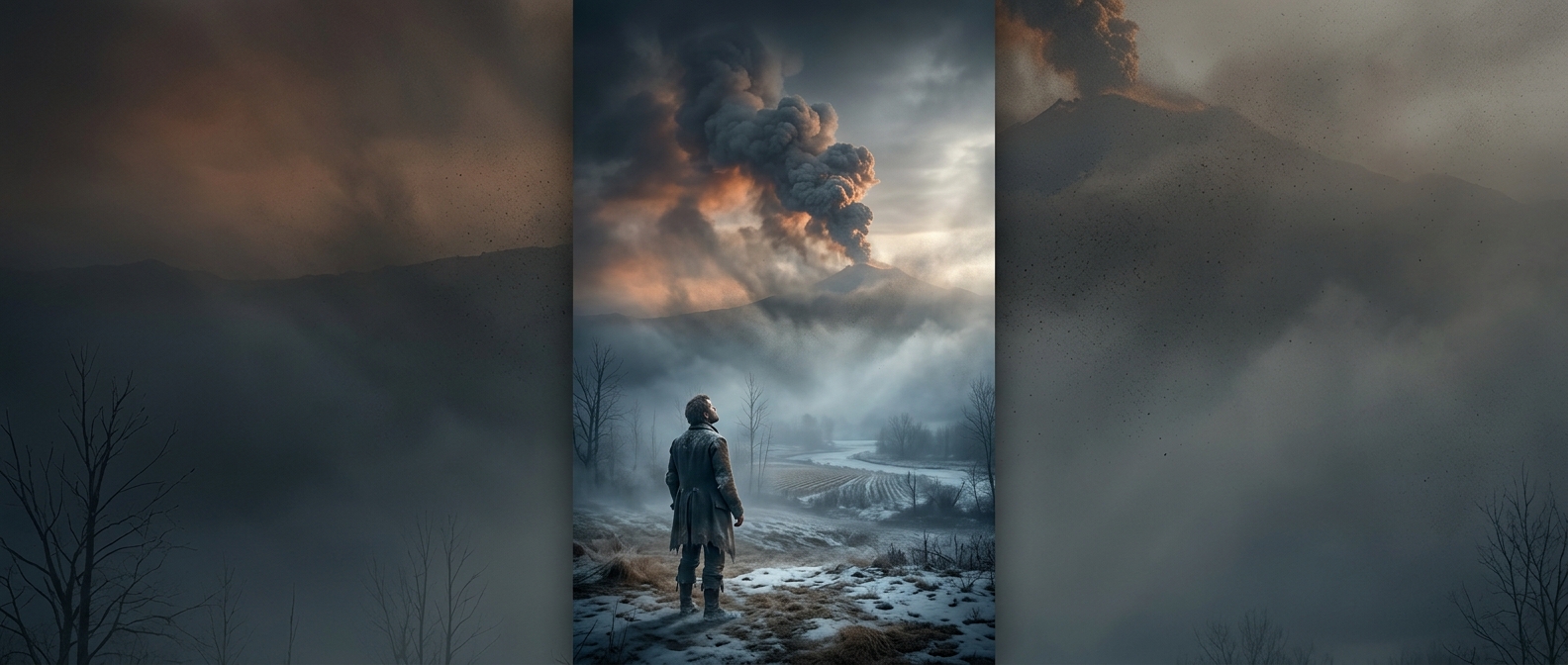
When Mount Tambora erupted in April 1815, the blast did more than throw ash over nearby islands. It sent sulfur gases high into the atmosphere. There, they formed tiny sulfate particles—an aerosol, or fine material suspended in air—that scattered some incoming sunlight back toward space. Because these particles reached the stratosphere, the high atmospheric layer above most weather, they could spread widely and linger for months.
The result was a subtle but consequential loss of solar heating, not a blanket of ash falling over the world. The cooling also disturbed weather patterns, helping produce unusual cold and wet conditions in parts of the Northern Hemisphere. The effects built and persisted into 1816, well after the eruption itself.
From strange weather to food shortages
A modest shift in temperature can matter greatly to crops. In places where the growing season is already short, frost can kill plants before harvest; persistent rain can delay planting, damage fields, or spoil grain. In 1816, cold and wet weather harmed harvests in parts of Europe and North America, contributing to food scarcity and sharp pressure on prices.
The crisis was uneven: “a year without summer” does not mean every place went frostbound or experienced the same weather. But for communities already dependent on a narrow harvest, a bad season could mean hunger, depleted reserves, and difficult choices about whether to stay or seek food elsewhere.
Why the name endured
The phrase captures a striking mismatch: a volcanic event in Indonesia altered conditions far away, and its consequences were felt in kitchens and fields more than a year later. Tambora showed how a disturbance high in the atmosphere can connect a distant eruption to the success or failure of a local harvest.