The Sun as a cosmic lens
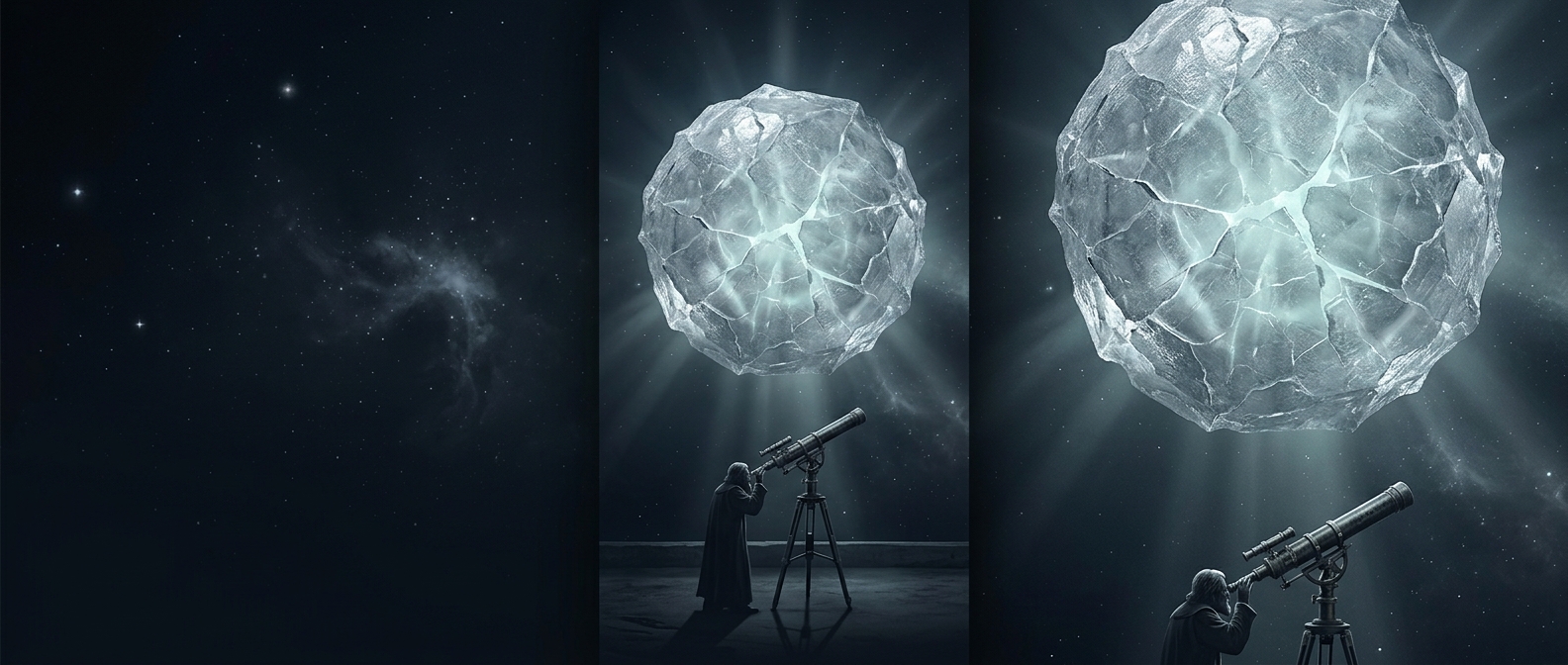
Before scientists had a convincing explanation for the Sun’s steady heat, some 17th-century scholars tried to account for it with an unexpected idea: the Sun might be a vast mass of ice. In this picture, it was not a fire but a transparent body that gathered light from distant stars and concentrated it.
The analogy was familiar. A glass lens can bend incoming light and bring it together at a bright focal point. A sufficiently enormous icy lens, the theory suggested, might collect enough light to make the Sun shine intensely.
A lens moves the mystery
The proposal offered a way to explain the Sun’s brightness without treating it as a burning object. But concentrating light is not the same as creating it: the lens would need an external supply of energy, in this case light from other stars. The puzzle of the Sun’s heat had been shifted outward rather than fully resolved.
That is what made the idea revealing as well as strange. The Sun’s immense, sustained output demanded an explanation, but scholars were working without the modern account of energy production inside stars. The icy-lens theory shows how they used a known optical effect to make sense of a celestial mystery—and how an explanation can solve one problem while leaving its source still to be found.