How a Button Turns a Folded Umbrella Into a Canopy
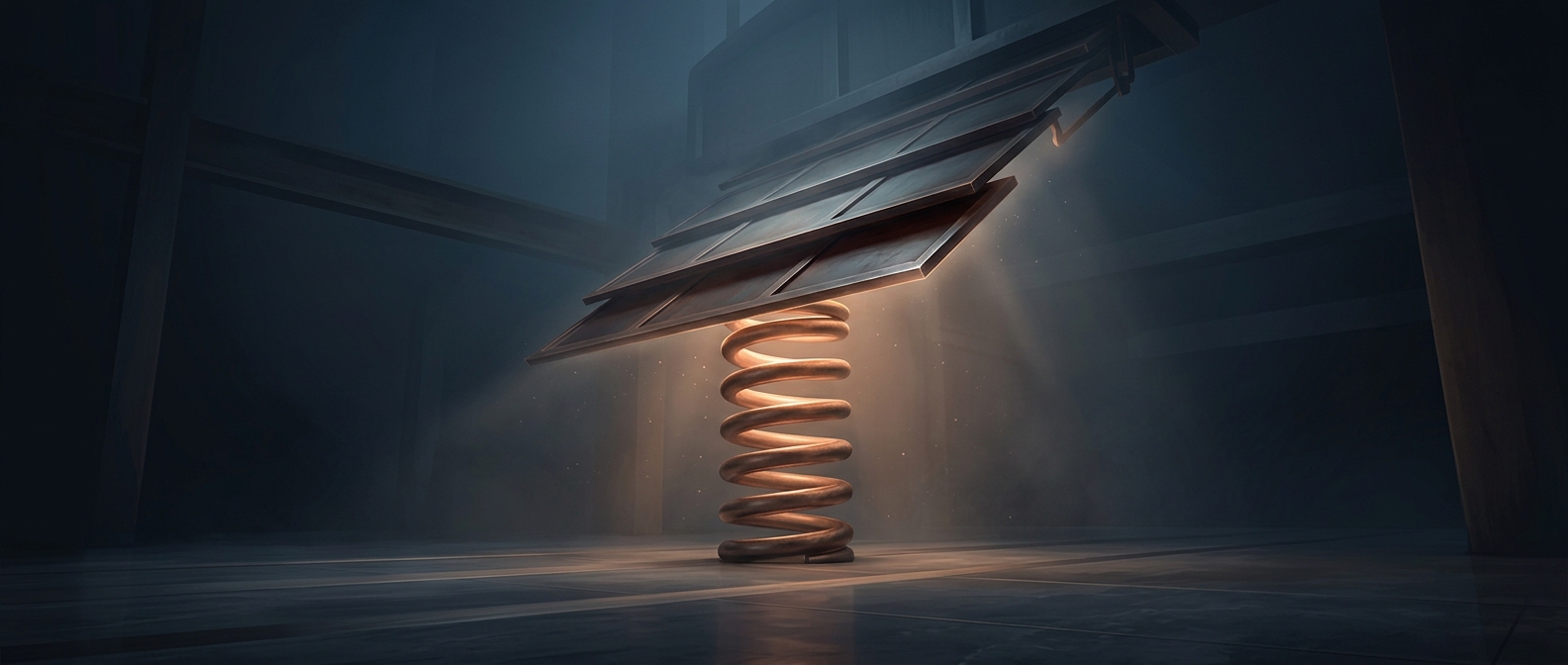
Inside an automatic umbrella, the button is a release—not a motor. When the umbrella is closed, a strong spring inside the shaft is held under compression, while a small catch keeps the moving parts from shifting. Pressing the button disengages that catch and lets the spring expand.
The spring drives a sliding collar, called a runner, up the central shaft. Thin stretchers connect the runner to the umbrella’s ribs, the hinged arms that support the fabric. As the runner moves, those links swing the ribs outward and spread the canopy. The mechanism converts a short push along the shaft into movement across the umbrella’s frame.
Why Closing It Takes Effort
To close the umbrella, the runner must travel back down the shaft, folding the ribs inward and compressing the spring again. On many models, the user pushes the shaft sections together until the catch locks; the button can then release the stored force for the next opening.
That stored energy is why an automatic umbrella opens so quickly—and why its frame needs a secure latch. Until the catch engages, the spring is still trying to drive the mechanism open.