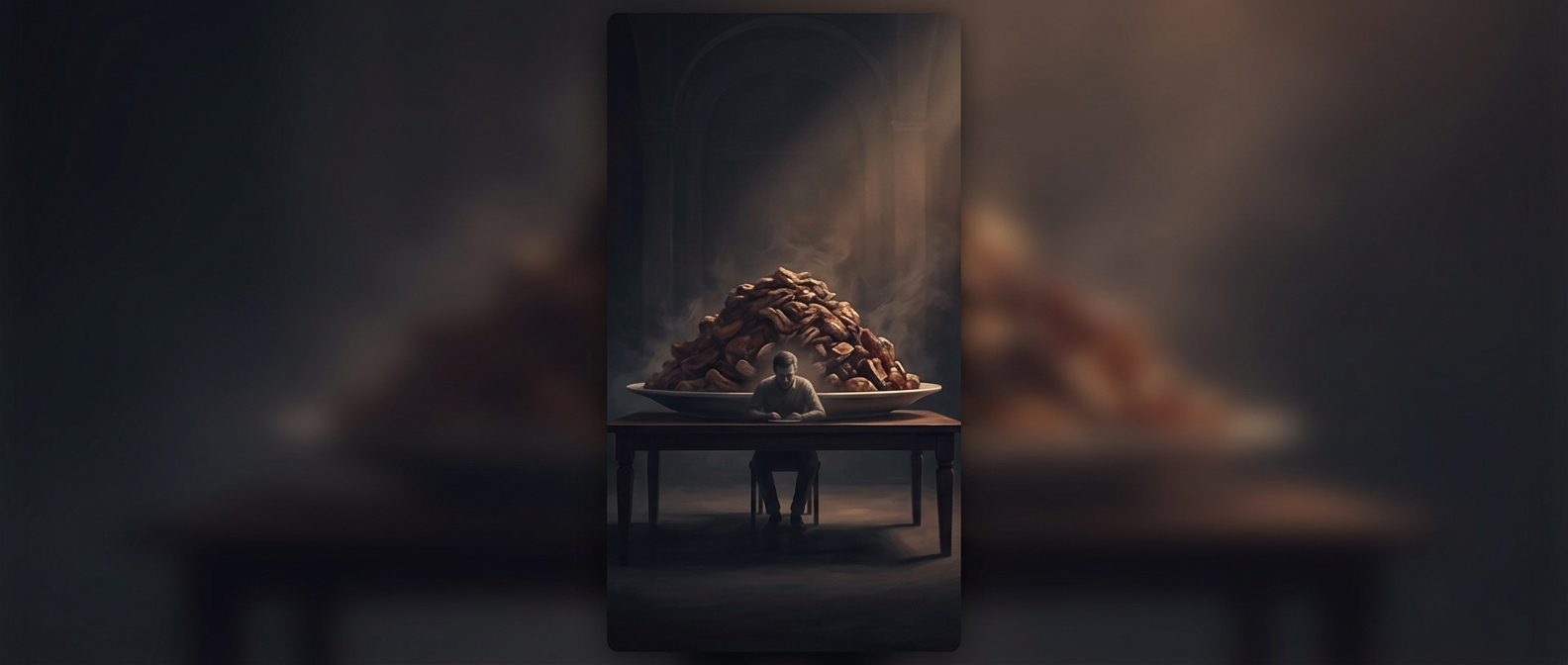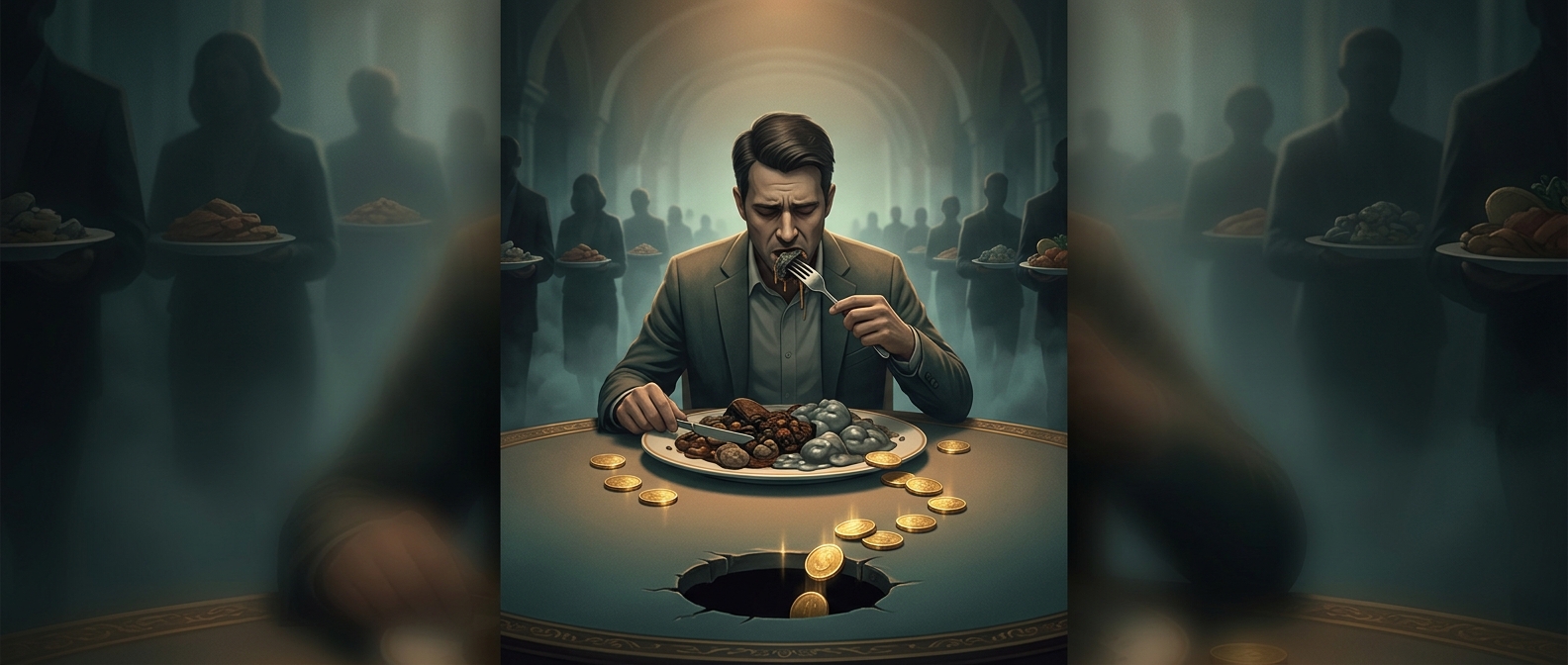
When the plate starts to feel like a debt
A meal can become difficult to leave unfinished when the food on the plate feels like something you owe. The price has already been paid, the portion has been served, and stopping can seem to turn those choices into waste. That feeling shifts attention away from the question “Do I want another bite?” toward “Wouldn’t it be wrong to leave this?”
The food itself has not become more appealing. Instead, a second motive—avoiding waste or meeting an obligation—competes with appetite. If that motive feels stronger in the moment, someone may keep eating despite disliking the meal.
Why the bargain is hard to escape
Once money is spent, eating the rest cannot bring it back. But leaving food behind can make the loss more visible: the payment and the uneaten portion seem to sit together on the plate. Finishing can then feel like a way to make the purchase count, even though it does not undo the cost.
Portions can carry a similar sense of obligation. Food served by a host, or food someone has prepared, may feel like a gift or an effort that deserves acknowledgment. In that situation, stopping may feel socially awkward even when the body is signaling that it has had enough.
Appetite and obligation are different signals
Hunger and fullness concern the body’s need for food. Guilt, thrift, and politeness concern what a person thinks they should do. Those signals can point in opposite directions, and the “should” can win for a while—especially when the plate makes the remaining food hard to ignore.
That is why finishing a meal someone dislikes is not necessarily evidence that they secretly enjoyed it. Sometimes the last bites are less a verdict on the food than an attempt to settle the small debt they feel the meal has created.