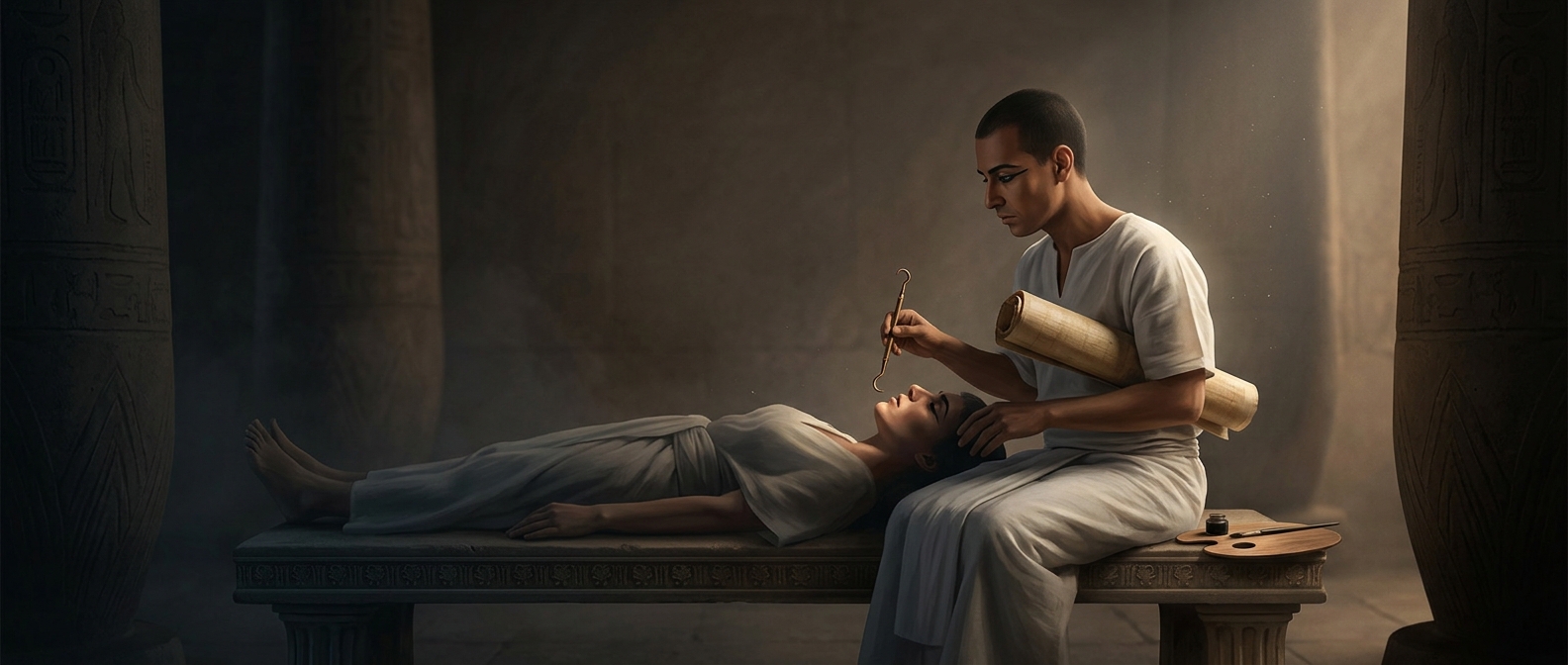
What a tomb title can—and cannot—tell us
In ancient Egypt, a tomb inscription was a public record of a person’s identity and standing. Titles named the work or authority a person was associated with, but they were not job descriptions in the modern sense. The phrase about dealing with teeth identifies a recognized specialty; it does not tell us what procedures the scribe performed, how he learned them, or whether he treated patients full-time.
That distinction matters because “first recorded dentist” means the earliest person known to us through surviving evidence—not necessarily the first person in history to care for teeth. Earlier practitioners may have existed without leaving an inscription that survived.
Why teeth needed skilled attention
Teeth could become badly worn and painful in the ancient world. Grit from stone-ground grain could get into food and gradually abrade tooth surfaces; decay and infection could also cause serious pain. A specialist associated with teeth would therefore have dealt with a practical, persistent problem, even though the tomb gives no clinical details.
The inscription preserves something more durable than a treatment record: evidence that dental care was distinct enough to be named as a specialization. It lets us glimpse an early division of labor in health care, while leaving the scribe’s actual methods beyond what the evidence can show. The remarkable thing is not that we can reconstruct his toolkit, but that his title survived long enough to tell us Egyptians recognized dental expertise as a role.