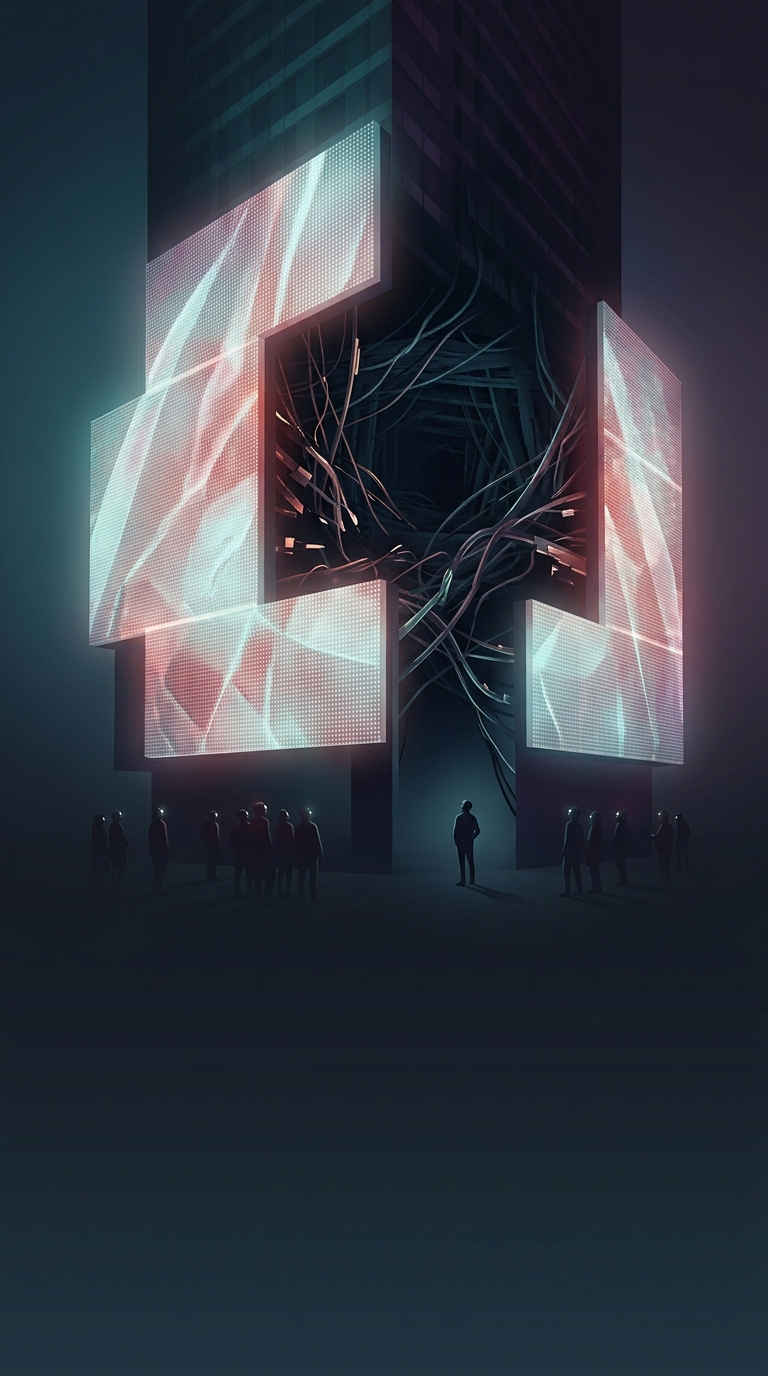
The buildings behind Times Square’s glowing walls
The billboards are more than decoration: in many places, they form a bright outer layer over the buildings behind them. Look past the animated images and you may find ordinary façades, upper-floor windows, or the structural frames that hold the displays in place. From street level, the signs can make separate buildings look like one continuous wall of light.
That effect is part of Times Square’s design. The area’s rules encourage prominent illuminated signs, so building owners have reason to devote large stretches of their street-facing surfaces to advertising. The result is a streetscape in which the signs—not the buildings—often claim the eye.
A screen still needs a building behind it
A giant display has to be supported, powered, and reached for repairs. Its visible panels are only the front of a system attached to a building or a purpose-built frame. That practical layer—supporting structure, wiring, and maintenance access—is easy to overlook when the images are changing overhead.
So the hidden detail is not a secret room shared by every billboard. It is the urban fabric the signs cover or overshadow: buildings and infrastructure still doing their work behind the spectacle. The next time Times Square seems like a canyon made entirely of screens, look for the edges where a sign ends. That is where the city underneath begins to show.