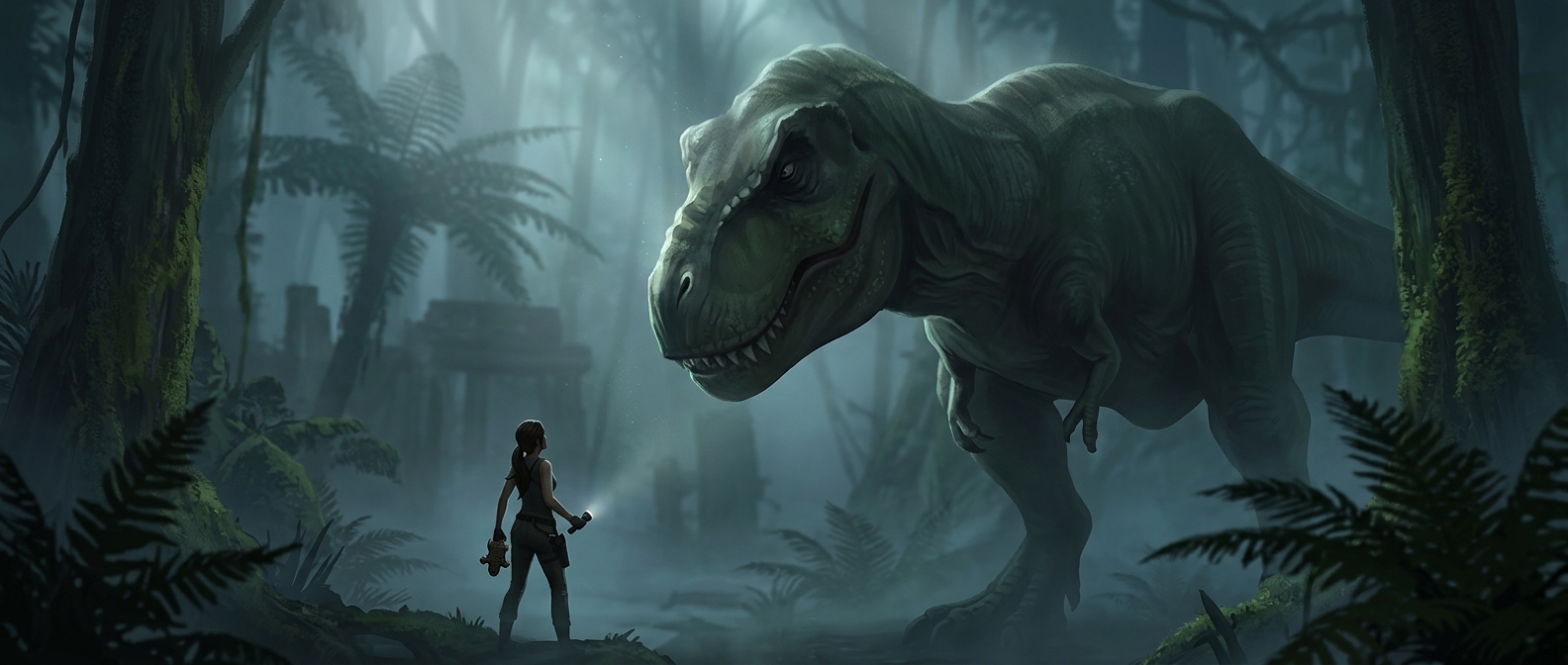
A prehistoric threat breaks the rhythm
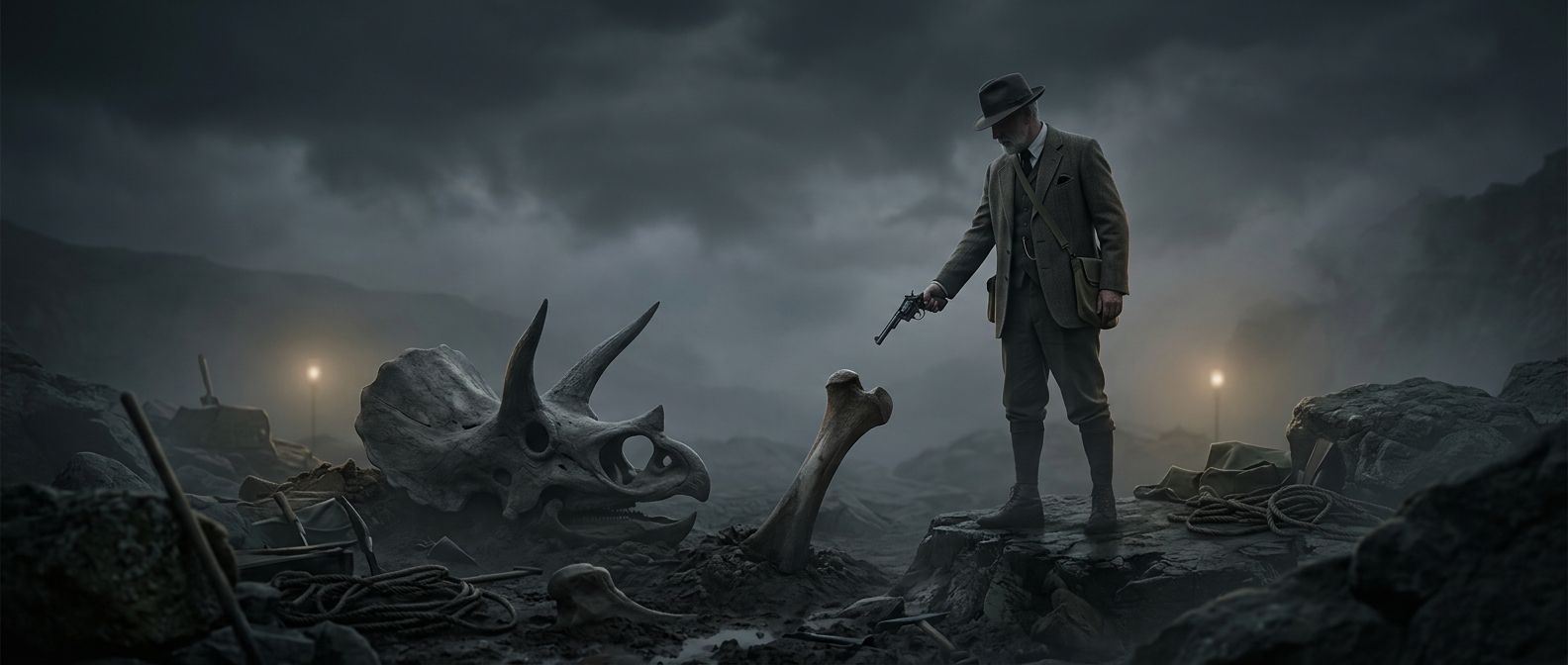
Lost Valley begins as a place to explore: Lara moves through an open, ruin-strewn landscape, reading its terrain and working out where to go. Then a Tyrannosaurus appears. The encounter does not arrive as the payoff to a mystery about why dinosaurs live there; its abruptness is the point. A landscape that had invited careful exploration suddenly feels dangerous.
That shift works because the threat is legible at a glance. Players do not need a long explanation to understand what a T. rex means: it is enormous, powerful, and likely to attack. The surprise comes from meeting that familiar creature inside a game world that, until then, has asked players to treat the environment as something to navigate.
Surprise becomes a gameplay problem
The dinosaur is more than a startling image. Once it appears, the player has to respond in real time—by fighting, moving, or trying to get clear. That turns shock into a test of control. The player may know what a T. rex is, but still has to figure out what to do with one while guiding Lara through the danger.
The encounter also shows a useful design tradeoff: explanation can make an event feel coherent, but it can also prepare the player for what is coming. By withholding a lore-based setup, the game preserves the force of the interruption. The T. rex matters not because it explains the Lost Valley, but because it suddenly changes what the player must do there.