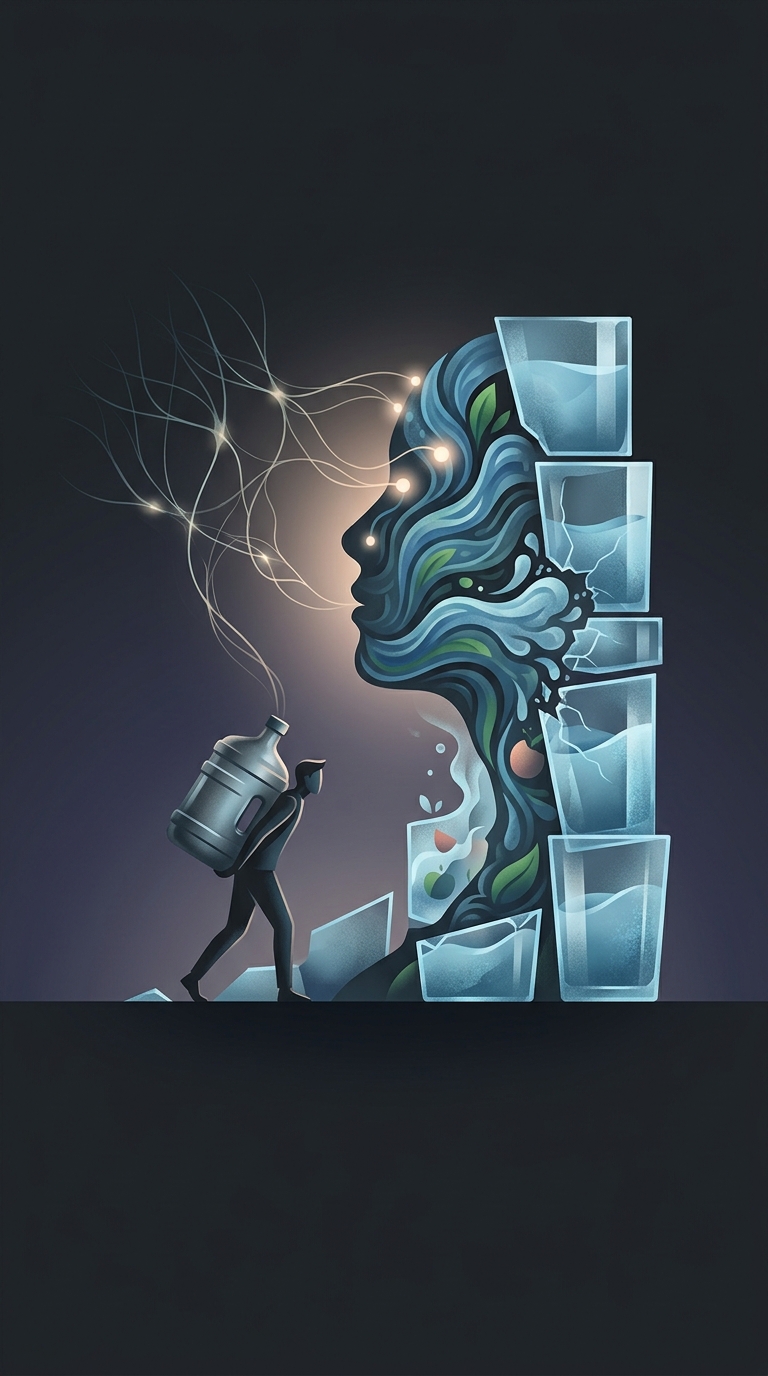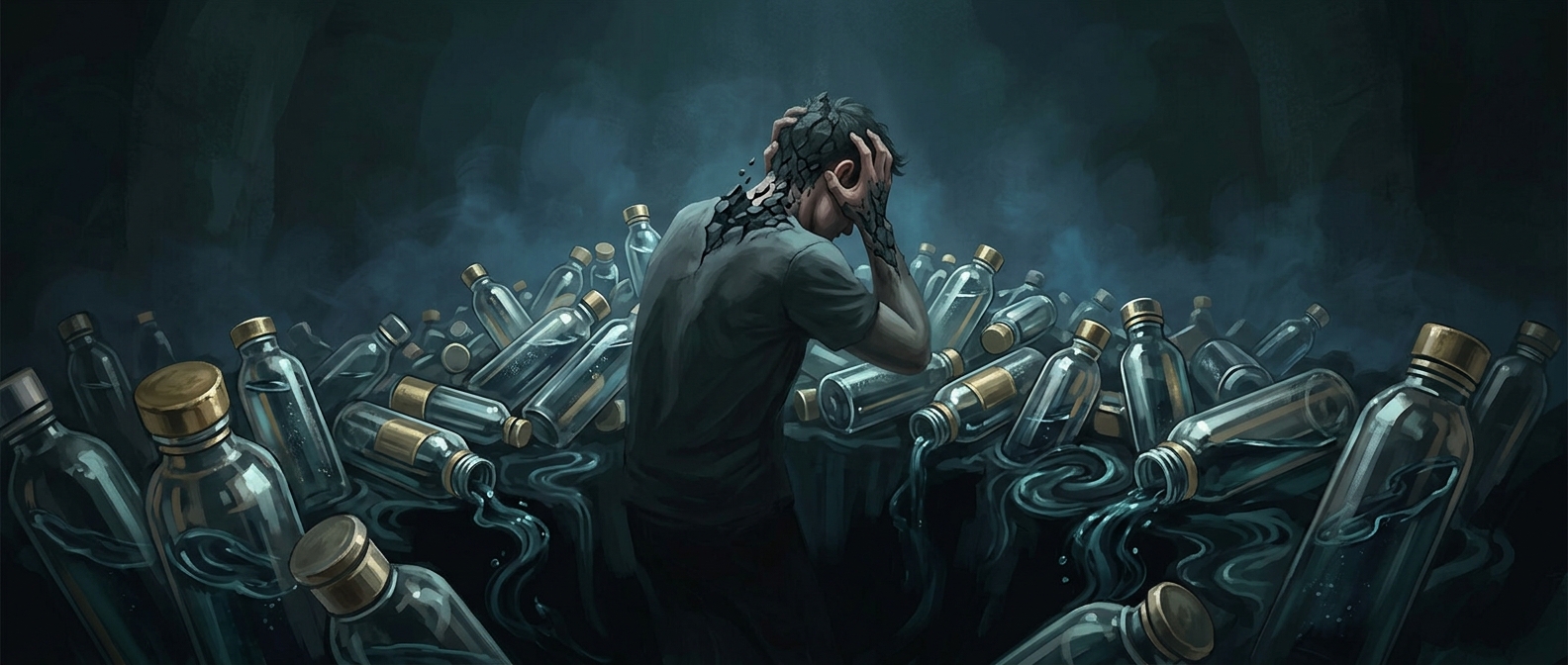
How too much water can disrupt the body’s salt balance
Water is essential, but the body can only remove excess fluid so quickly. The kidneys continuously filter blood and send extra water out as urine, adjusting the amount according to the body’s needs. If someone drinks a very large amount in a short time, that water can arrive faster than the kidneys can clear it—even when the person was healthy beforehand.
Why the brain is especially vulnerable
The danger is not simply that the body contains more water. It is that extra water dilutes sodium in the blood. Sodium helps regulate how water moves between the blood and cells. When blood sodium falls sharply, water moves into cells, including brain cells.
The skull cannot expand to make room for swelling. As pressure rises inside it, a person may develop headache, nausea, confusion, or seizures. In severe cases, swelling can interfere with vital brain functions and cause death. This condition is called water intoxication, or acute hyponatremia when the central problem is abnormally low blood sodium.
Speed matters as much as volume
A healthy person’s kidneys can handle ordinary drinking, and serious water intoxication is uncommon. The risk increases when a large quantity is consumed rapidly, particularly during prolonged exercise or other situations where the body is already losing water and salts. Some medical conditions and medications can also make it harder to regulate water balance.
There is no single amount that is dangerous for everyone: the body’s size, health, activity, and pace of drinking all matter. The practical point is to drink to thirst during ordinary activity rather than forcing down large amounts quickly. Water becomes dangerous when it overwhelms the body’s ability to keep blood chemistry stable.