How a drinking bowl became a pilgrimage object
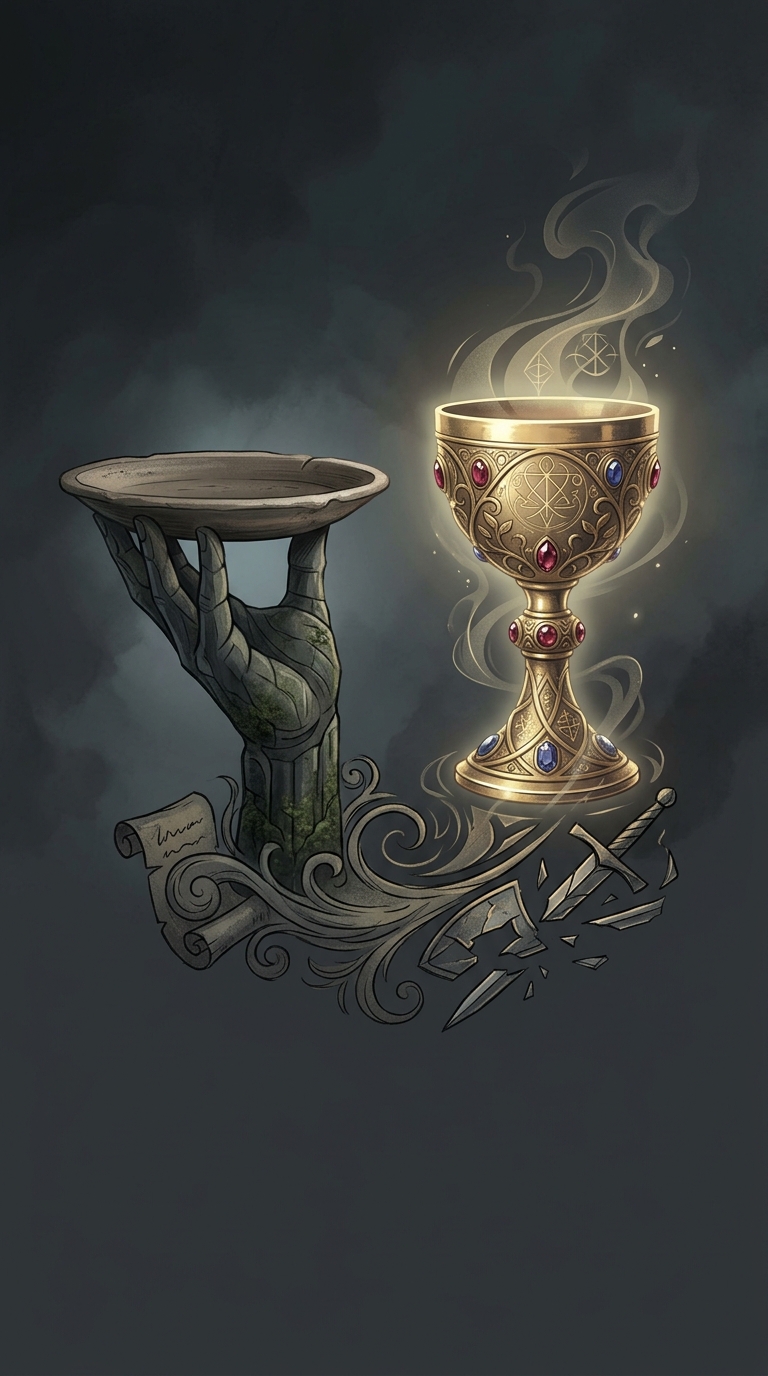
The Nanteos Cup’s importance came to rest less on what it was made to hold than on what people believed contact with it could do. Local tradition connected the wooden vessel with the Holy Grail and healing. For pilgrims, touching or taking a fragment could turn an encounter with a revered object into something personal and portable.
That practice reflects a broader feature of religious pilgrimage: physical contact can make an otherwise distant story feel immediate. A small piece of an object was not merely a souvenir to someone who believed the vessel had sacred or curative power; it could be treated as a keepsake carrying some of that significance.
The cost of taking a piece
Wood is vulnerable to repeated handling, and biting it would have made the damage worse. Each attempt to remove a fragment could leave the rim more ragged, making the next piece easier to break off. The reported souvenir-taking thus threatened the very object pilgrims had come to see.
Adding a metal rim offered a practical barrier around the most exposed edge. It could help hold the battered wood together and make it harder to bite away more. The repair also tells a compact story about the cup’s changing role: a vessel once valued for drinking had become a focus of pilgrimage, and protecting it meant guarding not just its shape but the tradition attached to it.