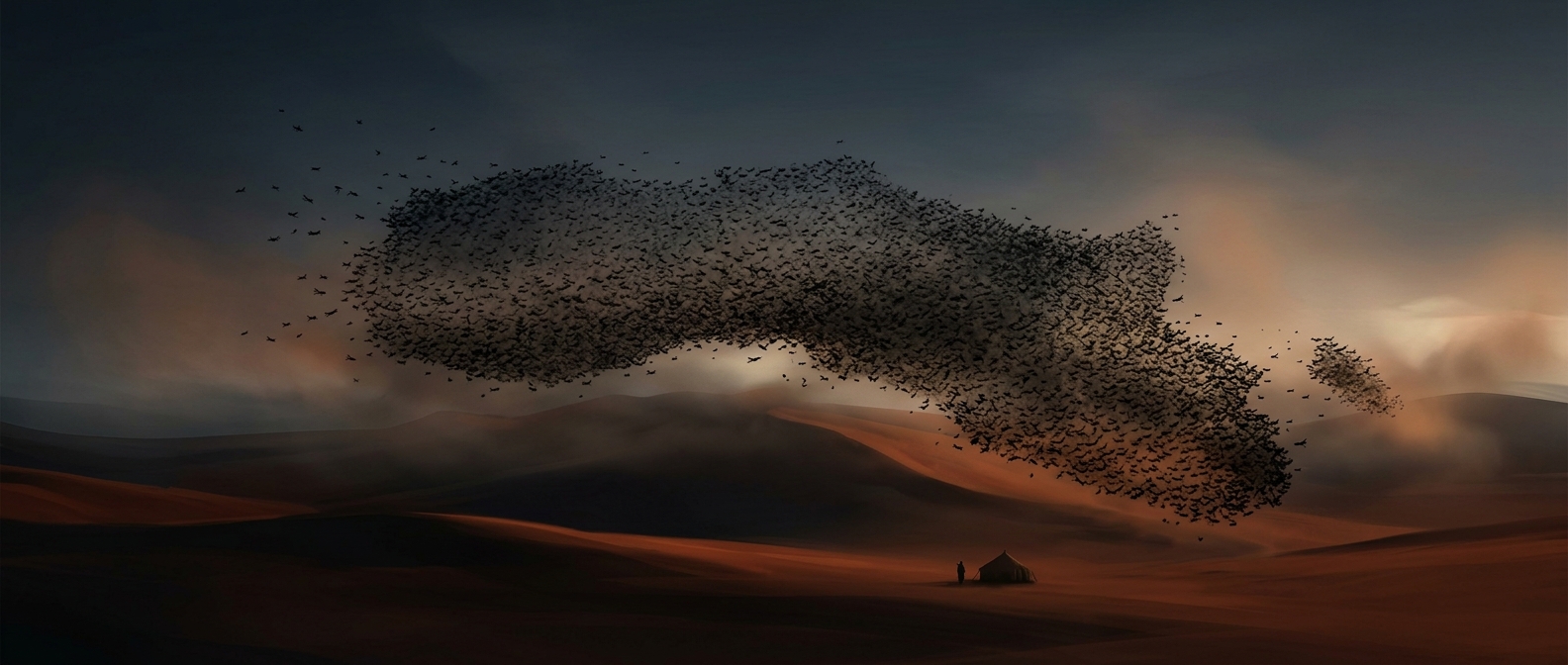
How crowding changes a locust’s behavior
A locust does not become a different species when it joins a swarm. It shifts between two forms of the same species: a mostly solitary form and a more social, mobile one. The change is driven partly by repeated contact with other locusts. When insects are packed together, bumps and touches—especially to the hind legs—help trigger a shift toward gregarious behavior. Serotonin, a chemical messenger in the nervous system, is involved in starting that behavioral change.
The shift is not simply a matter of one insect deciding to follow another. A solitary locust tends to avoid its own kind; a gregarious one is more likely to approach and remain with others. With sustained crowding, changes can also develop in the insects’ appearance and body proportions. The transition takes time, and the two forms are phases, not separate kinds of locust.
How a crowd becomes a moving threat
Crowding can grow when conditions bring many locusts together—for example, when good breeding conditions increase their numbers in one area. As they meet more often, their behavior reinforces the group: insects that are more inclined to join others accumulate into dense bands or swarms. Young locusts, which cannot yet fly, can move together across land; winged adults can travel much farther.
That movement changes the scale of the damage. A lone insect eats locally, but a large group feeds as it advances, stripping vegetation along its route. The dangerous transformation is therefore both biological and collective: crowding changes individual behavior, and those changed behaviors help keep the crowd together.