Why the Thames Became a Place to Scavenge
The Thames was not merely a waterway; it was also a working route crowded with boats, wharves, and riverside trade. Small objects could fall from cargo or be dropped along the banks, while coal and scrap metal had value even when they were dirty or damaged. At low tide, the retreating water exposed stretches of riverbed where a person might search for such remnants.
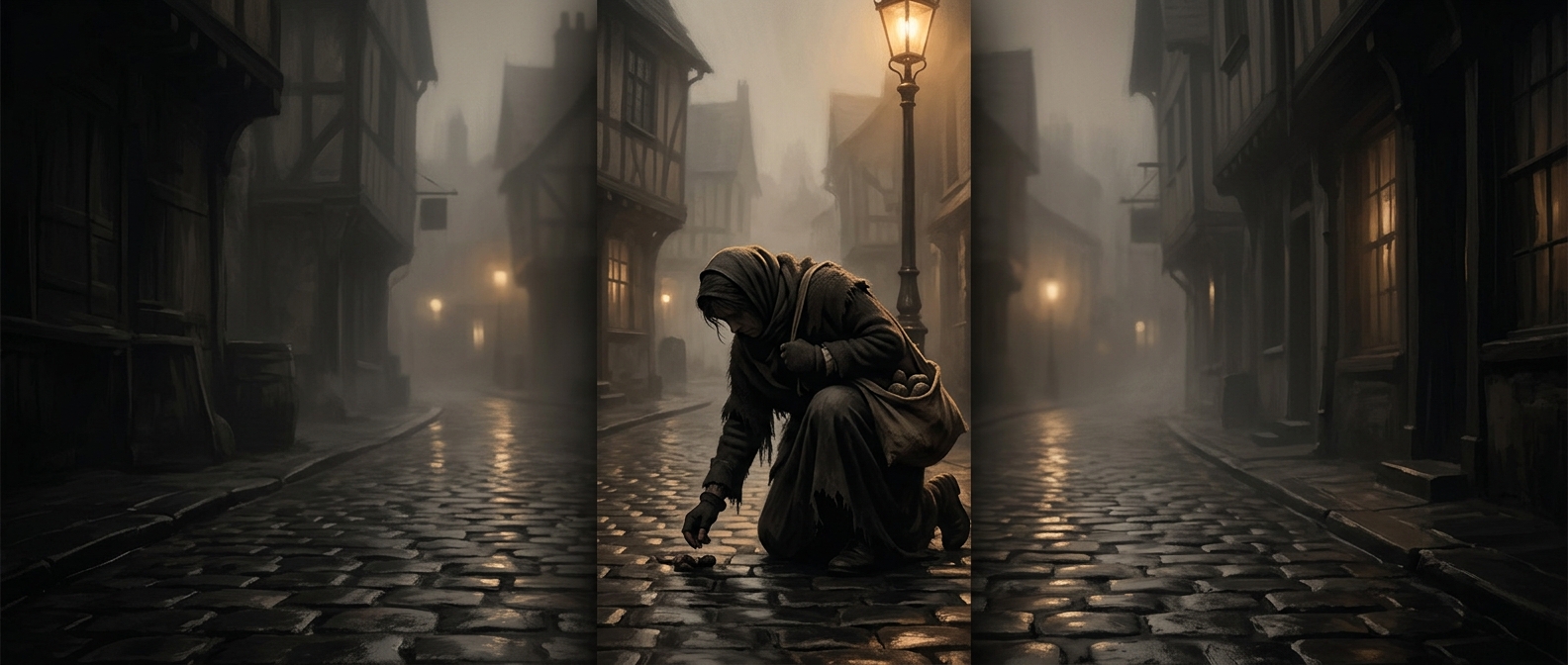
Children who made this search were often called mudlarks. For families with little money, scavenging offered a way to turn overlooked scraps into something useful or sellable. It was not a reliable livelihood: a search might yield something worth keeping, or nothing at all.
The Tide Made the Search Possible—and Dangerous
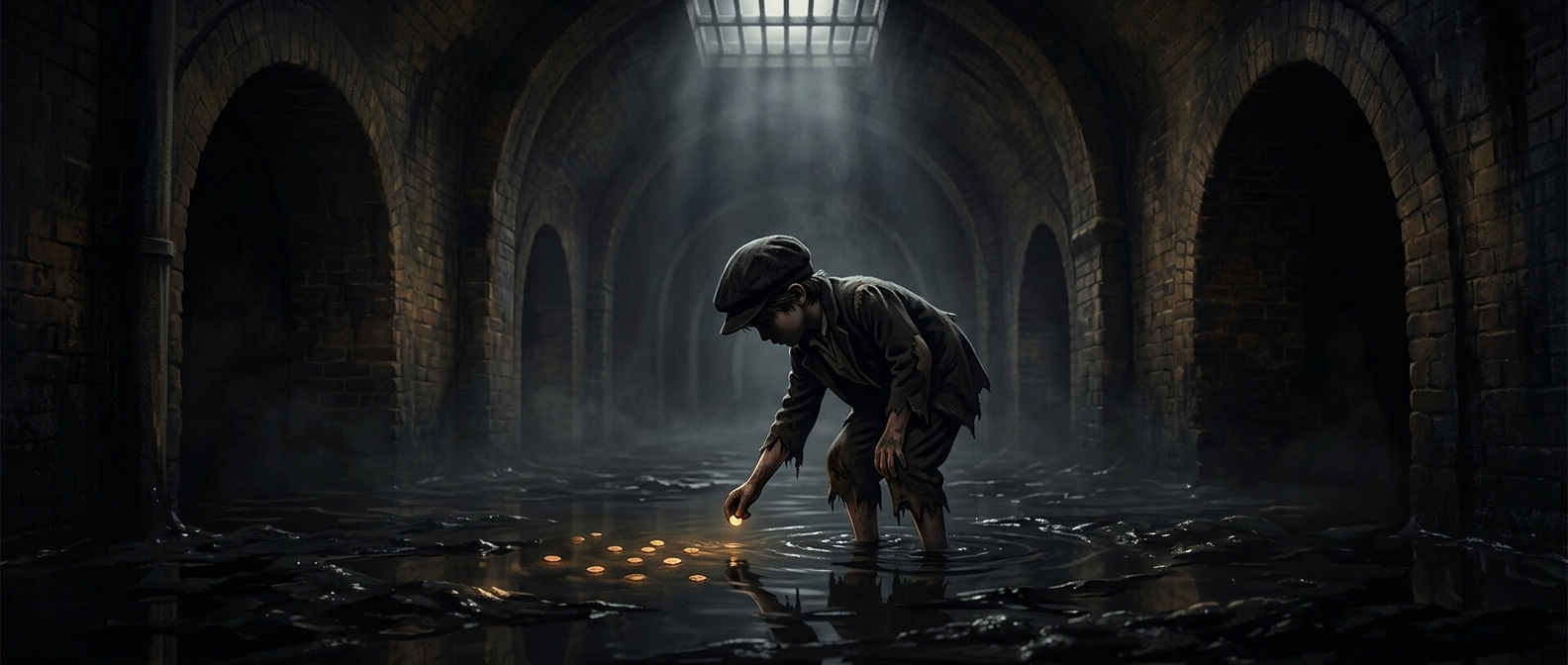
The Thames is tidal, so the water level rises and falls. Low water revealed ground that was otherwise submerged, but it did not make that ground safe. River mud can be soft and unstable, and the tide would return. A child focused on finding valuables could be caught by rising water, lose footing, or become trapped in the muck.
The danger was sharpened by the river’s condition in Victorian London. Sewage and other waste entered the Thames, making the exposed riverbed foul as well as hazardous. The work put children in close contact with contaminated mud in pursuit of tiny rewards.
A Search Shaped by Poverty
Mudlarking shows how urban poverty pushed children into the spaces and scraps left behind by commerce. The river’s ordinary traffic created the possibility of finding something; low tide briefly opened access to it. But the same setting that offered a chance to earn a little also made each search precarious. A few coins or pieces of metal could be recovered from the shore—while one misstep could turn scavenging into a life-threatening accident.