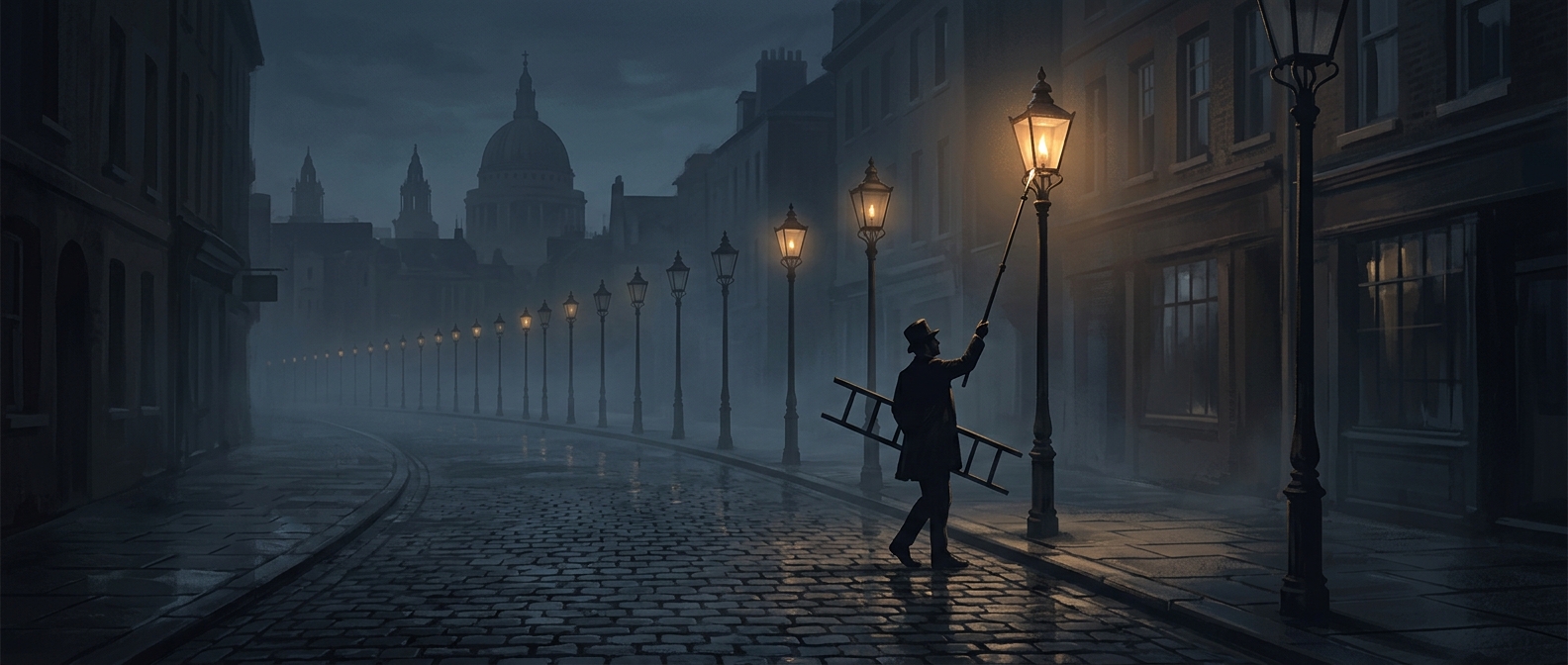
A flame at the end of a pole
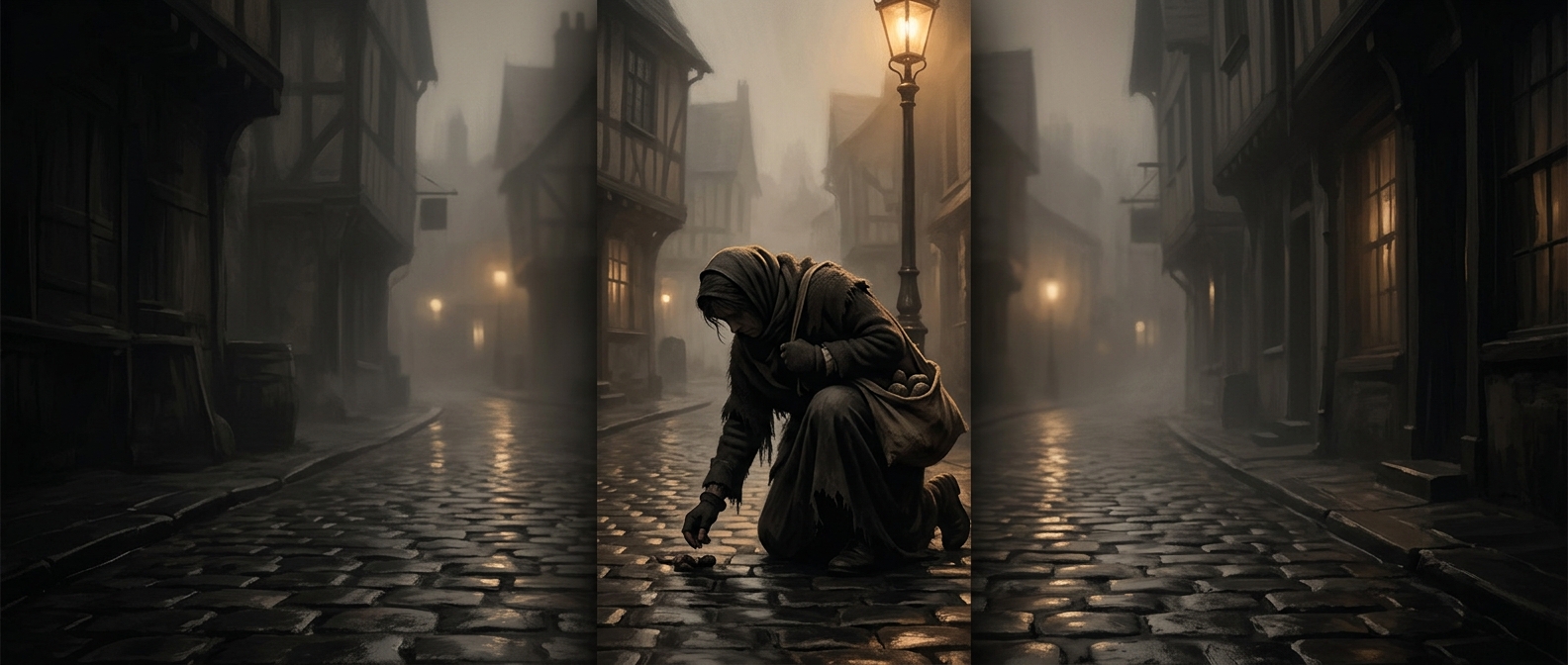
A gas streetlamp was not a self-contained lantern that a worker had to refill. In cities with gas mains, a pipe delivered fuel to the burner inside each lamp. The lamplighter’s task was to open the gas supply and bring a flame to the burner, often using a long lighting pole to reach it from the street. The pole made it possible to ignite lamps without climbing to every fixture; the worker still had to stop at each one.
At dawn, the process ran in reverse: the lamplighter shut off the gas so the lamp would not keep burning through daylight. The evening and morning rounds were therefore two parts of operating the same network, not separate jobs.
Lighting the city by route
Because each lamp needed attention, street lighting depended on people moving through the city in a planned sequence. Their routes had to cover the lamps assigned to them, and the work followed the changing boundary between daylight and darkness: lamps were needed after dusk, then could be extinguished once morning light made them unnecessary.
That arrangement put a human being between the city’s gas supply and the light on the street. A lamp could be connected to a main and still go dark if it was not lit; the infrastructure delivered fuel, but the nightly service required a worker to reach the fixture. The street’s illumination was not simply switched on—it was carried from lamp to lamp, then collected again at dawn.