The bell turns a siege into a timed encounter
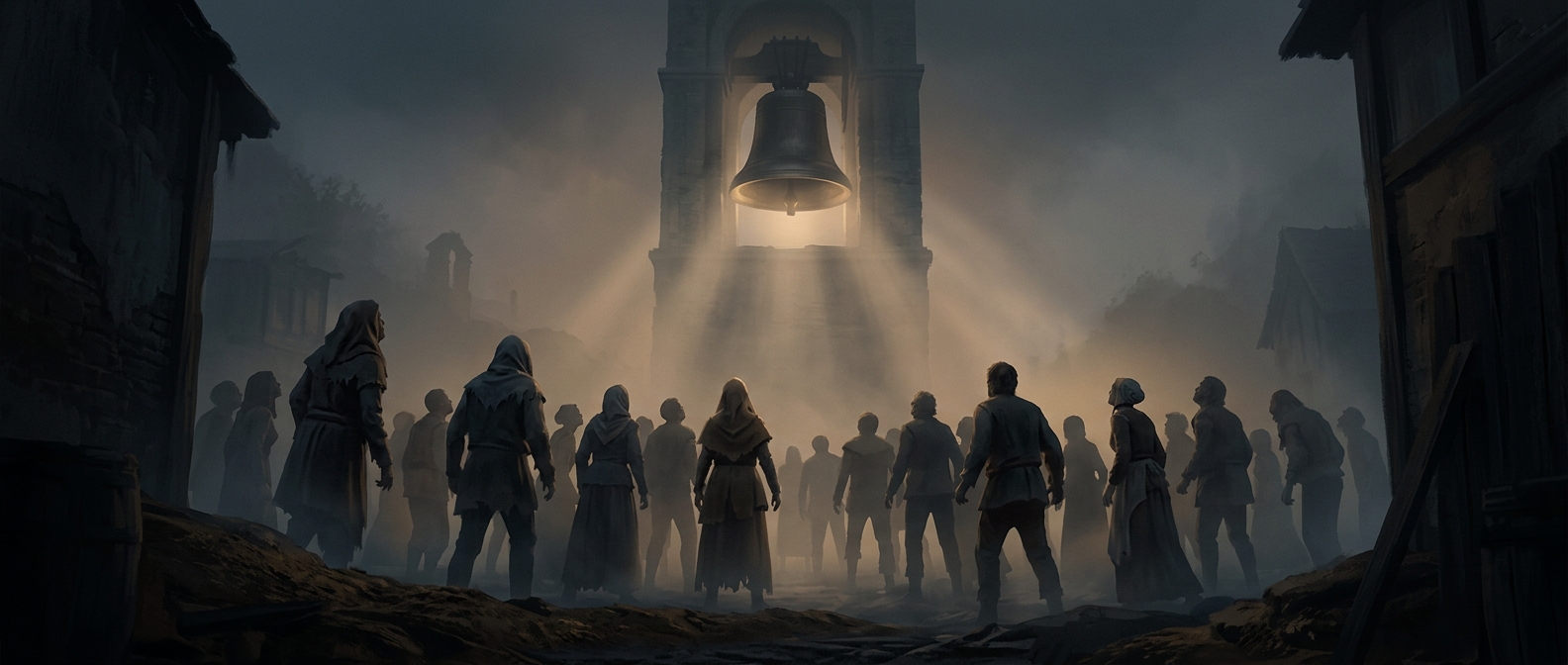
At the start of Resident Evil 4, Leon is surrounded in a village square while hostile villagers keep closing in. The distant bell changes the scene: the attackers abruptly break off and head away, leaving the fight unresolved rather than requiring Leon to defeat the crowd.
That distinction matters. The encounter is built around lasting through a crisis, not clearing every enemy. A player who spends the whole sequence fighting may read it as a conventional battle; the bell reveals that the pressure has an endpoint beyond the player’s weapons.
An in-world signal doubles as a game cue
The bell gives the villagers a reason to stop attacking: they are being called away to pray. At the same time, its sound tells the player that the immediate danger is over. The game does not need a scoreboard or an instruction box to announce the transition; the fictional village itself supplies the signal.
That makes the retreat feel startling but legible. The crowd’s behavior changes all at once, turning a desperate scramble for space into a moment of sudden quiet. It also teaches a useful lesson about the game’s encounters: sometimes the important goal is to endure until circumstances change, not to win by force.