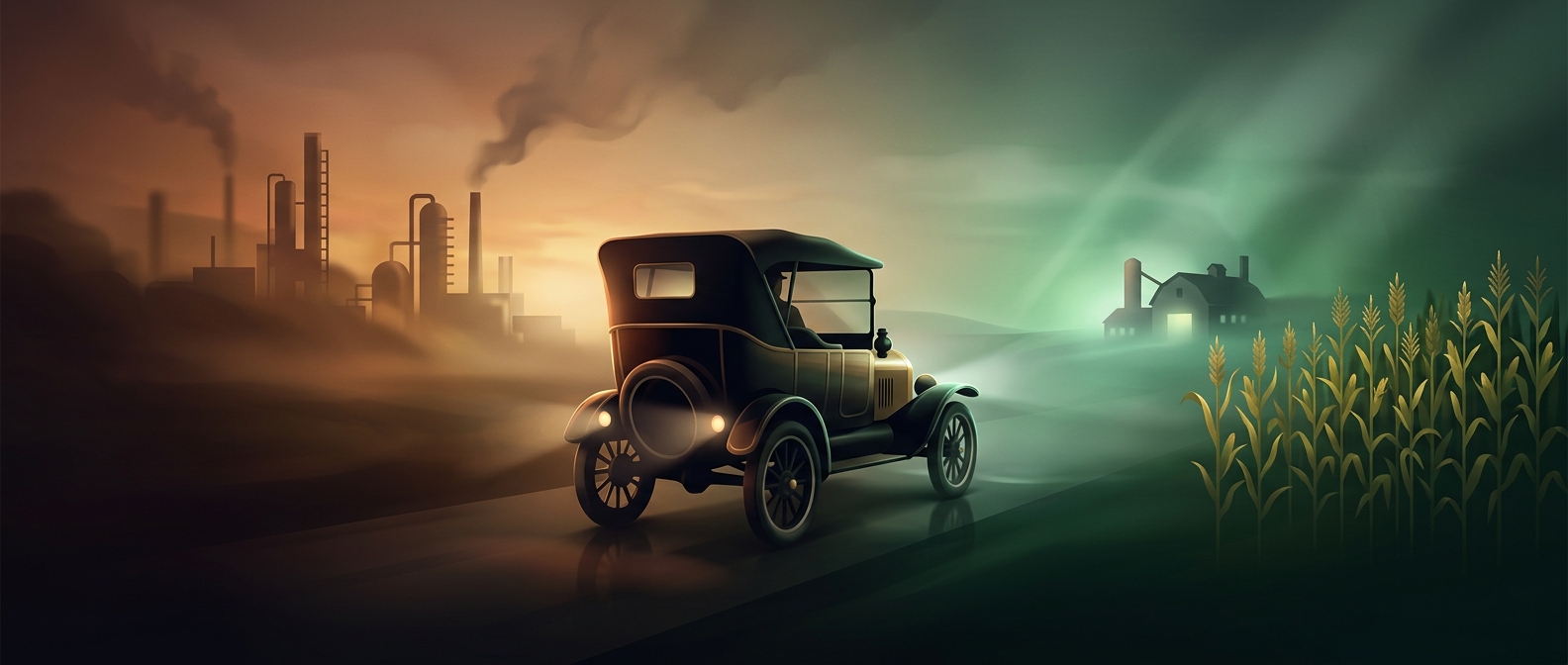
A small adjustment changed what the Model T could drink
The Model T’s carburetor—the device that blends liquid fuel with air before it enters the engine—was mechanically simple. An adjustable needle helped control how much fuel entered the mixture. With the setting changed, the engine could run on ethanol, an alcohol fuel, rather than gasoline.
That mattered because gasoline was not the only possible source of power in the early automobile age. Ethanol could be made from crops: yeasts ferment sugars into alcohol, which can then be concentrated by distillation. For a farmer with suitable equipment and feedstock, fuel could in principle come from nearby fields rather than a distant oil supply.
Local fuel came with practical tradeoffs
The engine did not make the two fuels identical. Ethanol contains less energy per gallon than gasoline, so an engine generally needs more of it to do the same work. Fuel preparation and reliable supply also mattered: growing a crop was only one step between a field and a tank.
Gasoline, meanwhile, became easier to buy as roads, cars, and fuel distribution expanded. That convenience helped make it the everyday choice, even though the Model T’s adjustable carburetor gave it another option. The notable point is not that every owner routinely brewed fuel, but that the car’s basic mechanical design could accommodate a fuel made from agricultural crops.