Why a Model T Could Climb Better Backward
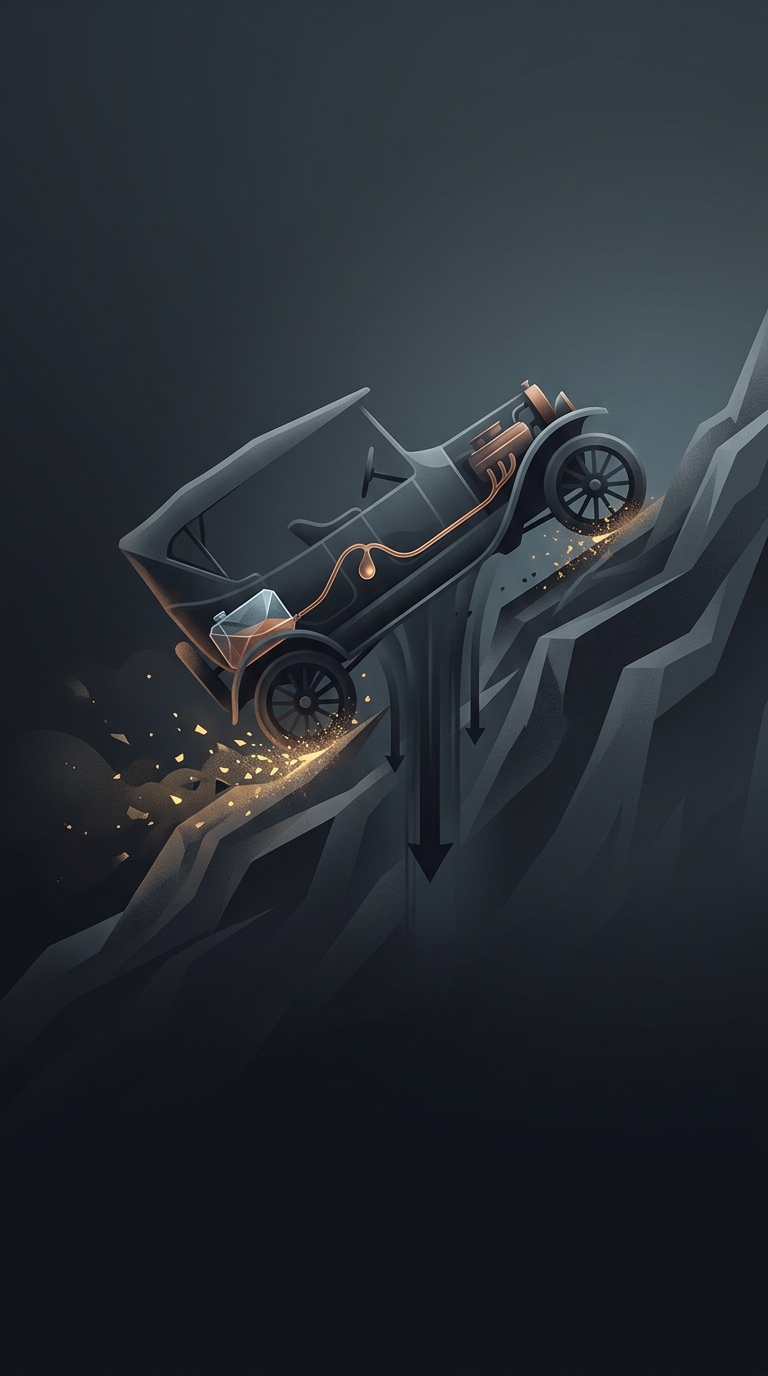
The Model T’s fuel system depended on gravity rather than a pump. Gasoline sat in a tank beneath the front seat and flowed toward the engine’s carburetor, the device that mixes fuel with air before the mixture enters the engine. On level ground, the tank’s position was high enough for fuel to keep moving.
A steep hill changed that geometry. As the car pointed uphill, its front—and the engine—tilted higher than the tank. With less gravitational pull carrying gasoline forward, the flow could falter, leaving the engine short of fuel just when it was working hard to climb.
Turning Around Changed the Fuel’s Path
Backing up the slope put the car’s front end downhill while the vehicle still moved uphill. That shifted the tank above the engine again, restoring the downhill path gasoline needed to reach the carburetor. The driver wasn’t reversing because the Model T lacked the power to climb forward; the workaround addressed how its fuel was delivered.
It was a practical consequence of a simple system: the car’s ability to keep running on a sharp grade could depend on which end pointed uphill. On a difficult ascent, the right direction to travel was sometimes backward.