A boundary between human and animal
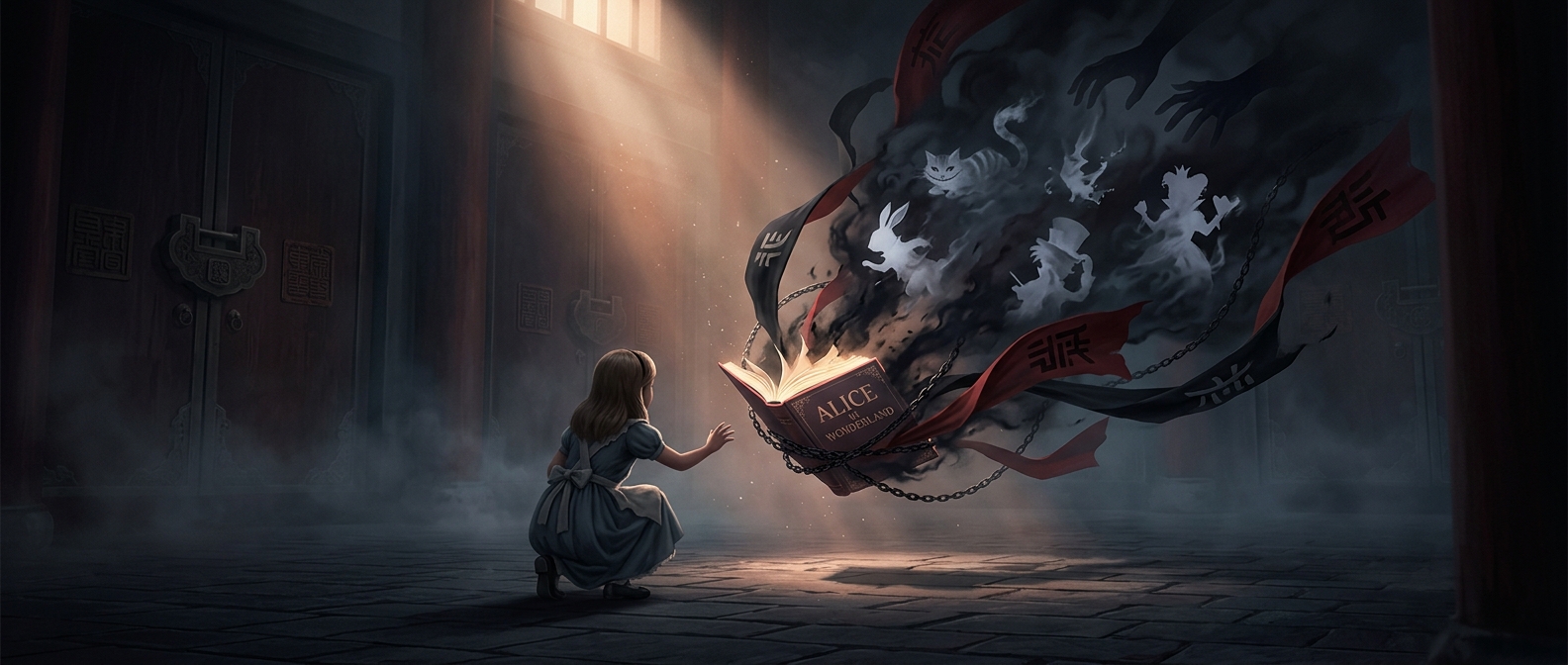
In Alice’s Adventures in Wonderland, animals do more than appear in the scenery: they talk, argue, give instructions, and sometimes seem more composed than Alice. The White Rabbit’s anxious errands and the Cheshire Cat’s sly conversation make animals participants in the same social world as the human child. That storytelling choice is central to the book’s strange comedy.
The 1931 ban in Hunan turned that choice into a matter of human dignity. The governor’s objection, as described, was that letting animals speak on a conversational level with people insulted humanity. In other words, the concern was not simply that the story was fanciful. It was that the story blurred a distinction the governor considered important: humans should occupy a higher place than animals, including in the world a book imagines.
What the ban tried to keep separate
Talking animals are a familiar literary device, but they can unsettle expectations precisely because they borrow a human privilege—language—and give it to creatures. Once an animal can reason, challenge Alice, or make demands, it is no longer just a thing she observes. It becomes a character with a voice of its own.
That makes the episode a revealing clash over what fiction is allowed to do. Carroll’s animal characters invite readers to enjoy a world where the usual hierarchy can wobble; Hunan’s governor treated that imaginative equality as an affront. The book’s offense, in this account, was built into its most recognizable trick: letting animals talk back.