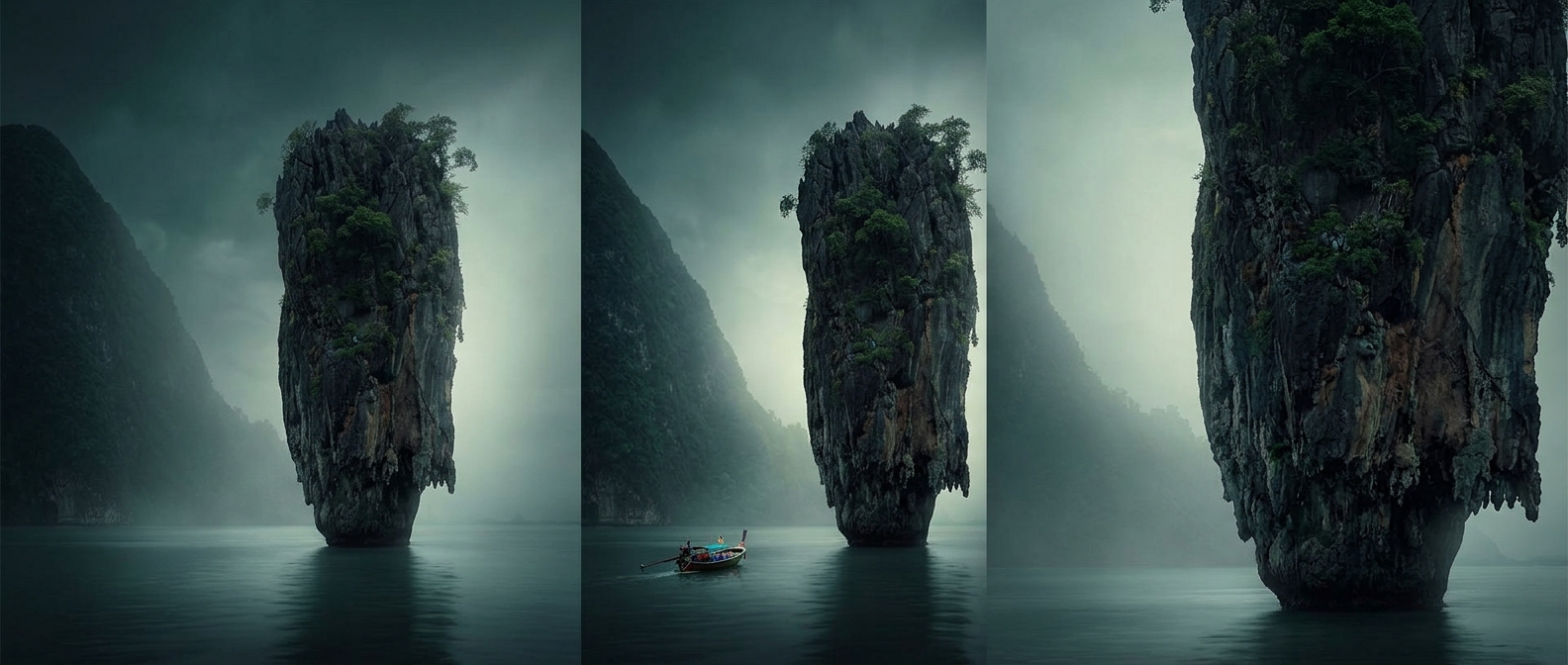
Limestone built the steep outline
The Phi Phi Islands’ sheer profiles begin with the rock itself. Much of the area’s dramatic island scenery is made of limestone, a rock formed from the accumulated remains of marine life on an ancient seafloor. Over time, geological forces lifted and exposed those layers above the water.
Limestone is riddled with joints and cracks. Rainwater, made mildly acidic by carbon dioxide in the air and soil, can slowly dissolve it, widening those openings into an uneven landscape of ridges and hollows. Where the rock meets the sea, waves also wear at its exposed edges. Together, these processes help leave steep faces rather than smooth, gradual slopes.
Why the cliffs meet the water
A cliff does not mean there is no beach nearby. Beaches form where sand and other loose material can collect; they may occupy a sheltered cove or a pocket between rocky headlands. Along an exposed stretch of limestone, there may be little broad, gently sloping ground for that material to settle on. The rock face remains the dominant feature right down to the waterline.
That contrast is what makes the islands feel so abrupt: pale, rugged rock rises almost vertically, while turquoise water fills the narrow space below. The “stone wall” appearance is not a single wall of rock, but the visible edge of a landscape shaped by uplift, dissolution, and waves.