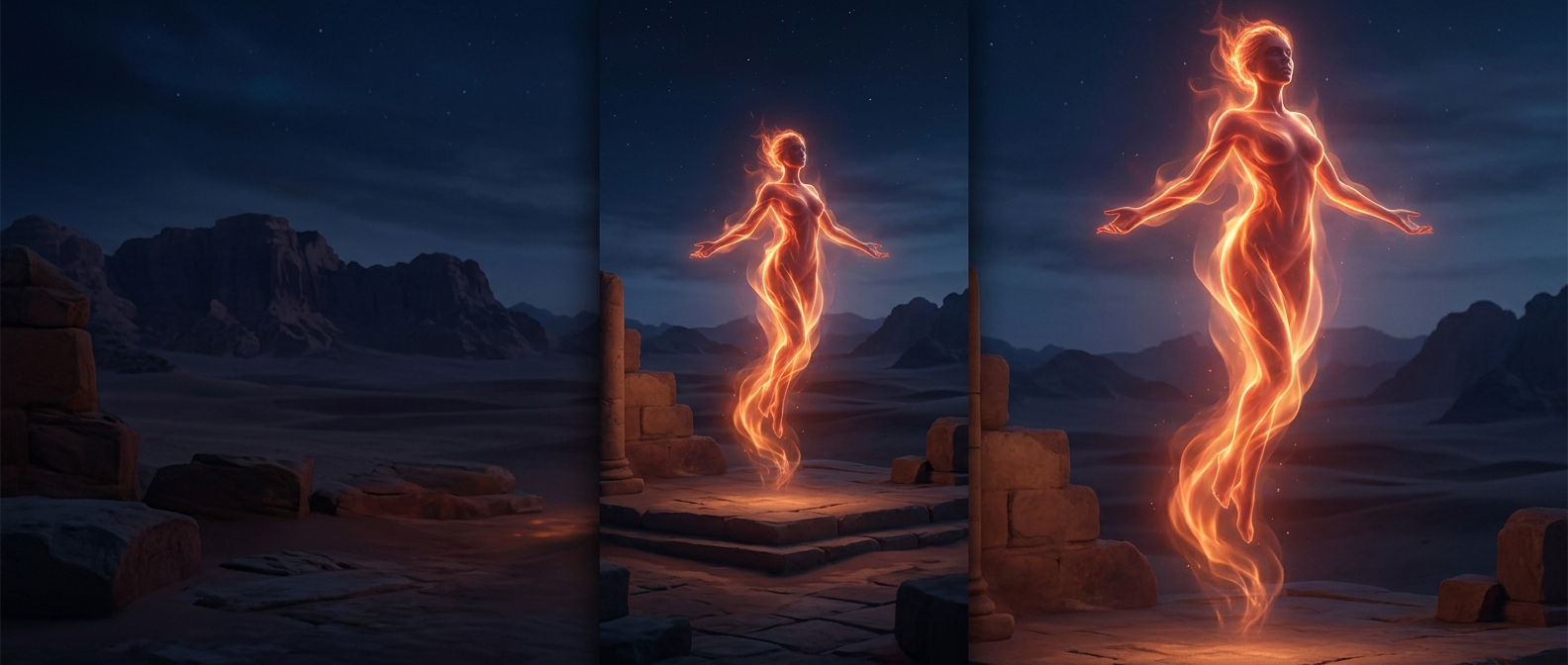
A point calculated from the Moon’s orbit
The Moon does not travel around Earth in a perfect circle. Its slightly stretched orbit brings it closer at one end and farther away at the other. Black Moon Lilith marks the far end—the lunar apogee—not an object occupying that spot. Because the Moon’s path is continually influenced by the Sun and other forces, astrologers may use different calculation methods for the point, which can produce slightly different chart positions.
That makes Black Moon Lilith different from a planet, a moon, or an asteroid: it has no physical body, surface, or light of its own. Its significance comes from the location assigned to it on an astrological chart.
From a mythic figure to a chart symbol
Astrology links the point’s name to Lilith, a figure associated in later traditions with refusing submission and leaving Adam. That story gives the chart point its symbolic vocabulary. In modern readings, astrologers often use Black Moon Lilith to explore themes such as autonomy, resistance to control, or parts of a person that feel difficult to express openly.
Those meanings are interpretive, not properties measured in space. The astronomical calculation identifies where the point falls in a chart; the myth supplies a lens for reading it. So when someone says Black Moon Lilith is “in” a particular sign, they mean that the calculated lunar-apogee point appears there—not that a hidden world is orbiting Earth.