A burial pose with a religious message
Tutankhamun’s mummified body was prepared with his penis upright, a highly unusual detail that has been interpreted as deliberate rather than incidental. In ancient Egyptian religion, the body’s treatment could carry meaning beyond preservation: a king’s burial was part of his passage into the next life, and its symbols helped express what kind of divine transformation he was expected to undergo.
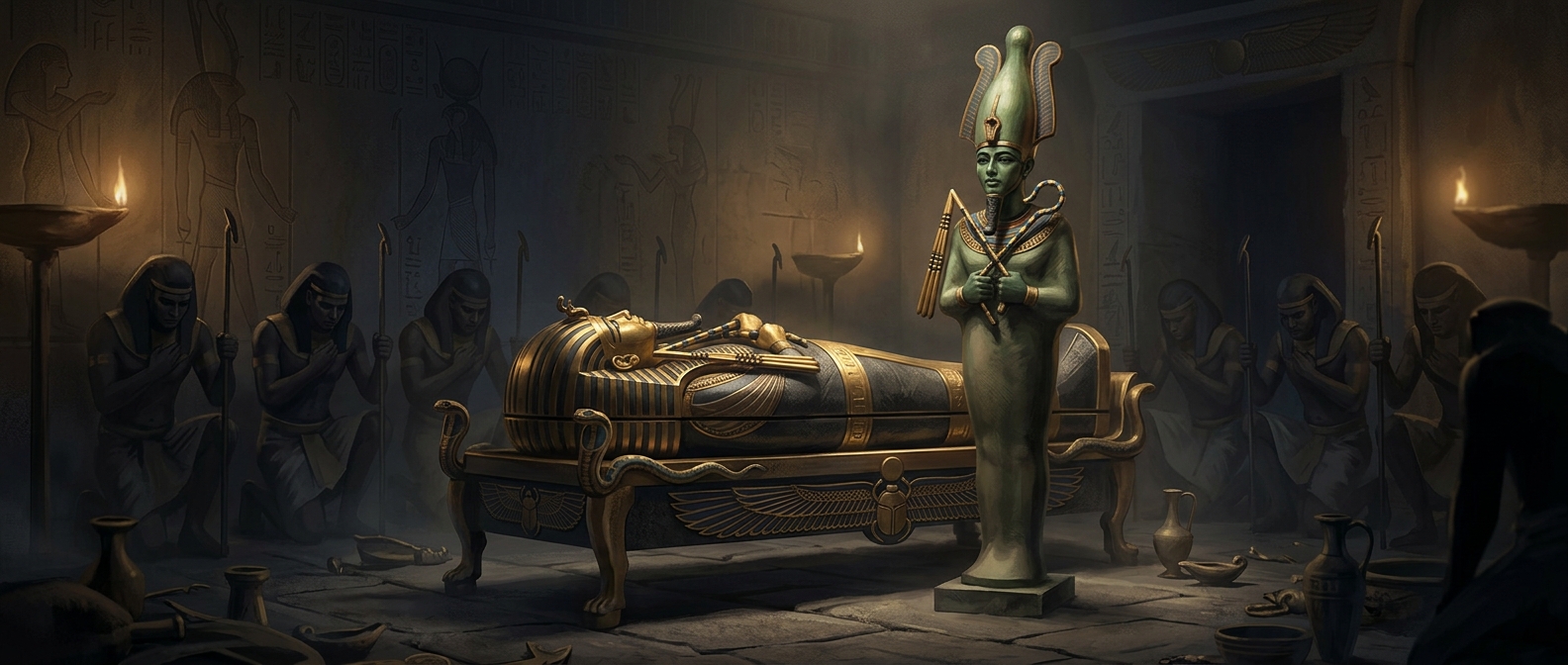
The pose connects Tutankhamun with Osiris, the god associated with the dead and with renewed life. Osiris’s mythology linked death not only to an ending but also to regeneration. An erect phallus could therefore evoke fertility and the power to bring life back after death. The image was not simply a private bodily detail; in a royal burial, it could make the king’s hoped-for rebirth visible.
A royal burial also marked a religious turn
The symbolism mattered in the political climate Tutankhamun inherited. His father, Akhenaten, had elevated the worship of Aten, the sun disk, and sharply reduced the prominence of Egypt’s other gods. After Akhenaten’s reign, Tutankhamun’s government restored the traditional religious order, including the worship of established deities such as Osiris.
The burial’s connection to Osiris fits that restoration. It presented the young king not as a continuation of his father’s religious rupture, but as a ruler returning to familiar beliefs about divine kingship and life after death. The body itself became part of that message: even in death, Tutankhamun was being aligned with the god through whom Egyptians imagined the dead could be renewed.
That makes the unusual pose more than a curiosity. It shows how a small, concrete choice in preparing a royal body could express both a hope for the king’s rebirth and a public return to Egypt’s traditional gods.