A blade made from iron before ironworking
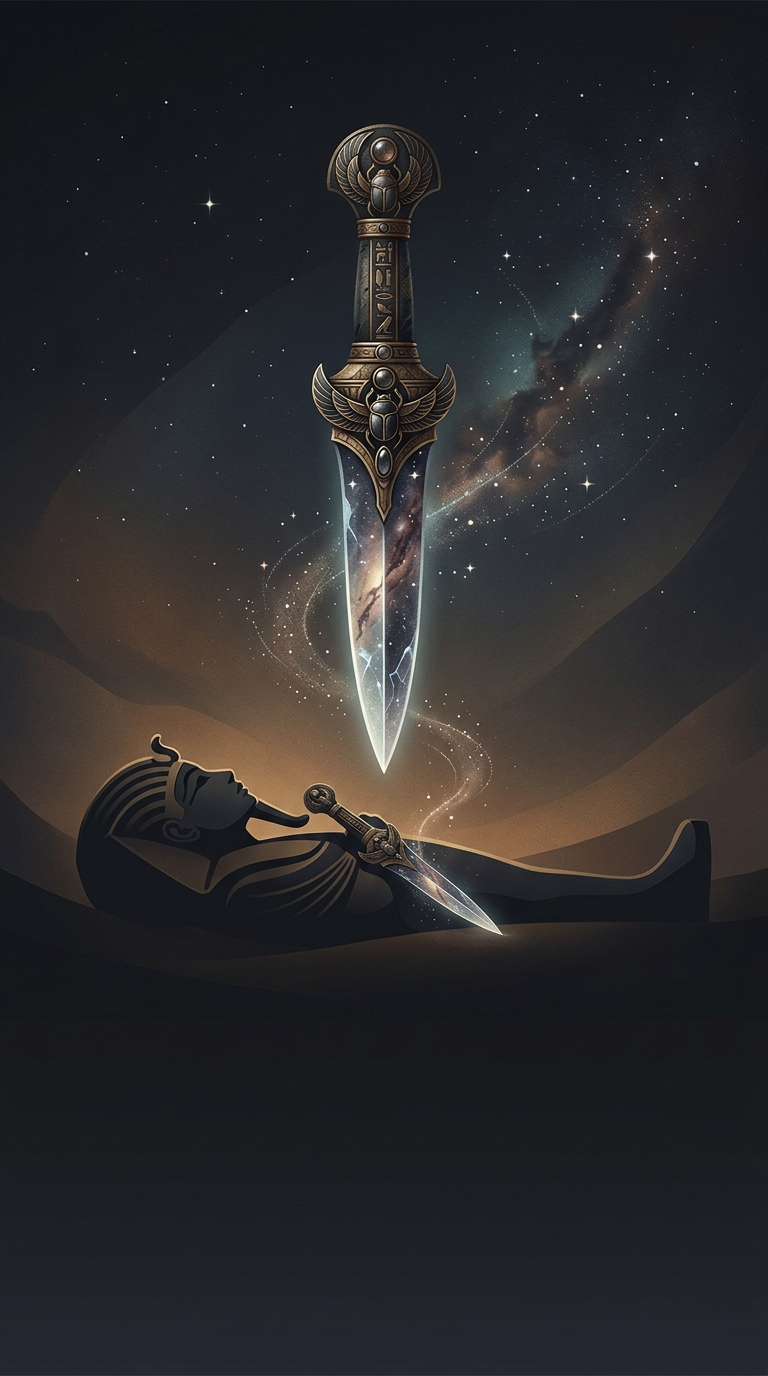
In Tutankhamun’s Egypt, most everyday tools and weapons were made of copper or bronze. Producing iron from ore required high-temperature furnaces and skilled metalworkers; that technology was not yet widespread in the region. Iron from a meteorite offered a different route: it had already formed in space as a naturally occurring metal, ready to be shaped by a smith.
That made the dagger’s blade unusual not simply for its material, but for the long chain of events that brought it into a royal workshop. A meteorite had to fall, be found, and be recognized as something worth preserving before its metal could be worked into a finely made object.
How researchers traced its origin
The blade’s surface was examined with X-ray fluorescence, a technique that identifies elements by measuring the signals they emit when exposed to X-rays. Its high nickel and cobalt content is characteristic of many iron meteorites and differs from the composition expected of ordinary iron made from terrestrial ore. The result supports the conclusion that the blade was forged from meteoritic iron.
The dagger was placed in the young king’s tomb, where it remained for more than three millennia. Its presence does not tell us whether Tutankhamun ever used it in battle; burial objects could serve ceremonial or symbolic purposes as well as practical ones. But it does show that a rare material from beyond Earth could be turned into a carefully crafted royal possession—at a time when iron itself was still uncommon.