Why Everest’s reported height ended in two extra feet
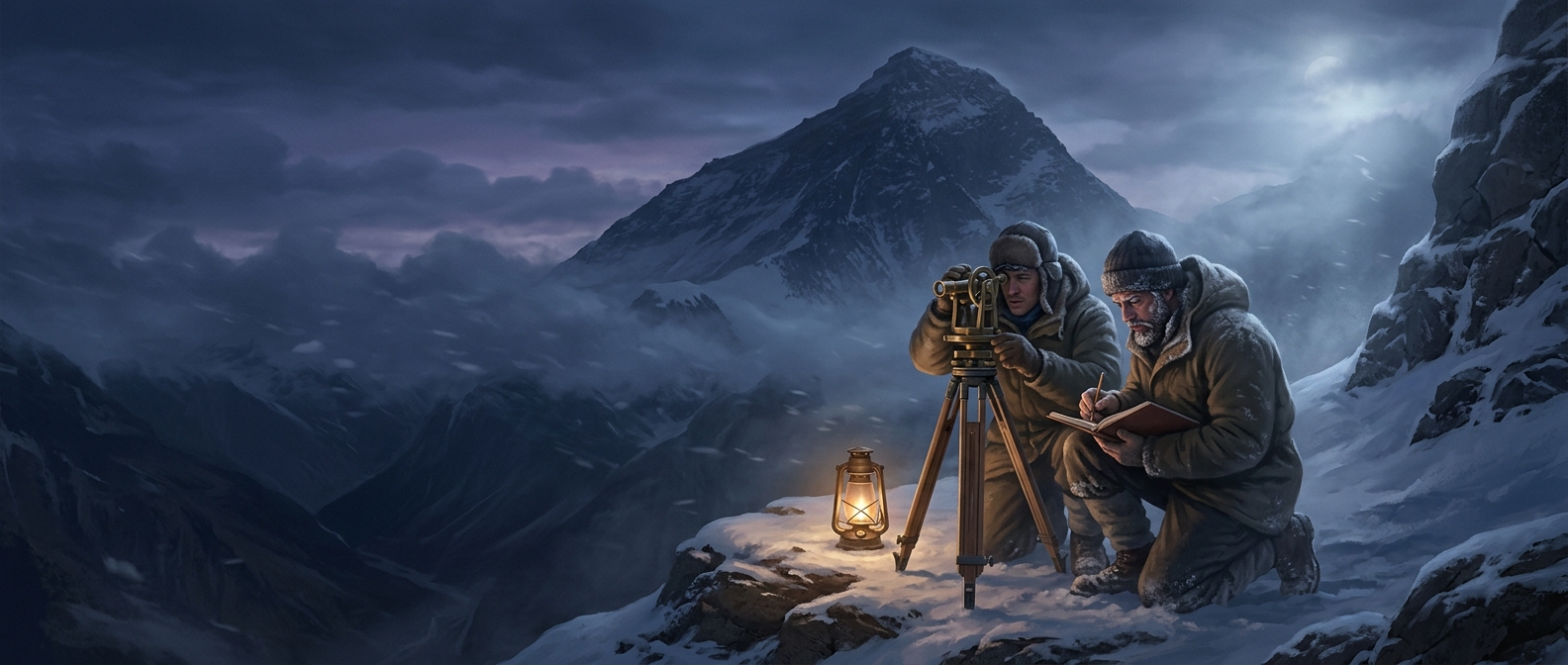
In the nineteenth century, surveyors could estimate a mountain’s height without climbing it. They measured angles to its summit from known positions across the landscape, then used triangulation—the geometry of connecting those observations—to calculate its elevation. For a peak as distant and difficult to reach as Everest, the result depended on careful field measurements and calculations, not a tape measure at the top.
The problem with a perfectly round answer
The calculation came out to 29,000 feet. That figure might have been accurate, but its neatness created a problem: readers could mistake it for a rounded estimate rather than the result of a detailed survey. So the surveyors reported the height as 29,002 feet, adding two feet to signal that the number was meant to reflect a specific calculation.
The adjustment was not a claim that they had measured those last two feet with special certainty. It was a judgment about how a result would be perceived. A number that looked more precise could make the work behind it seem more credible—even though the added precision did not eliminate the uncertainties involved in surveying a remote, snow-covered summit.
Precision and accuracy are not the same
That distinction still matters whenever measurements are reported. Extra digits can show how a result was calculated, but they do not automatically make it more accurate. In Everest’s case, two feet helped distinguish a surveyors’ answer from a suspiciously tidy guess—and turned a tiny reporting choice into a memorable part of the mountain’s measurement history.