How an hourglass can measure a year
An ordinary hourglass empties quickly because its narrow waist lets sand pass through at a steady rate. Stretching that process across a year requires more than making the glass bigger: the opening must be small enough, and the sand must flow reliably enough, that the upper chamber empties only gradually.
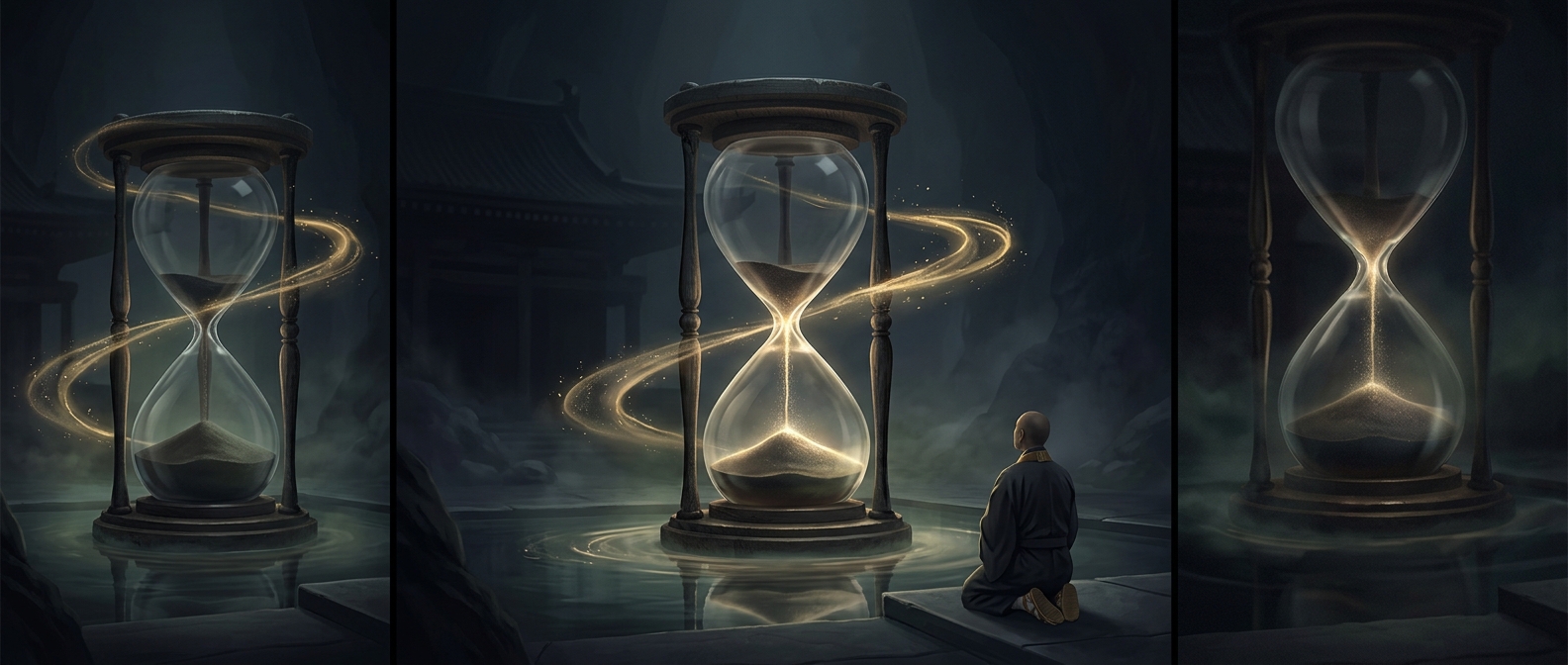
In Nima’s giant hourglass, gravity does the work. Sand falls through the neck from the upper bulb to the lower one; there is no clockwork mechanism speeding it along or correcting its pace. The year-long duration is therefore built into the physical design—the quantity of sand and the restricted passage through which it falls.
A measure of duration, not a clock
An hourglass does not tell you what time it is. It marks the passage of a set interval, so its meaning depends on when it is turned over. Once the sand has collected below, the measurement is finished; to begin another interval, the glass has to be inverted again.
That makes the Nima hourglass a strikingly visible kind of timekeeper. Its measurement cannot be tucked away inside a dial: the passing year is embodied in a slow, continuous fall, and the end arrives when the last sand reaches the bottom.