A dial made the paddle’s position feel direct
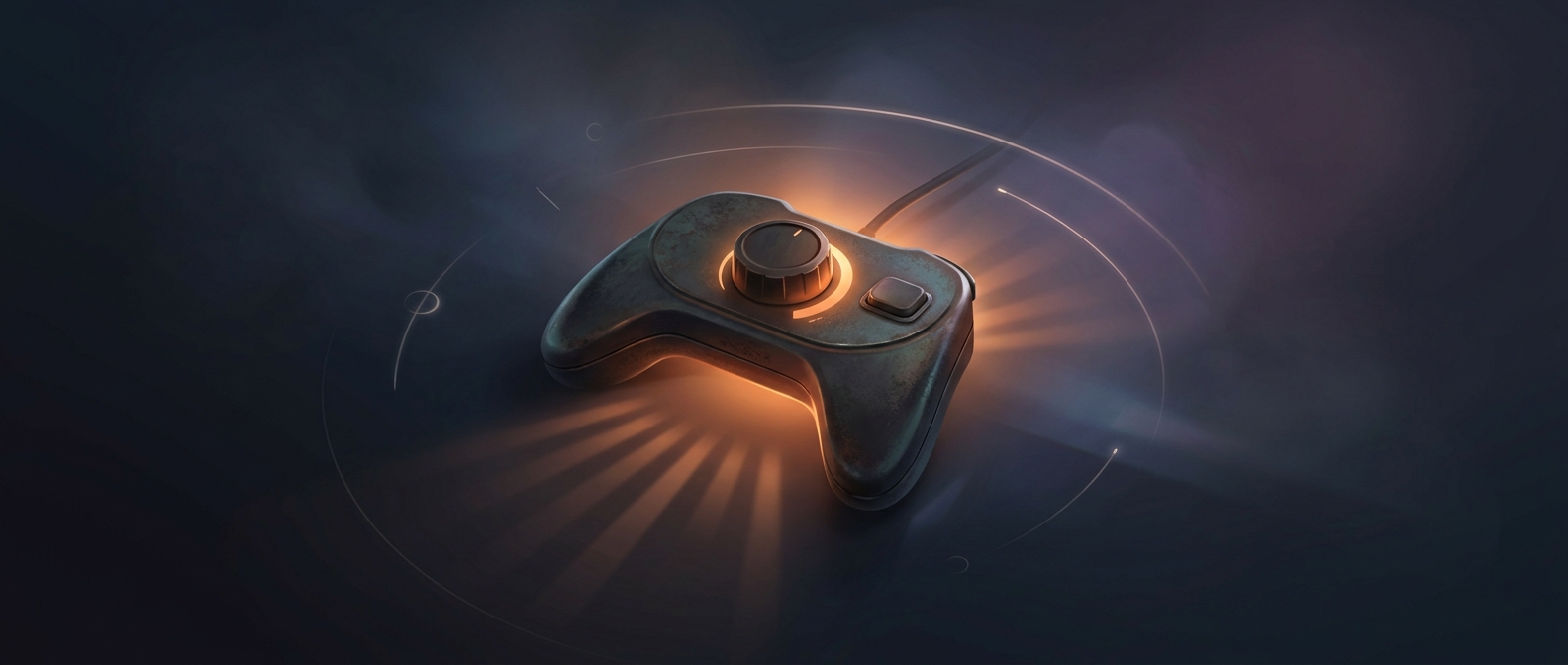
In early paddle games, the knob was more than a convenient way to steer. It was connected to a potentiometer—an electrical component whose output changes as it turns. The game read that changing signal and used it to place the paddle higher or lower on the screen.
That created a close link between hand and image: turn the dial a little, and the paddle shifts a little; turn it farther, and it moves farther. The controller gave the machine a range of positions, not merely a command such as “go up” or “go down.”
Why a knob suited a game of rebounds
In a game like Pong, the paddle’s main job is to meet a moving ball at the right height. A dial lets a player make quick, fine adjustments without navigating menus or choosing among separate directional buttons. Its circular motion also makes small corrections easy to repeat as the ball crosses the screen.
This is a different feel from a typical digital joystick, which tells a game which direction is being pressed. A paddle dial instead communicates how far around its range the control has been turned, letting the game map that position directly to the paddle. The distinction made the controller feel less like issuing a movement command and more like setting the paddle’s place on the court.
The control shaped the play
That direct mapping suited a simple screen with one moving ball and a small number of paddles. The player’s attention could stay on the ball, while the knob handled positioning with a compact, intuitive motion. In a game built around meeting a target at just the right height, the controller’s precision was part of the design—not an afterthought.