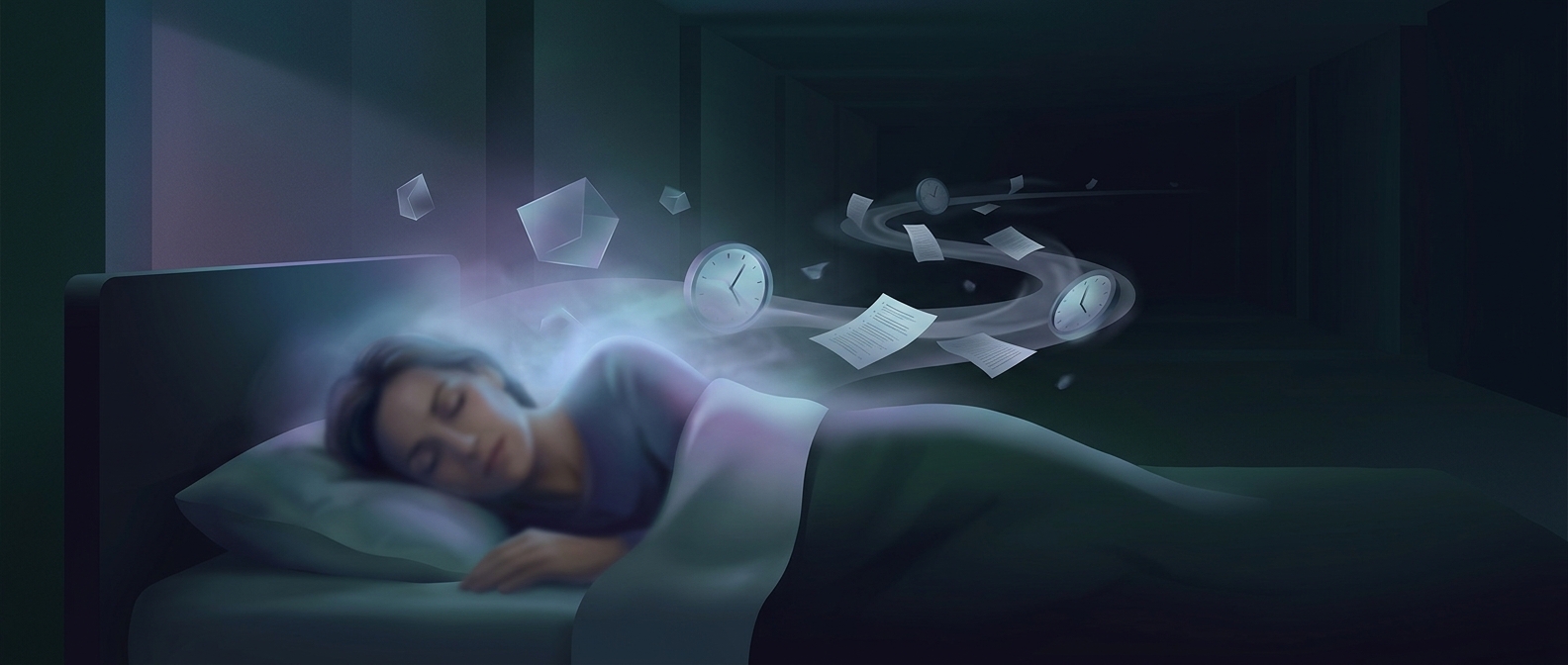
Why REM sleep can return with extra force
Sleep is not a uniform stretch of unconsciousness. The brain cycles through stages, including REM sleep, when brain activity rises and many vivid dreams occur. After too little sleep—or too little REM in particular—the body may spend more time in REM during a later sleep period. This is called REM rebound: a shift in sleep patterns that helps make up for some of what was missed.
The rebound does not work like a simple hour-for-hour repayment. Its timing and strength vary, and lost sleep can change the balance among several sleep stages. But when REM arrives sooner or lasts longer than usual, there may be more opportunity for dreams to form and be noticed.
Why the dreams can seem so vivid
A dream can feel intense because of its emotional tone, unusual imagery, or rapid changes in the scene. During REM, brain systems involved in emotion and imagery are active, while systems used for careful, logical checking are less engaged. That combination can produce experiences that feel compelling even when they make little sense.
Vividness also depends on memory. People are more likely to remember a dream if they wake during or soon after it. A disrupted night can bring more brief awakenings, giving a dream a better chance of being carried into waking memory. So an especially memorable dream after lost sleep may reflect both REM rebound and the timing of awakenings—not necessarily a dramatic increase in dreaming overall.
The night after a short one
After a late night or repeated interruptions, a longer recovery sleep can feel unusually cinematic. The experience is a clue that sleep stages and dream recall have shifted, not evidence that every missed dream has been restored. What you remember in the morning may be only the final scene before waking, but it can make the whole night seem packed with dreams.