How a Wooden Beam Could Guide a Train
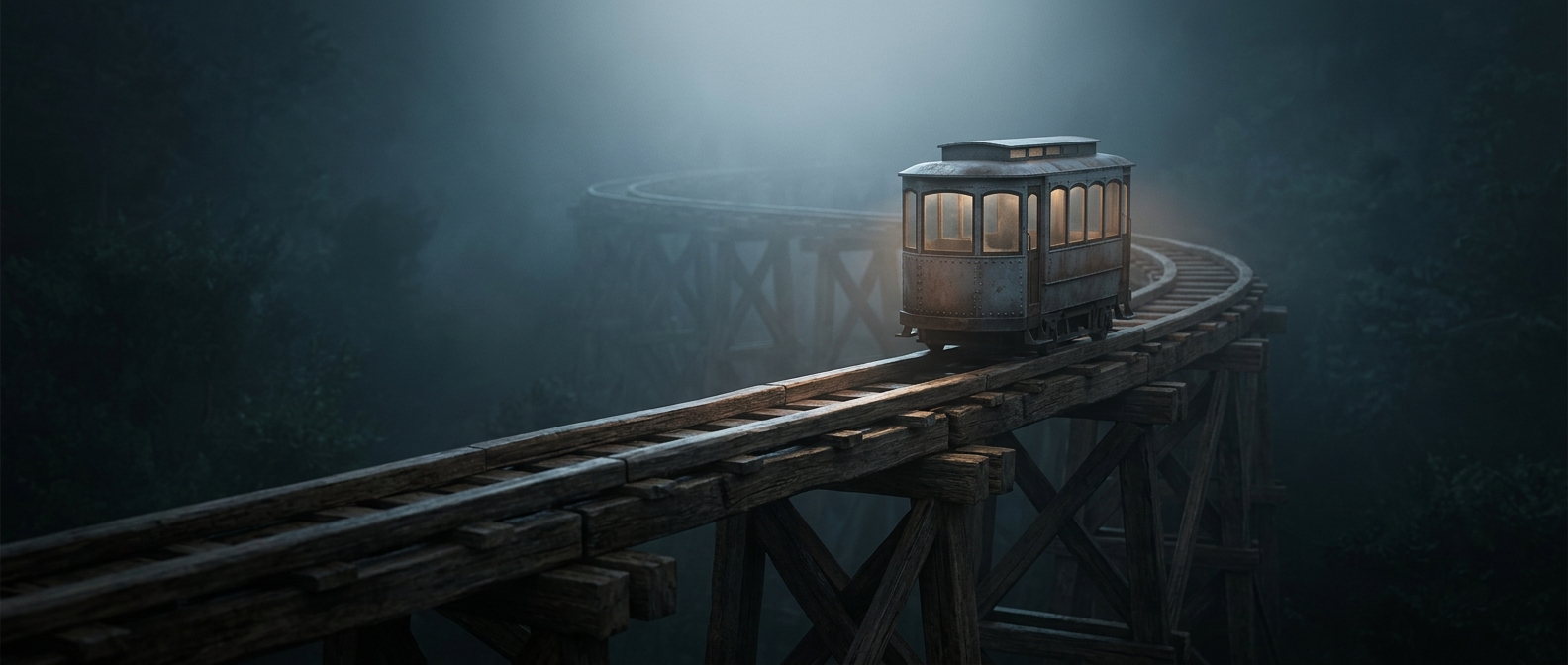
A conventional railway uses two rails to support a vehicle and keep its wheels aligned. A beam monorail concentrated those jobs in one track: the car’s wheels gripped or ran along opposite sides of the timber, so the beam both carried the load and resisted sideways movement. The vehicle did not balance on a narrow plank like a tightrope walker; its wheel arrangement held it in place.
That geometry made the guideway simpler in one sense. Builders needed a continuous beam rather than a pair of rails spaced precisely apart. But the beam still had to stay straight and firmly supported. Any bending or shifting could affect the wheels’ contact with it, and the timber’s surface took the repeated wear of passing cars.
The Tradeoff Behind the Timber Track
Wood was workable with ordinary building tools, but it was less durable than a metal running surface. Moisture, decay, and wear could change its condition over time, so a wooden guideway demanded attention as well as sound construction. The design exchanged the familiar two-rail layout for a single structural member whose shape and condition mattered directly to both support and guidance.
That is what makes the arrangement more than a railway built out of an unusual material: the beam itself had to do the work of track, alignment, and balance.