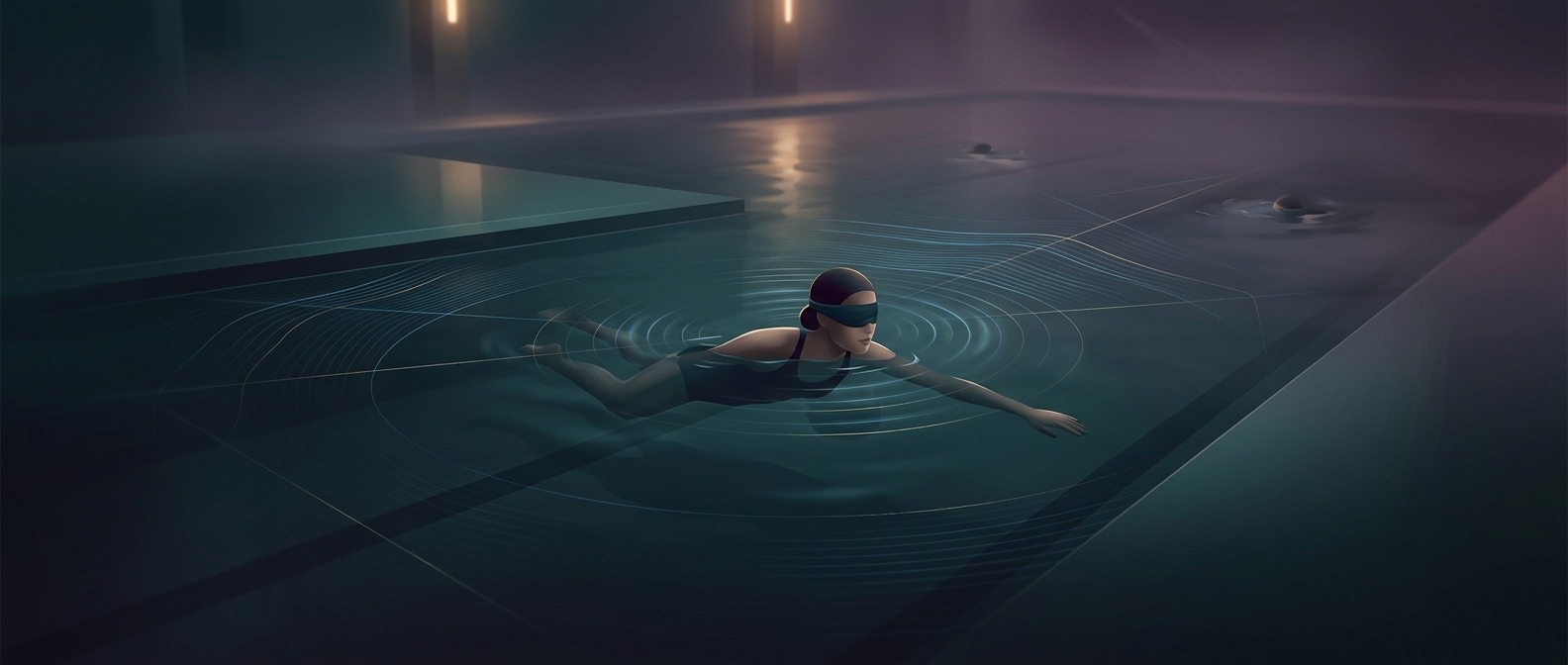
Replies Turn Sound Into a Rough Map
The blindfolded swimmer creates a signal by calling out; the other swimmers answer, giving the caller sounds to locate. The key clue is not a hidden sonar device but the way sound arrives: a nearby reply reaches the ears sooner and usually sounds more direct than one from farther away. Comparing replies can help the caller judge which side of the pool holds another swimmer and whether that person is closing in or moving away.
This is a rough estimate, not a precise measurement. Sound travels quickly through air, so the difference in arrival time across a pool can be too small for a person to time consciously. In practice, the brain combines several cues—direction, loudness, and the slight difference in when a sound reaches each ear. The caller’s own shout may also bounce off walls and the water’s surface, producing echoes that blur the picture.
Why the Game Keeps Moving
The swimmers’ replies make the sound source move from turn to turn. A caller can listen, choose a direction, and then call again to update the guess; each new exchange provides another snapshot. That makes the game a simple, social form of sound-based navigation, rather than the precise echo-ranging used by bats or electronic sonar.
The pool itself is part of the challenge. Hard walls reflect sound, while splashing and overlapping voices can mask the cleanest clues. Even so, a shout and a reply can narrow the search enough to guide the next move—which is why the game turns listening into action.