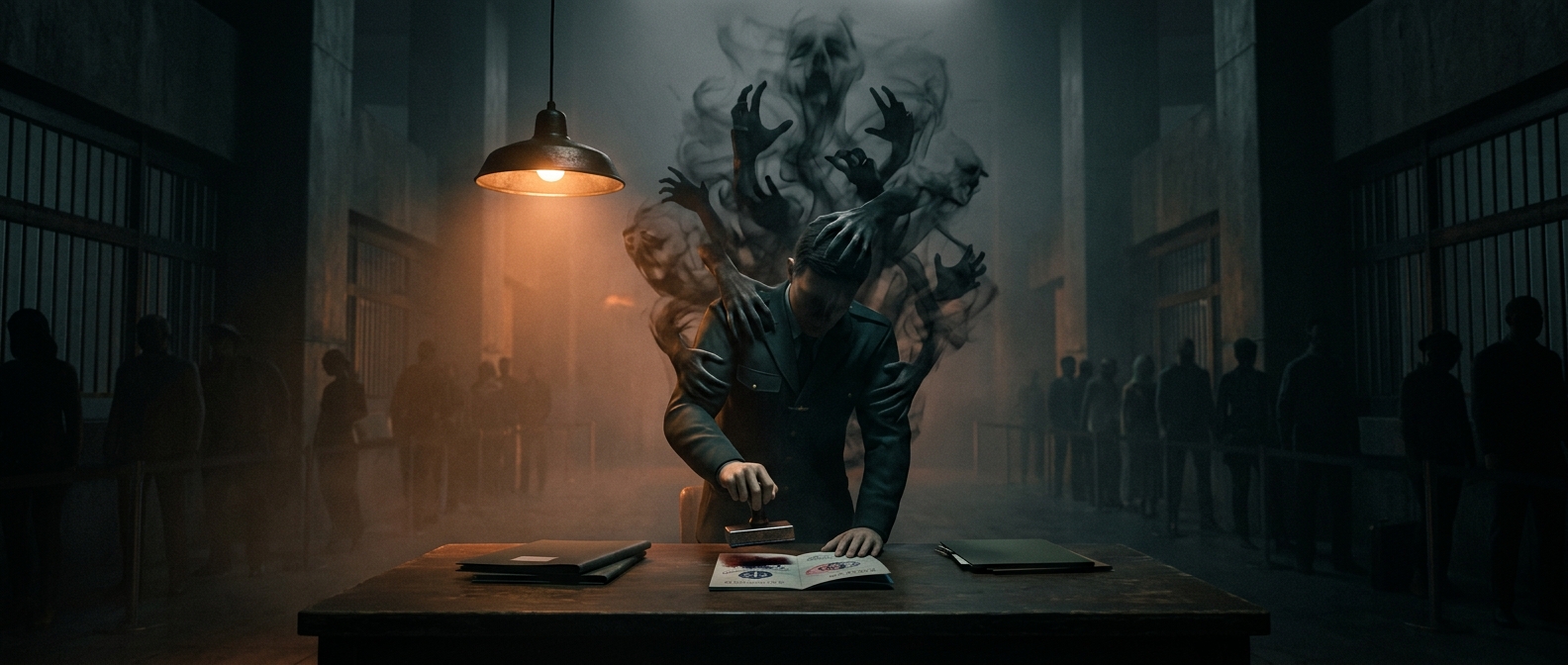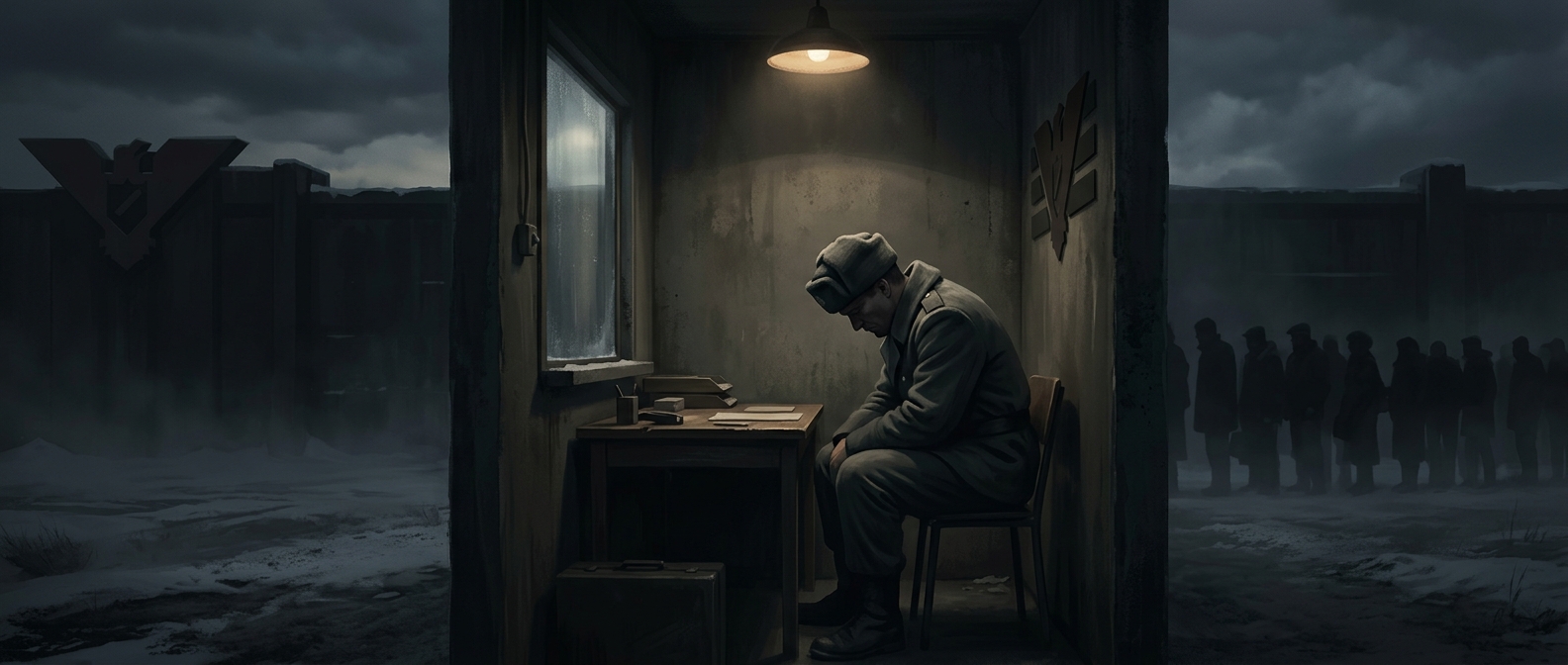
The border desk is the game’s pressure machine
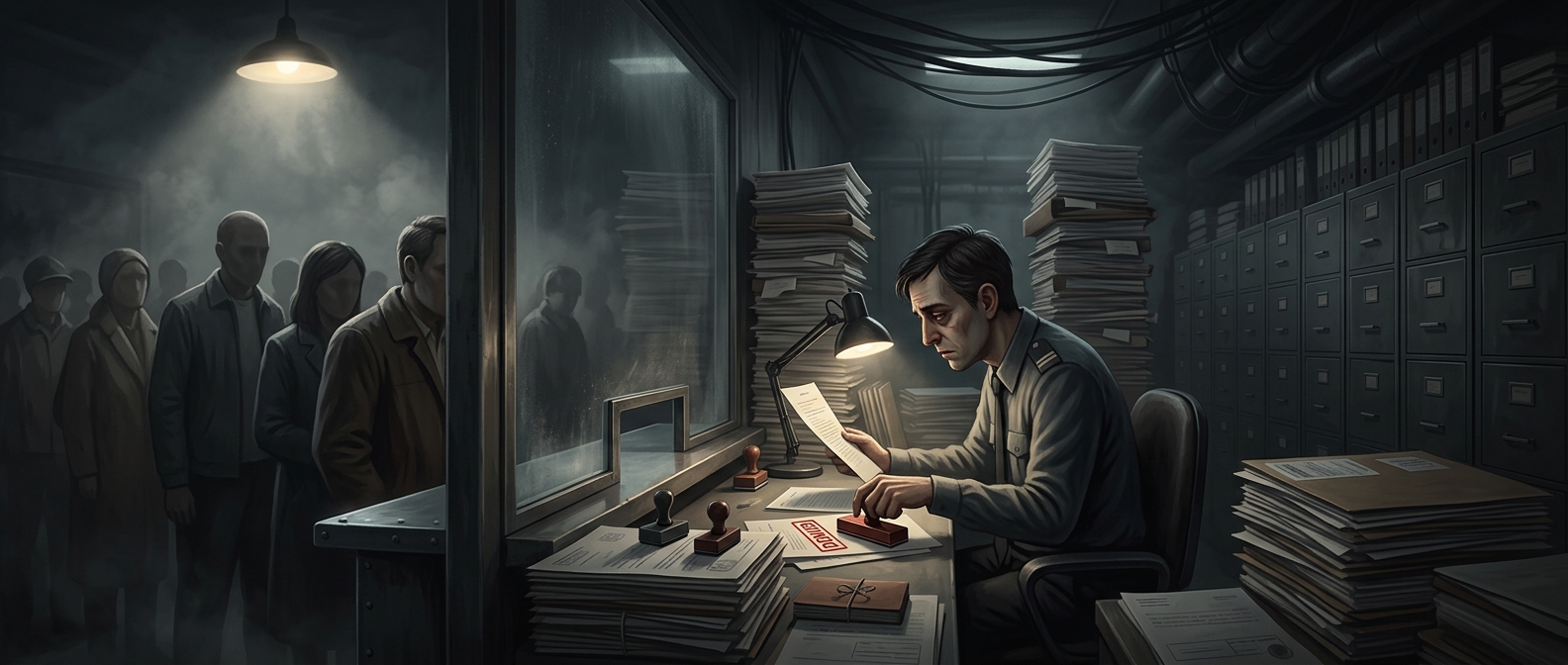
In Papers, Please, each traveler arrives with a small stack of documents, and the player must compare details that ought to match: names, dates, photographs, stamps, and required permits. The challenge is not simply spotting an obviously fake paper. Rules change, new documents become mandatory, and a tiny discrepancy can be easy to overlook while a line of people waits.
That turns routine clerical work into a test of attention under time pressure. The player is not solving one grand mystery; they are repeating a task whose rules keep becoming more demanding.
Every decision has a household cost
The game connects accuracy to survival through wages. Processing travelers correctly earns money; mistakes can bring penalties, while working faster leaves more time to handle the day’s queue. At the end of a shift, the inspector must pay for necessities for their family. A decision at the desk therefore has two consequences: what happens to the traveler and what the household can afford.
The tension comes from incompatible obligations. Enforcing the rules protects the player’s paycheck, but a person with a sympathetic story may need help. Bending the rules can feel humane in the moment, yet put the family’s food, heat, or medicine at risk. The game makes neither choice cost-free.
Paperwork becomes a moral choice
The desk’s narrow point of view is central to the design. The player sees people through documents, instructions, and brief encounters, then has to decide whether to treat a discrepancy as a reason to refuse entry or as something worth questioning. As the procedures grow more complicated, the same act of checking papers becomes both a puzzle and a judgment about whom to trust.
That is why a forged visa matters beyond the stamp itself: it tests whether the player can protect a vulnerable household while deciding what responsibility they owe to strangers.