How a truck finds its way onto the rails
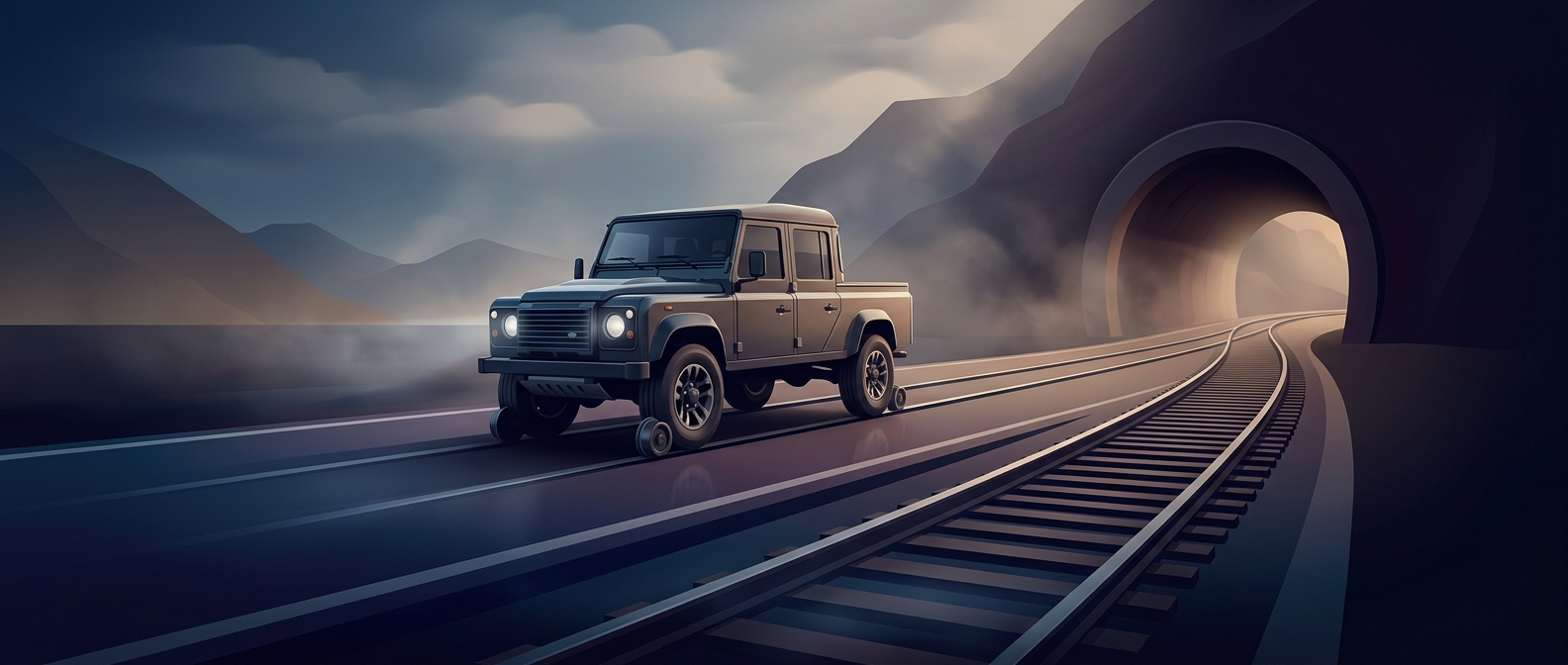
A hi-rail vehicle carries a second, retractable set of wheels: small steel wheels fitted with flanges, the raised inner edges that keep railway wheels from slipping sideways off the rails. At a suitable track access point, the driver positions the truck over the rails and lowers this gear. The flanges settle inside the rails, guiding the vehicle along the track; to return to the road, the driver raises the gear and continues on the truck’s regular tires.
The steel wheels do not turn an ordinary truck into a train. They give it a way to travel along the rails, while the vehicle’s engine, controls, and road wheels remain part of its original design. The details of how the road tires contribute to movement or braking can vary by vehicle and equipment.
The useful part is the changeover
Rail crews need to reach stretches of track with tools, inspection equipment, or maintenance supplies. A hi-rail truck can travel by road to a nearby access point, enter the track, and move along the railway without requiring a separate road vehicle and rail vehicle for every trip. Once its work is done, it can leave the track and use the road network again.
That flexibility has limits: while on rails, the truck is constrained to the track’s route rather than able to steer around an obstacle as it could on a street. The changeover is therefore more than lowering a set of wheels; it places the vehicle into a different, tightly guided path. One chassis serves two networks, but only by switching how it meets the ground.