How a birth date became a reading of fate
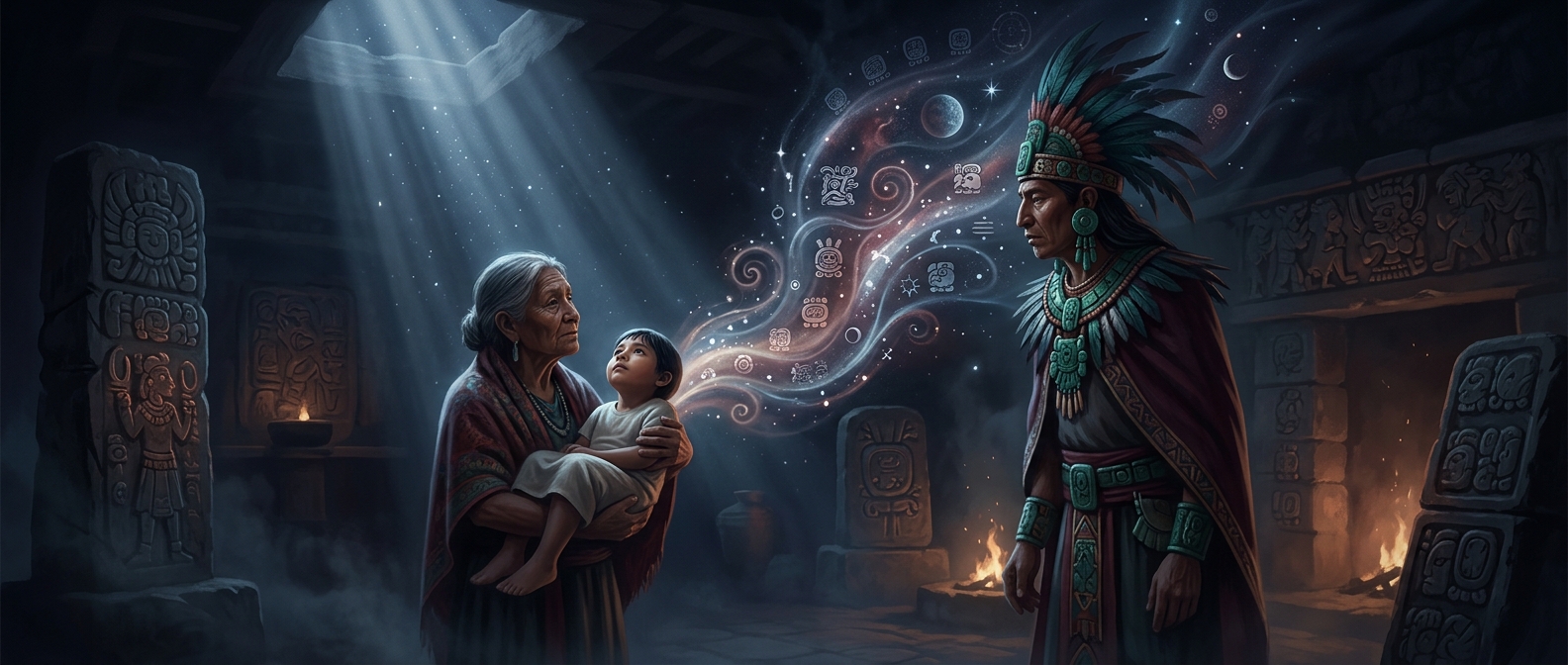
In the Maya Tzolk’in, a date was made by pairing one of 13 numbers with one of 20 day names. Because the two cycles do not line up evenly, the pairings repeat only after 260 days. A child’s birthday therefore carried a particular combination—not simply a number on a month-and-day calendar.
Ritual specialists interpreted that combination as a sign of the child’s character and prospects. The day-sign could help guide decisions such as what name to give a baby, and it might suggest which work or social role would suit them. The calendar was not just a way to count days; it offered a framework for understanding what kind of qualities a person brought into the world.
A calendar woven into community life
The 260-day cycle was part of a broader system of keeping time and conducting ritual. Its meanings depended on cultural tradition and interpretation, rather than on a single fixed forecast that every community would read identically. Mesoamerican peoples shared related calendar practices, but customs and beliefs varied across places and periods.
That made a birth reading more than a prediction about one individual. It connected a child to a recurring pattern recognized by the community—and could shape how adults understood the child’s strengths and future responsibilities. A date that might look like a simple entry in a modern register could, in this system, help set expectations for a life.