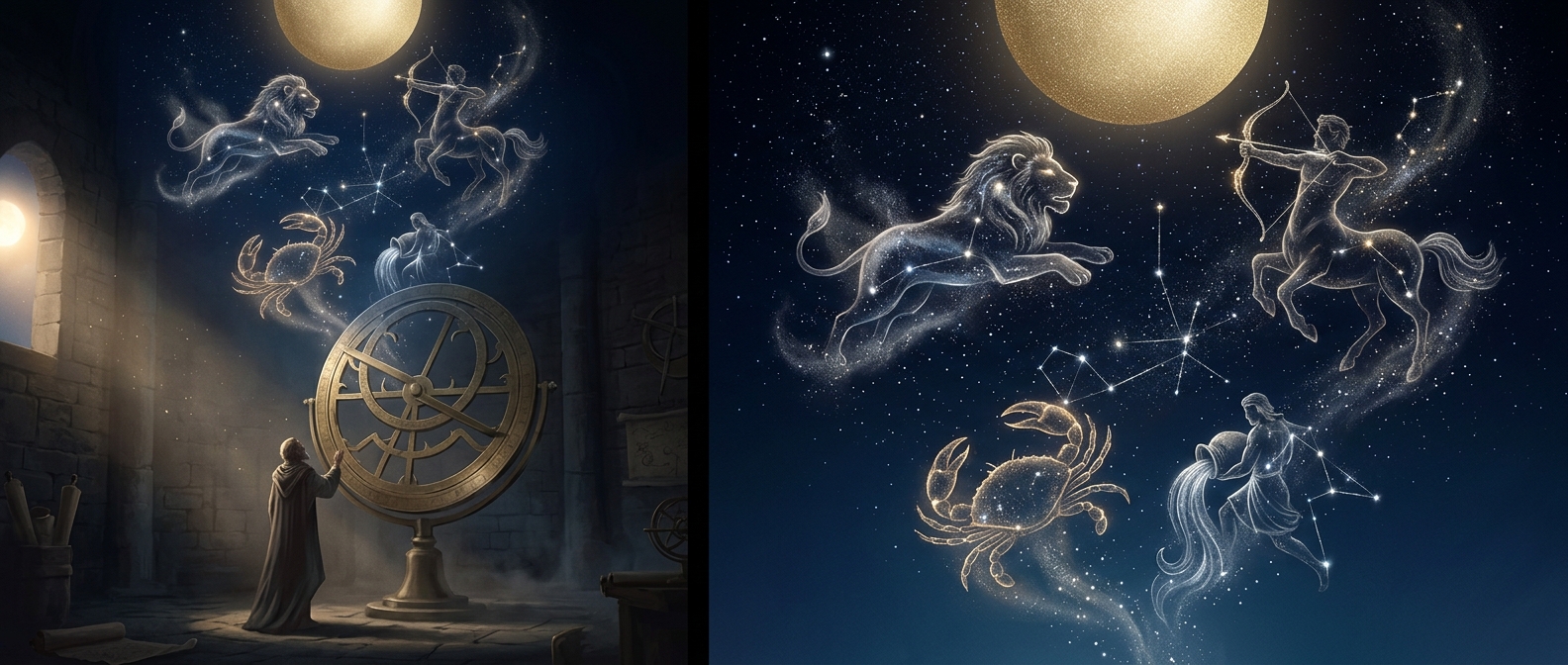
How a scatter of stars became a lion
The stars in a constellation are not usually close together in space. They only appear near one another from Earth, so connecting them is a way of organizing the night sky—not tracing an actual animal overhead. In Leo, a curved arrangement of stars suggests a head and mane, while other stars can be read as the body. The outline is a human interpretation, not a picture everyone would necessarily see.
That interpretation made the sky easier to remember. A name such as Leo turned a cluster of points into a familiar mental image, helping people recognize and talk about a region of stars. The same imaginative habit produced constellations associated with heroes, creatures, and objects from stories and traditions.
Names carried stories across generations
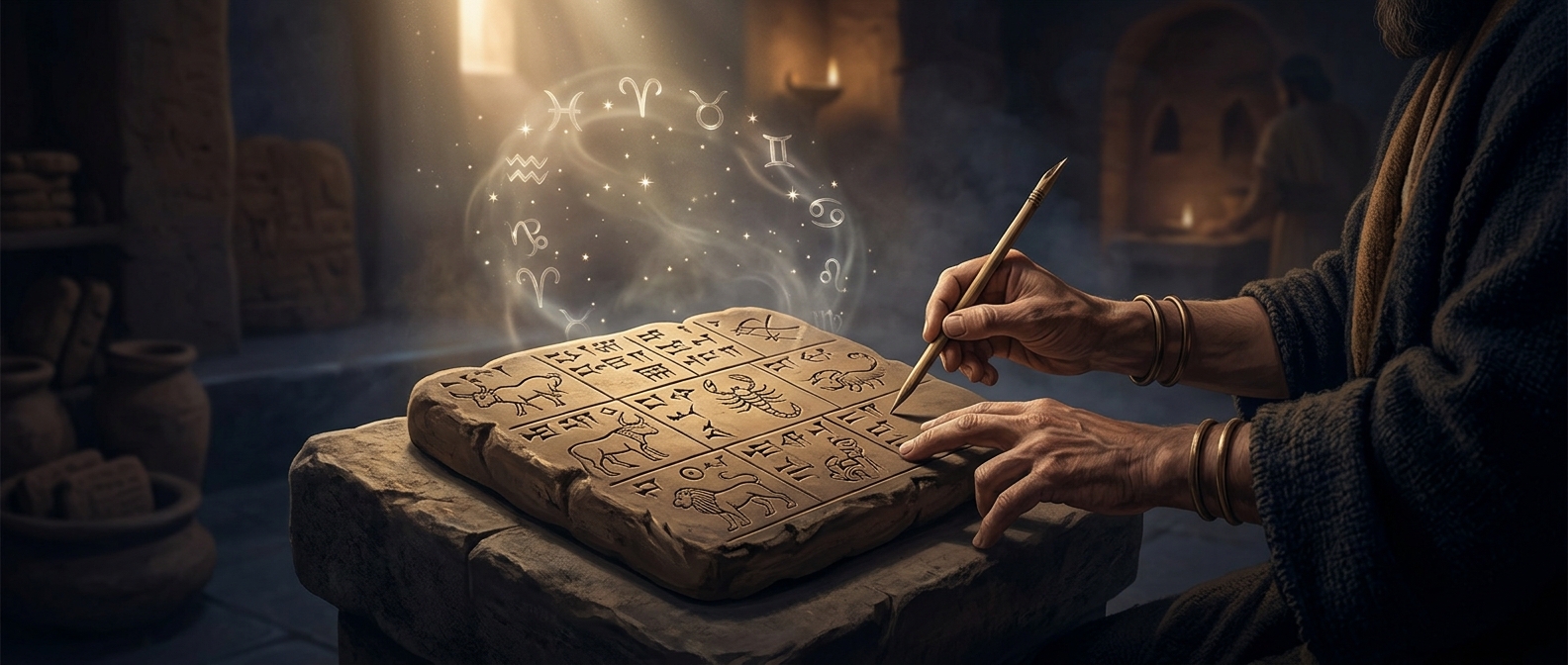
Constellation names were not invented all at once by a single group. Sky traditions developed over long periods, and Greek astronomers inherited and adapted some patterns and names from earlier cultures, including Babylonia. As those traditions traveled, the figures attached to the stars linked observation to shared stories and cultural memory.
Leo also became one of the twelve constellations along the traditional zodiac—the belt of sky through which the Sun appears to move over the course of a year. That gave its name a lasting place in calendars and astrology. The cultural meaning of Leo is real as a tradition; it does not mean the stars form a lion or establish an influence on people’s lives.
The useful trick was turning an immense, shifting sky into a set of memorable landmarks. Once people agreed on the names, they could pass those landmarks—and the stories attached to them—on to others.