Why a Smooth-Looking Sky Can Still Jolt a Plane
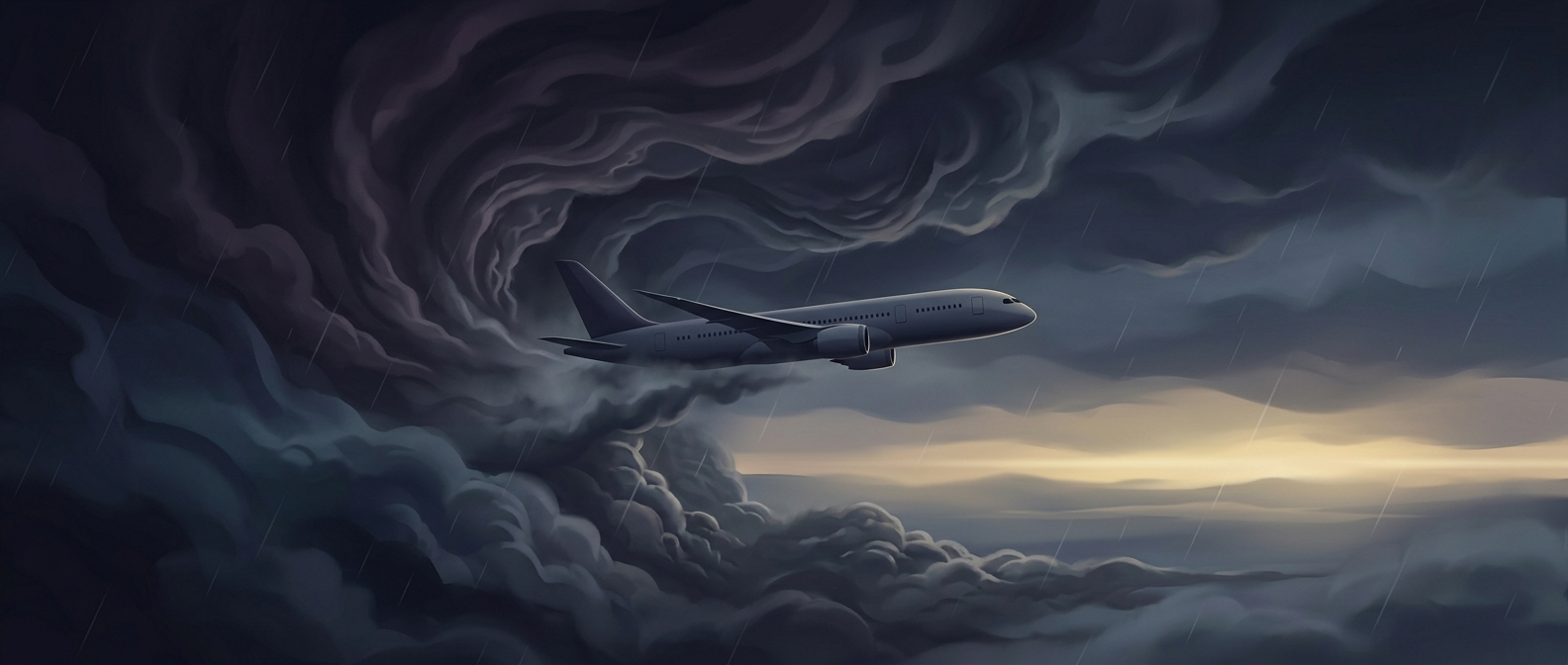
Turbulence does not require clouds, storms, or visible waves in the air. It can form where air currents moving at different speeds or directions meet. The boundary between them may be invisible from the cabin—and sometimes from the cockpit—so a plane can leave apparently smooth air and suddenly begin to bump.
The Air Is Moving in Layers
The atmosphere is not one steady stream. Winds can flow in layers, with faster and slower air alongside or above one another. Near a jet stream—a narrow band of strong winds high in the atmosphere—changes in wind speed or direction can create turbulent patches. As an aircraft crosses one, the uneven airflow changes the forces acting on its wings, producing the brief lifts, drops, or jolts passengers feel.
Pilots and forecasters can use reports and weather information to anticipate some turbulence, but small or shifting patches of clear-air turbulence can be difficult to pinpoint. That is why a cloudless view through the window is not a reliable sign that the ride will stay smooth.
Why a Coffee Cup Makes It Feel Worse
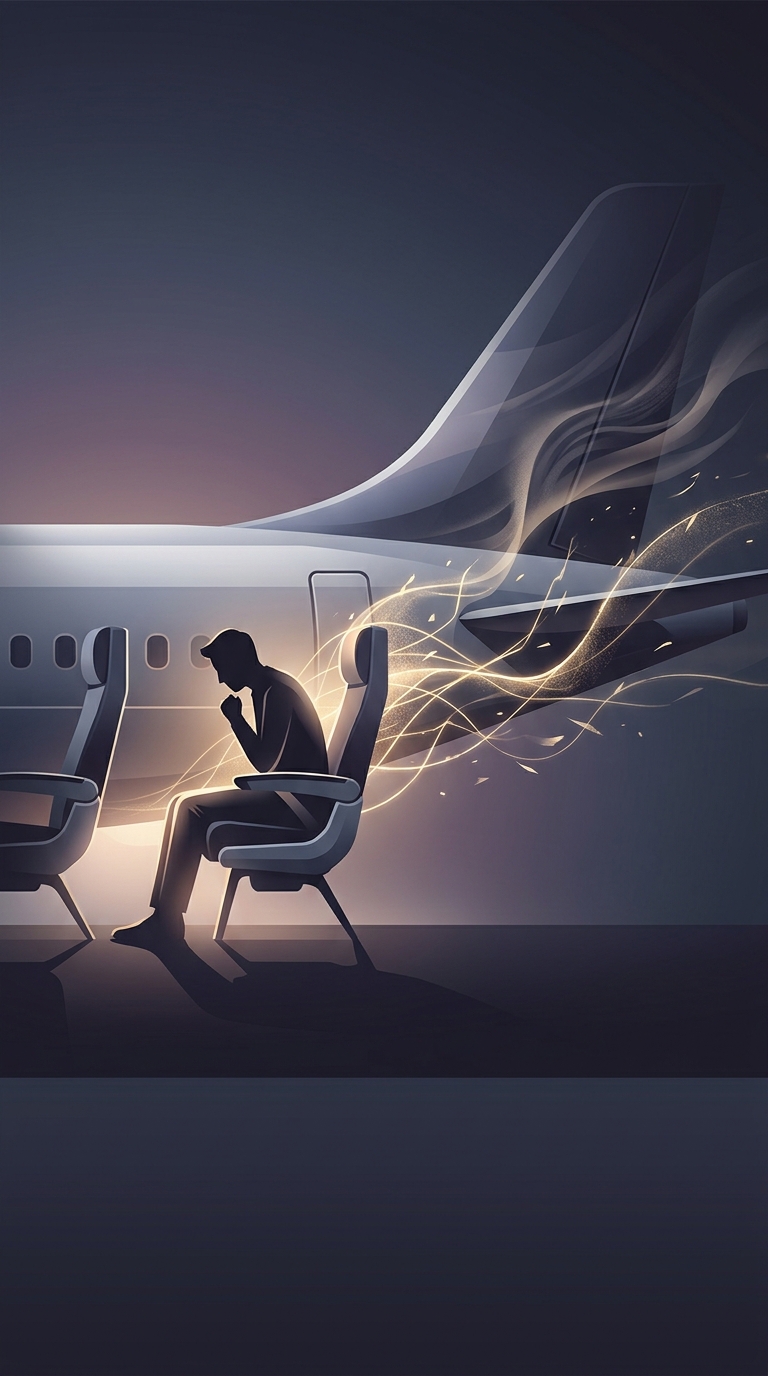
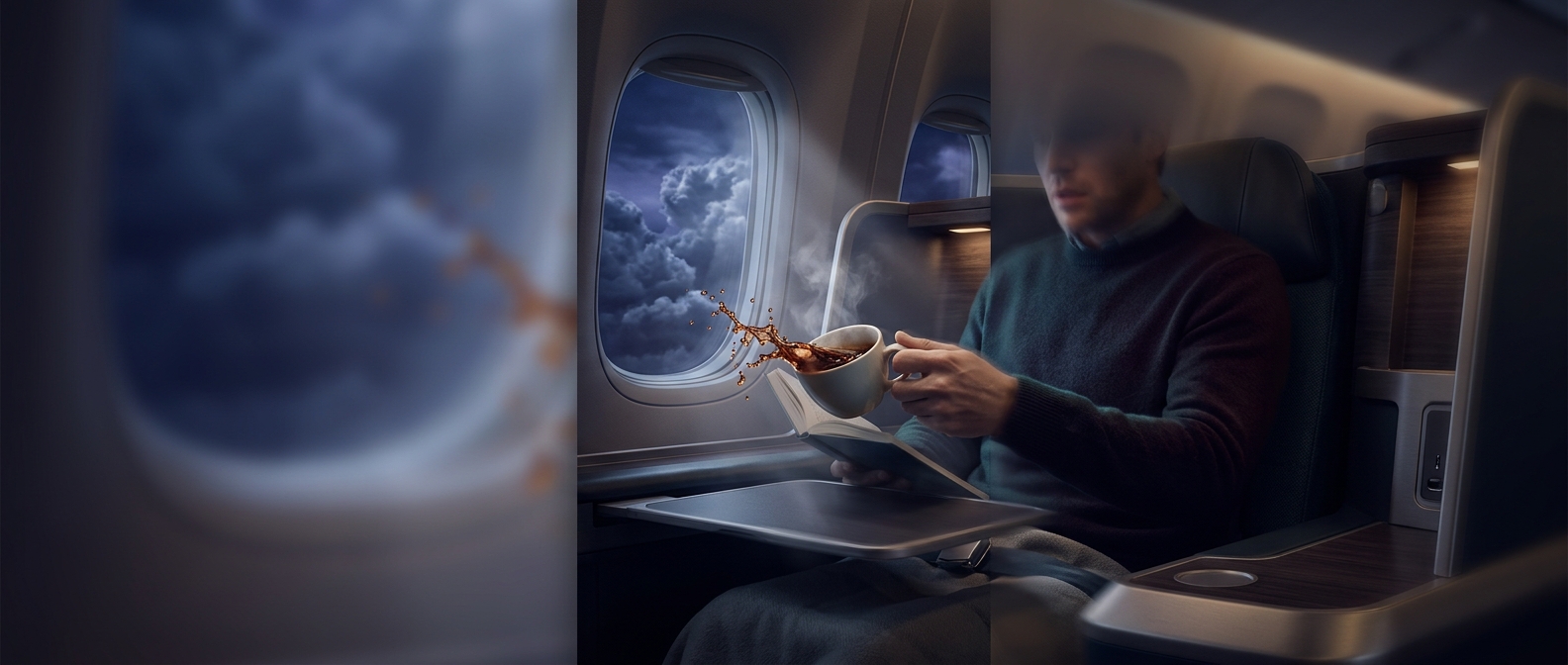
A sudden vertical bump can make liquid surge over a cup’s rim before a passenger has time to react. The spill is a small, visible sign of the same quick change in motion affecting everything in the cabin. Keeping a seat belt fastened when seated helps prevent a jolt from catching someone off guard—even when the sky looks perfectly calm.