Why water doesn’t wash concrete away
Fresh concrete is a mixture of cement, water, and aggregates such as sand and gravel. The cement is the reactive ingredient: when water reaches its particles, it triggers hydration, a set of chemical reactions that form solid compounds and bind the mixture together. The result is not dried mud. It is a new solid structure created with water as part of the process.
From workable mix to solid mass
At first, fresh concrete is fluid enough to place in a form or around reinforcing steel. As hydration products grow between the cement particles, they lock the sand and gravel into a rigid mass. The reaction also releases heat, especially noticeable in large pours, where the inside can warm as the concrete gains strength.
Hardening takes time. Concrete can become firm well before it has reached its eventual strength, so builders protect and support it while hydration continues. Keeping it moist can help: if the surface dries too soon, hydration near the surface may slow, leaving it weaker or more prone to cracking.
Underwater placement takes care
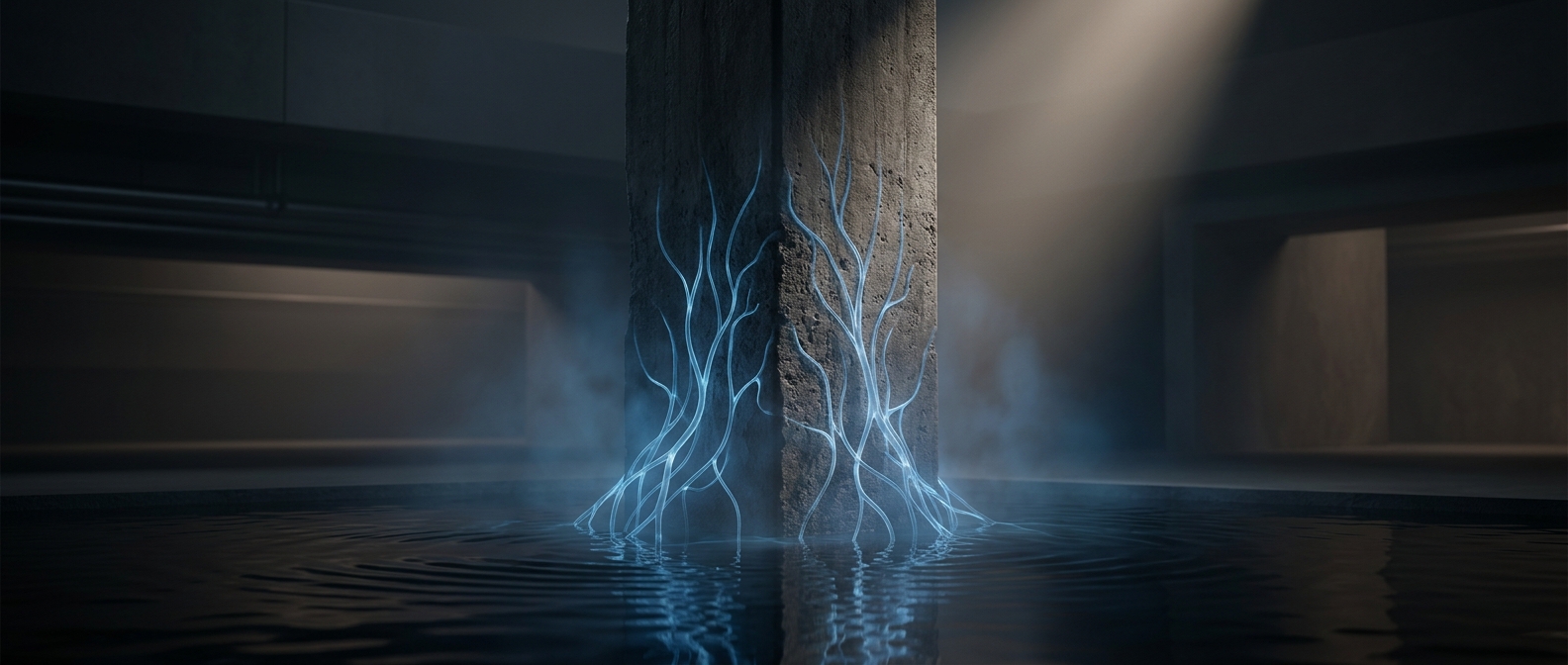
Concrete can therefore set below the waterline, but that does not mean any fresh mix can simply be tipped into moving water. Currents can carry away cement paste before it binds the aggregate, weakening the placed material. For underwater work, crews use methods that deliver the mix to its position with limited exposure to the surrounding water, such as a pipe that feeds concrete from the bottom upward.
The useful distinction is simple: water is a reactant in concrete’s hardening, while uncontrolled water movement can still disrupt the fresh mix. That is why a submerged foundation can become solid without ever being allowed to dry.