How a Zinc Bath Turns Into a Protective Coating
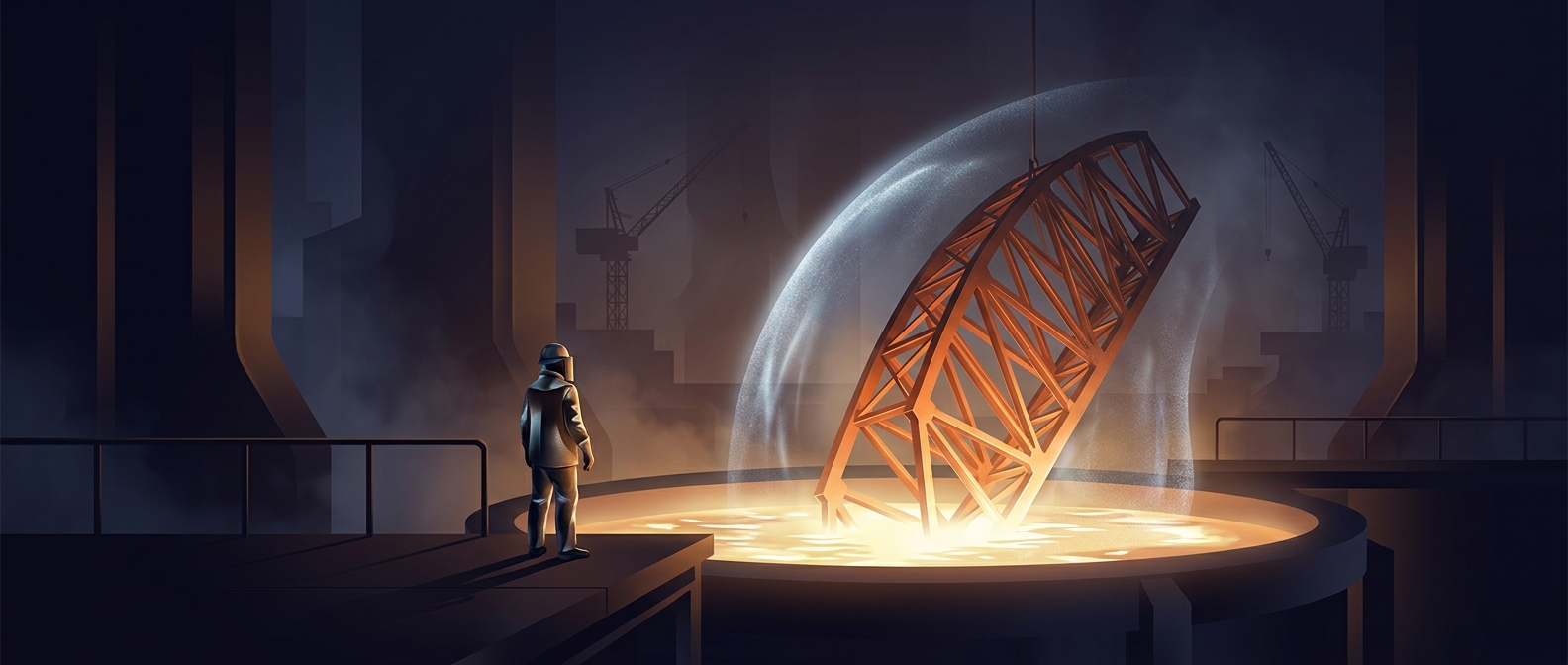
In hot-dip galvanizing, a cleaned steel part is immersed in molten zinc. At the hot metal surface, zinc and iron react to form a series of tightly bonded iron-zinc alloy layers. A final outer layer is mostly zinc. The result is not simply paint sitting on steel: the coating is metallurgically joined to it, so it resists peeling and can withstand handling and weathering.
Why Zinc Protects Even a Scratched Spot
The coating works in two ways. First, it forms a physical barrier that keeps water and oxygen away from the steel. But barriers can be scratched. Zinc adds a second defense: when exposed to moisture, it corrodes more readily than iron, so it gives up electrons in the corrosion process before the nearby steel does. This is called sacrificial protection.
That protection can extend across a small scratch because zinc near the exposed steel can still corrode in its place. It is not unlimited, though: a broad damaged area or a coating consumed over time leaves less zinc available to defend the steel.
Why the Process Suits Real-World Steel
Because the coating forms over the immersed surface, it can protect shapes that are awkward to cover evenly with a brush. The method is used for steel parts exposed to outdoor conditions, where maintenance access may be difficult. Its practical advantage is the combination of a durable barrier and a backup defense: even when the surface is nicked, the zinc can keep a small flaw from immediately becoming a rusting steel spot.