The fibers stop a bullet by resisting stretch
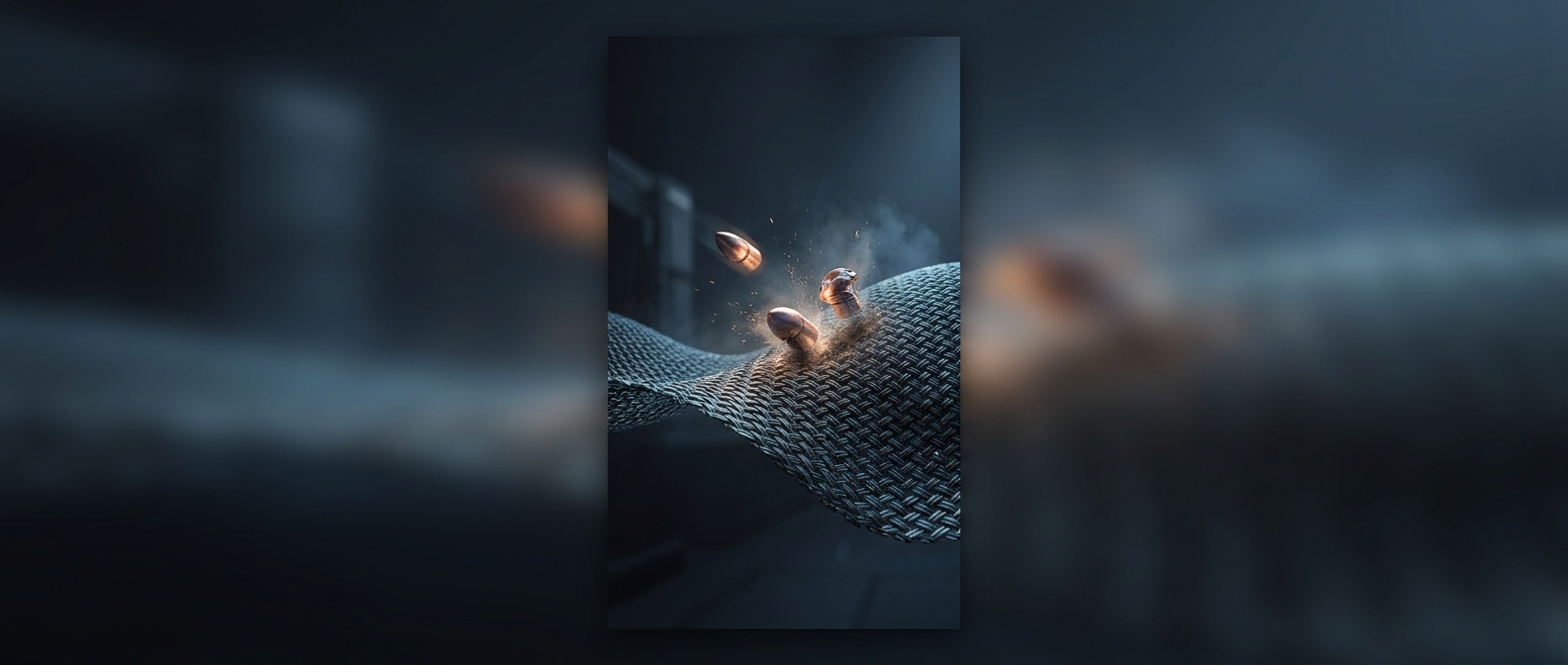
Kevlar is a strong, lightweight plastic whose long molecular chains make its fibers difficult to pull apart. In a protective panel, many of these fibers are woven into layers. When a bullet strikes, it pushes the first threads outward and tightens them; those threads pull on neighboring ones, spreading the load through the fabric instead of letting the projectile pass through a single point.
The fabric works mainly in tension—the force that stretches a material—rather than by forming a hard wall. The fibers resist breaking while the panel flexes and deforms around the impact. That movement, along with friction between threads and layers, helps absorb and disperse the bullet’s energy. A bullet can be caught even as the fabric is pushed inward substantially.
Why layers and fit matter
A single sheet would offer limited protection. Multiple layers give the impact more fibers to engage, while the weave holds those fibers in place and helps transfer force from one to another. The panel must also cover the right area and stay positioned over the body; a gap or shifted panel leaves an unprotected path.
Catching the projectile does not mean the wearer feels nothing. The vest can still press sharply into the body, causing injury from the blunt impact, and protection depends on the panel and the threat it is designed to resist. Kevlar stops a bullet by making a small, fast impact recruit a much larger network of fibers—not by making the vest an immovable shield.