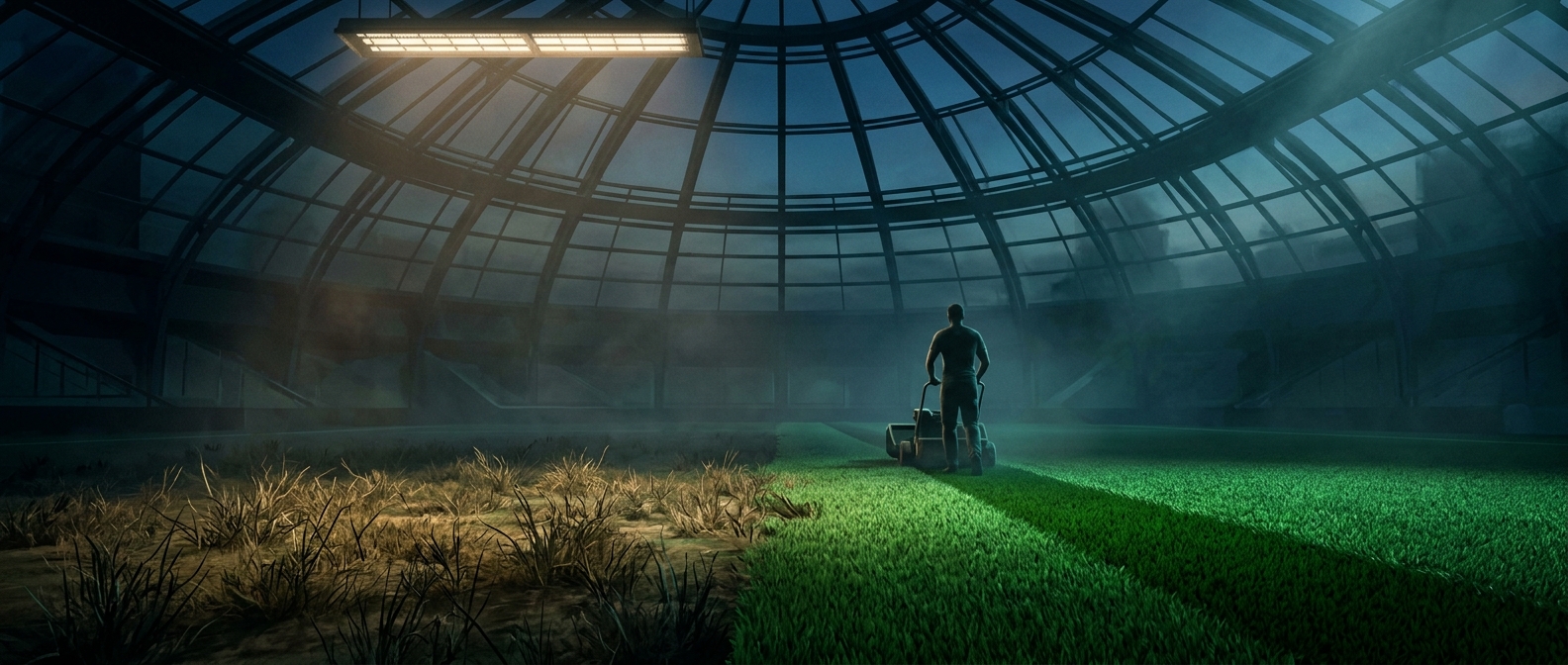
When the roof shut out the sun, the grass failed
The Astrodome’s roof solved one problem—playing in a covered stadium—but created another. Living grass depends on sunlight to keep growing. With too little light reaching the field, the grass died, leaving organizers with bare dirt where a playing surface was supposed to be.
Painting the dirt green could make it look less stark, but paint could not turn the ground into grass. Players still needed a surface they could run and play on, and the field could no longer rely on plants to grow back.
A carpet built for the field
The replacement was synthetic turf: a manufactured carpet designed to provide a green, grasslike playing surface indoors. Unlike living grass, it needed no sunlight to stay green. That made it a practical answer to a problem created by the stadium itself: the roof that sheltered the field also deprived natural grass of what it needed to survive.
The switch was more than a cosmetic makeover. It changed the field from something that had to be cultivated into a surface that could be installed. The Astrodome’s dead grass had exposed the limits of bringing an outdoor playing field inside—and helped turn artificial turf from a workaround into a new kind of sports surface.