How a Traffic Cone Folds Without Breaking
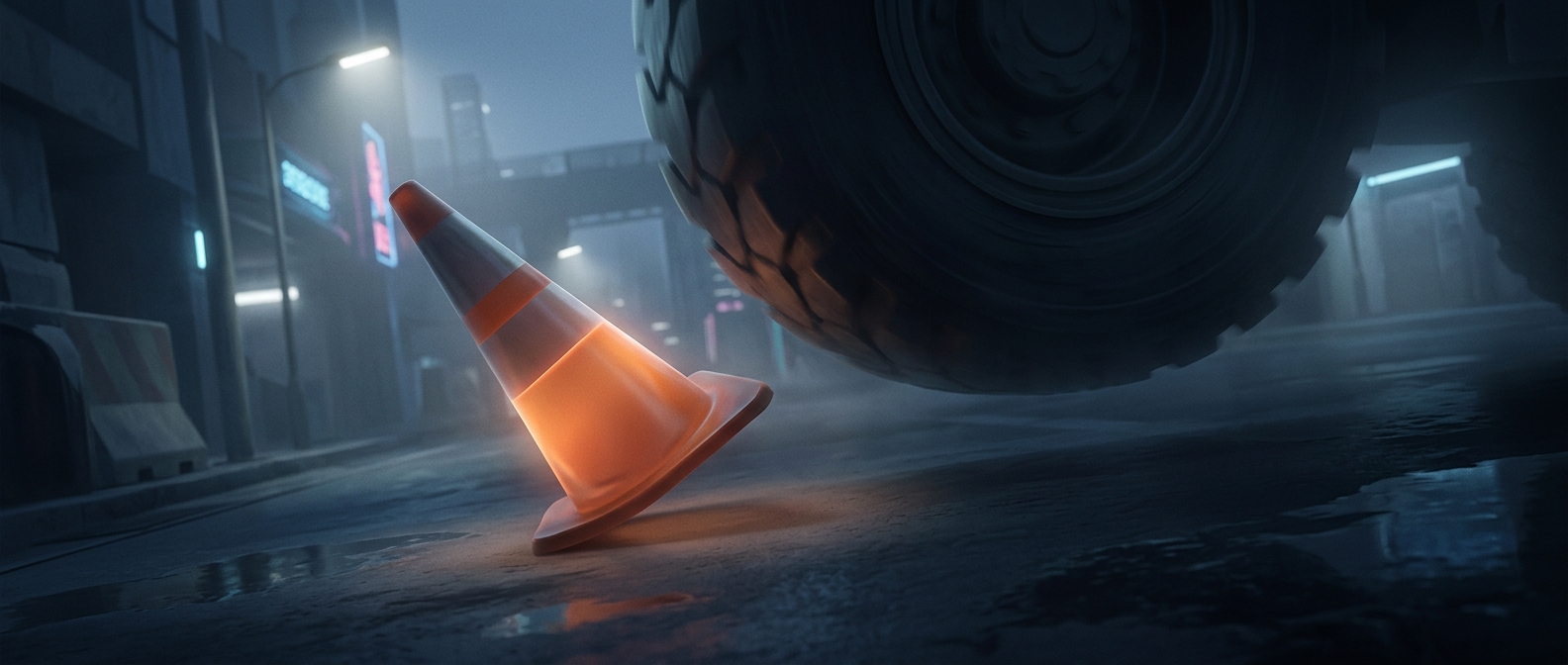
A tire presses down with far more force than a thin cone can resist in its upright shape. Rather than trying to hold that shape, a flexible PVC cone gives way: its tapered body bends and buckles, flattening under the tire. Because the plastic can flex instead of behaving like a brittle shell, the body is less likely to crack on impact.
PVC means polyvinyl chloride, a plastic whose stiffness can be adjusted during manufacture. In a flexible cone, the material can bend substantially and then recover much of its shape when the load is removed. That rebound is a material property; it is not the base pushing the cone back up.
The Base Solves a Different Problem
The broad, heavy base helps resist wind and the small nudges that might tip a cone during ordinary use. It also gives the cone a stable footprint when it is standing. When a tire runs over the cone, however, the base may be pressed or dragged along with the body. The cone’s ability to recover depends largely on whether its plastic can flex without being torn, cut, or permanently deformed.
That distinction matters: “springing back” does not mean indestructible. Repeated crushing, sharp edges, or damage to the plastic can leave a cone misshapen or split. The practical design compromise is a cone stiff enough to stand visibly in place, but compliant enough to fold when struck—so a brief impact need not turn a warning marker into broken debris.