Why a warmer wire hangs lower
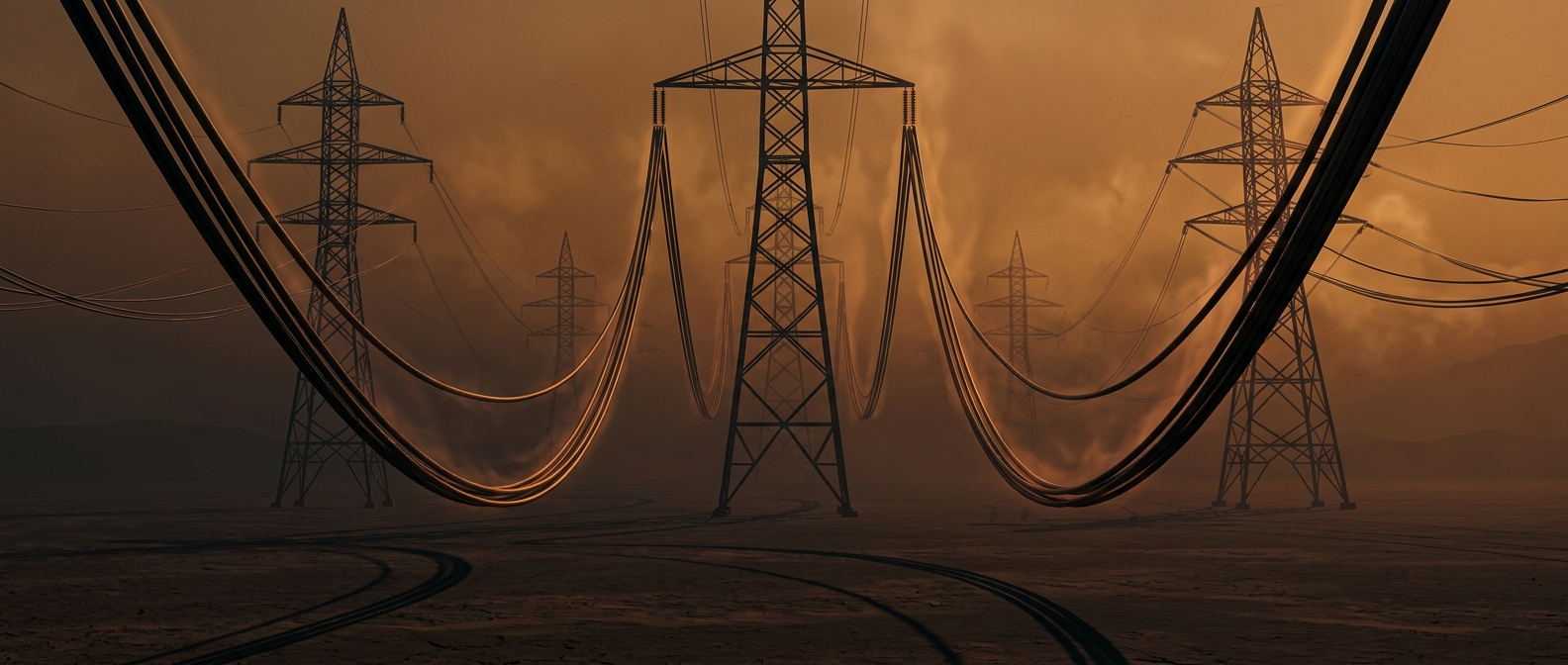
A power line is not stretched perfectly straight between poles. It hangs in a curve because of gravity, with its ends held by the supporting structures. When the metal warms, it expands lengthwise. Because the poles do not move with it, the extra length settles into a deeper curve rather than pulling the poles apart.
Electricity adds heat as it flows through a wire: the wire resists the current slightly, converting some electrical energy into heat. Heavy demand can therefore warm a line even when the surrounding air is cool. On a hot day, sunlight and warm air add to the wire’s temperature, leaving less room for the line to heat up before it approaches its safe clearance limits.
The clearance is part of the design
Engineers account for expected sag when setting the height and spacing of supports. But the lowest point can still vary with temperature, electrical load, wind, and the line’s condition. Utilities have to preserve enough space between conductors and the ground, buildings, or vegetation; a branch that gets too close can cause an electrical fault or ignite.
One way to carry more power without letting a line sag too far is to use conductors designed to tolerate higher temperatures, or to change the supports and route. Those choices involve tradeoffs in cost, construction, and how much extra capacity the line can provide. The visible dip is therefore more than a cosmetic change: it reflects a changing balance between heat, wire length, and the clearance that keeps electricity on its intended path.