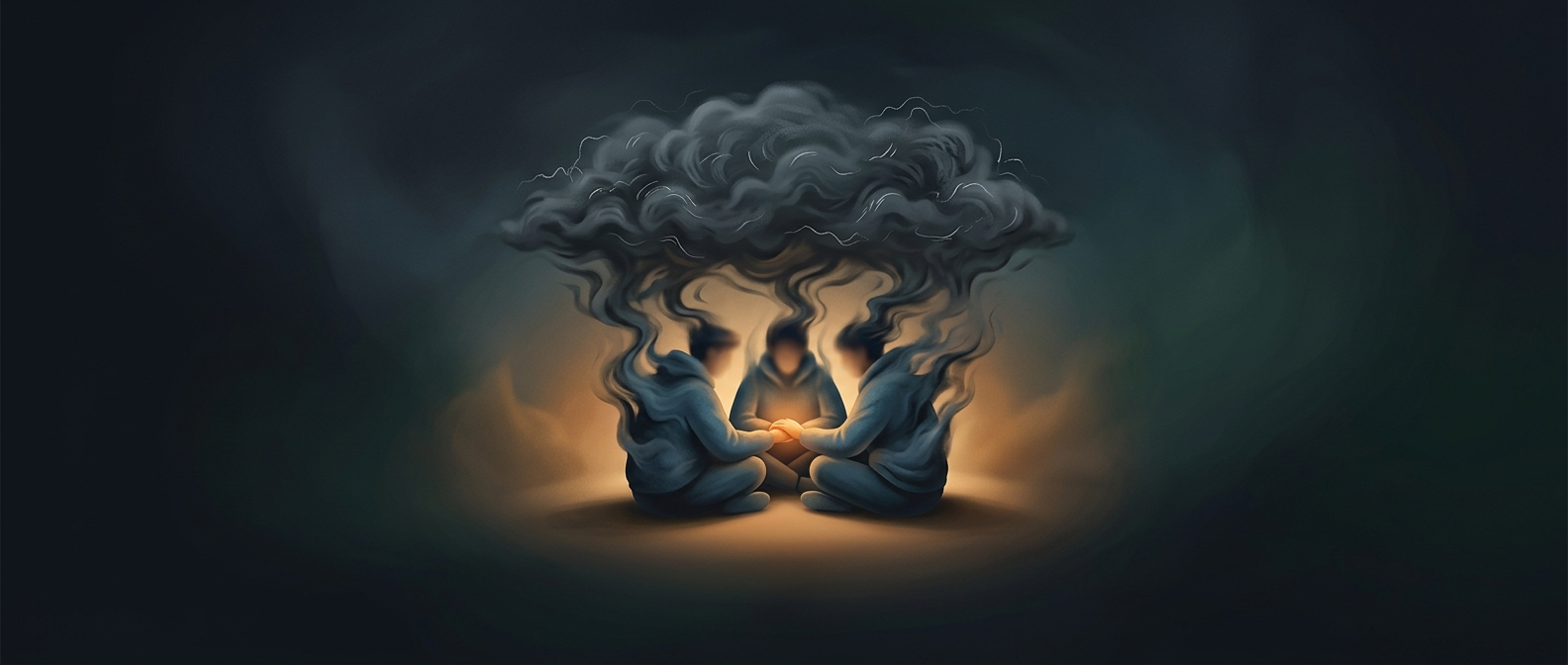
How a crowd can make fear feel safer
Anxiety is difficult partly because it leaves people uncertain: Is this danger real, and am I overreacting? When several people react at once, their alarm becomes social evidence. A worried expression, a warning, or a sudden change in behavior can seem to confirm that others have noticed a threat too.
That confirmation can bring relief even as it raises concern. The person no longer has to interpret the situation alone, and the group provides company while everyone decides what to do. Feeling less isolated is not the same as feeling less afraid; both can happen at once.
How reassurance can turn into reinforcement
People often use others’ reactions to judge ambiguous situations. This is especially powerful when the facts are unclear or when the other people seem informed. But shared anxiety is not independent confirmation: everyone may be responding to the same uncertain cue, or taking cues from one another.
As people repeat warnings, trade alarming interpretations, or watch for signs of danger, attention stays fixed on the threat. Each person’s fear can then look like further proof to the others. The group offers emotional company, but it can also keep the alarm active and make it harder to reconsider the first interpretation.
Company helps; perspective matters
The comfort comes from connection, not necessarily from the group having judged the danger correctly. A useful pause is to separate what someone directly observed from what the group inferred, then look for information that does not depend on everyone echoing the same reaction. That distinction can preserve the benefit of facing uncertainty together without letting shared fear become its own evidence.