How Jack Cole made movement look drawn
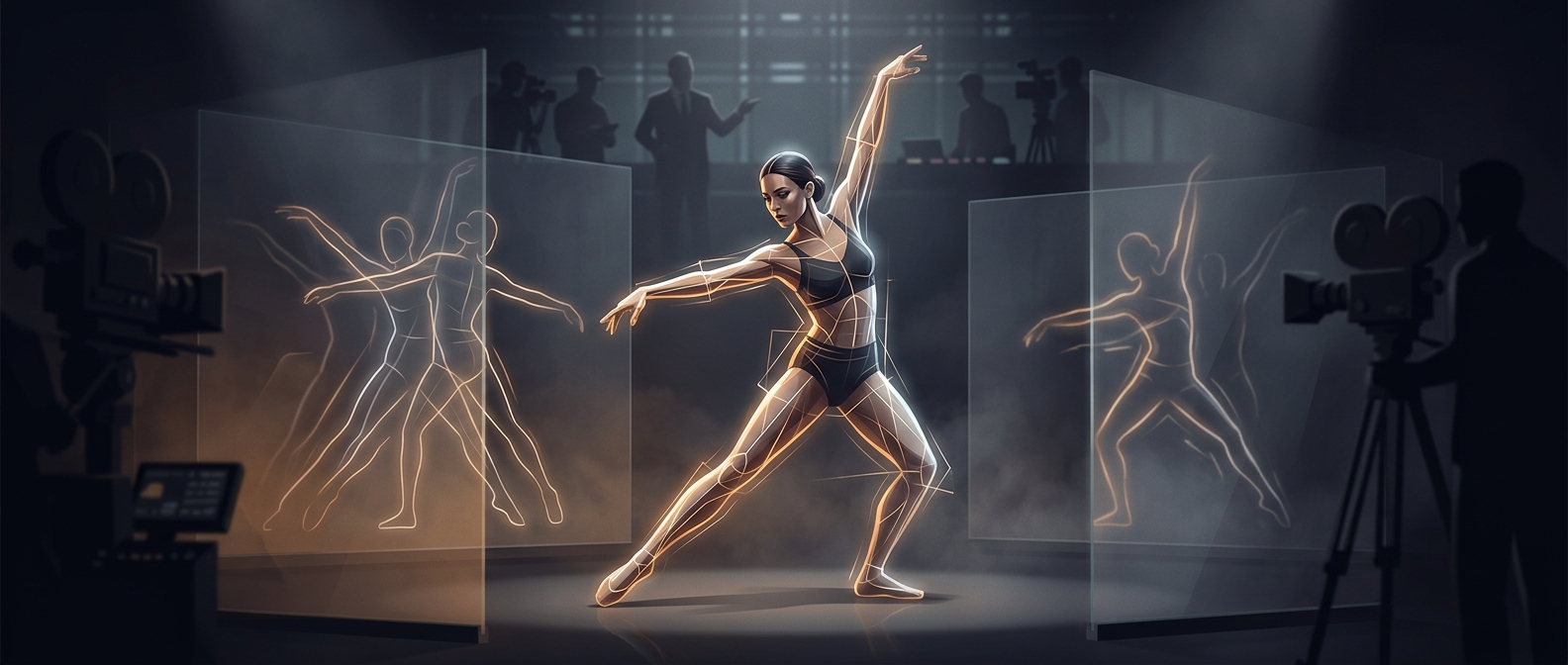
Jack Cole’s dancers seemed animated because their bodies did not always move as one continuous unit. Cole trained performers to isolate a shoulder, rib cage, head, or hip while keeping the rest of the body comparatively still. An isolation is this controlled movement of one body area apart from the others.
The effect depended on precision. A shoulder might snap upward, stop, and release just as the torso shifted in a different direction. These sharp starts and stops gave each pose a clear outline, like a sequence of illustrated frames. The dancers were not imitating digital animation; they were using live bodies to create a similarly segmented, highly legible style.
Why the drills mattered
That look was difficult to achieve casually. If a dancer’s torso drifted when only the shoulder was meant to move, the accent became blurred. Repetition taught performers to control separate muscle groups and to hit changes in timing together. In a group, that discipline made a row of dancers seem to flick, lock, or turn as a single designed image.
The method also changed what choreography could emphasize. Instead of relying only on large traveling steps, Cole could build a phrase from small, sudden shifts of shape—movements that remained striking even when the dancers stayed nearly in place. His stylized isolations helped make the human body read like a series of vivid poses, animated by exact timing.