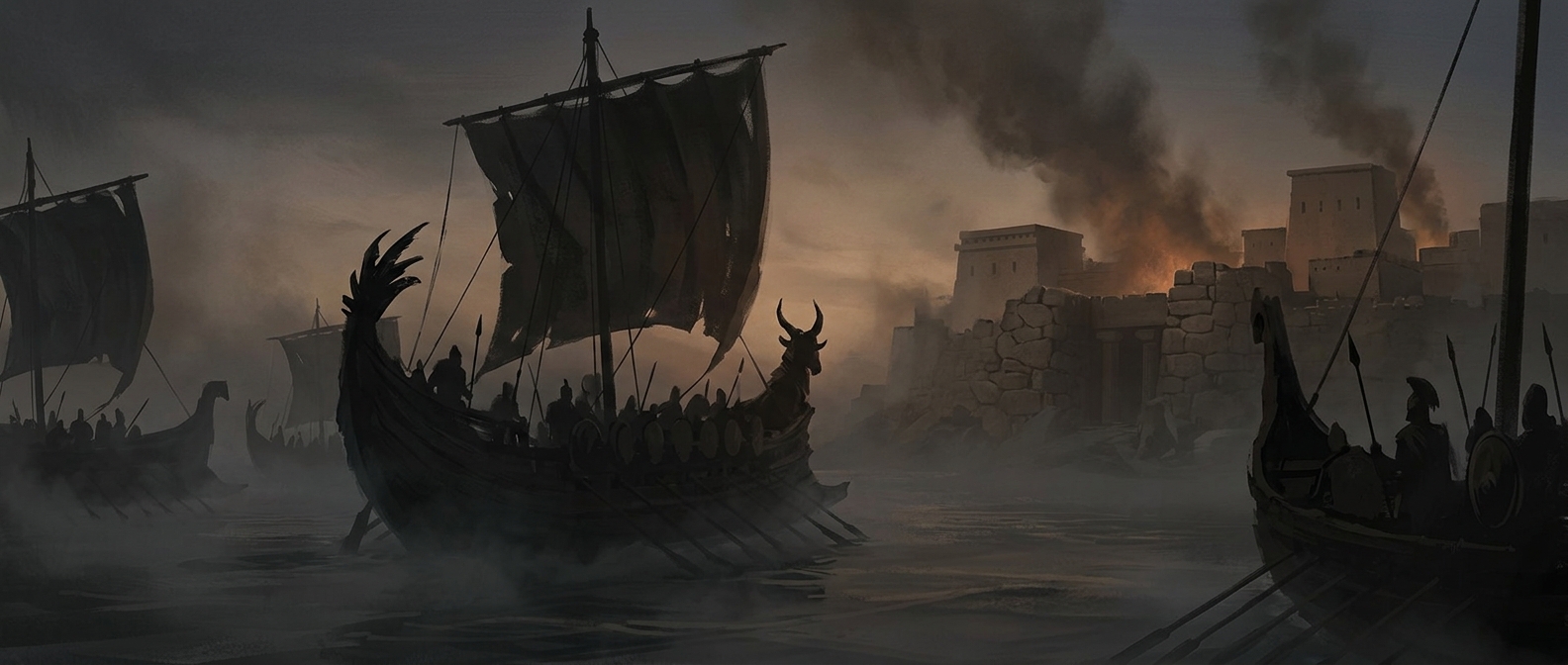
A name preserved by Egypt’s inscriptions
“Sea Peoples” is a modern umbrella name for groups that Egyptian records describe as arriving by land and sea near the end of the Bronze Age. It does not identify one confirmed nation or empire. The records name several groups, but they do not give historians enough information to trace all of them to a single homeland or explain exactly why they were moving.
Egyptian rulers presented these arrivals as enemies defeated in battle. That account preserves valuable details about the attacks, but it is also a royal story of danger overcome: it tells us how Egypt wanted its victory remembered, not the attackers’ own version of events.
Why raids could shake more than a coastline
Around 1200 BCE, the eastern Mediterranean was linked by trade and diplomacy. Powerful states and palace centers relied on routes that carried goods, supplies, and messages. Raids or fighting along those routes could make an already vulnerable system harder to sustain, while disruption elsewhere could push people to move and intensify pressure on neighboring lands.
That is why the Sea Peoples remain part of the story of the region’s upheaval, but not a settled explanation for it. Archaeological evidence shows that many communities and political centers were under severe strain; it does not prove that one invading force caused them all to fall. Their attacks may have contributed to the crisis, while other pressures and conflicts also mattered.
The lasting puzzle is that Egypt’s records preserve the name of a threat but not a clear identity. The same evidence that makes the Sea Peoples visible also leaves open how much they changed the course of the collapse.