The search for gold led through a cellar full of urine
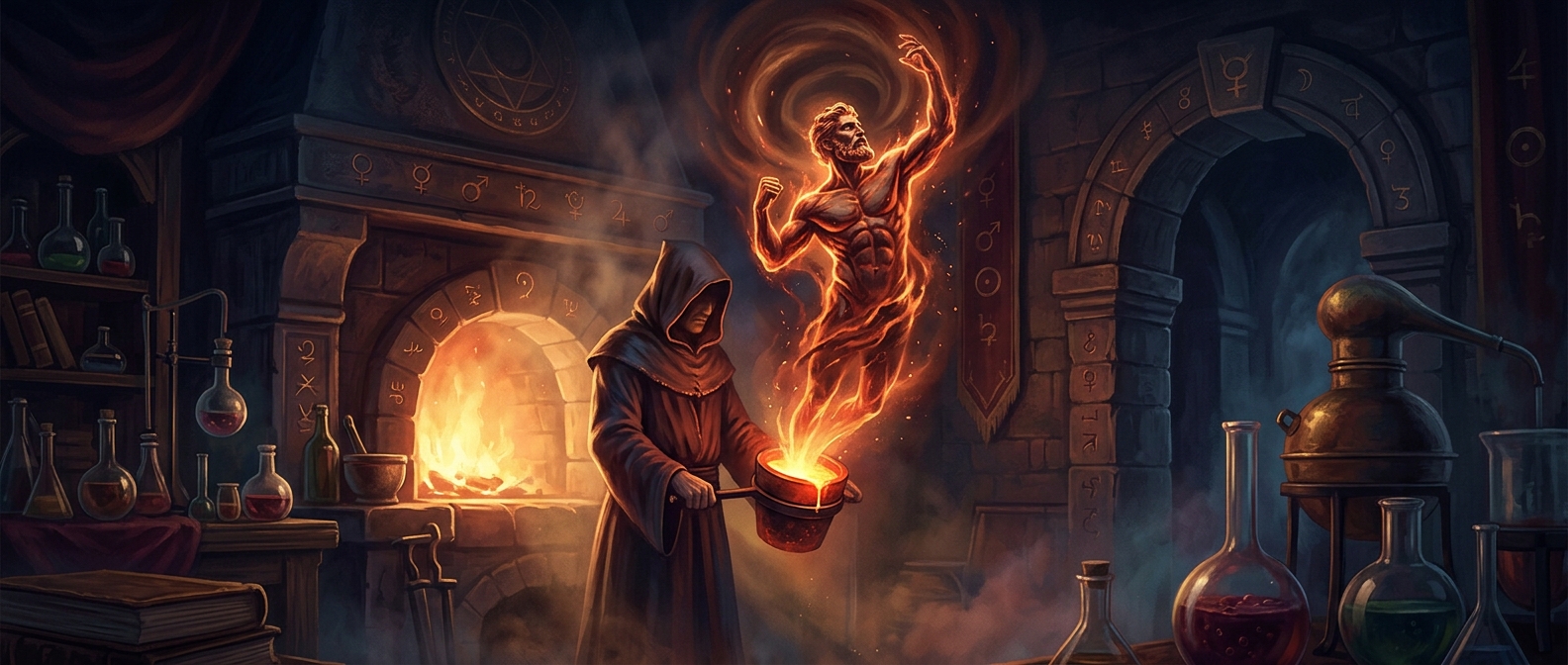
Around 1669, German alchemist Hennig Brand pursued a familiar alchemical promise: that the Philosopher’s Stone could transform base metals such as lead into gold. Brand’s experiment took an unusually literal route. He collected a vast quantity of human urine and heated it in a closed vessel, hoping that repeated processing would concentrate the substance he believed could reveal the secret of transmutation.
The work was slow and foul-smelling. As the liquid evaporated, it left a dark residue. Brand heated that material further and distilled its vapors through a cooling setup. The goal was gold; the unexpected product was a pale substance that glowed in the dark and could ignite when exposed to air.
Why the substance caught fire
That substance was phosphorus. Brand had not created it from nothing: urine naturally contains phosphorus-bearing compounds, including phosphate, a form of phosphorus bound to oxygen. His heating and distilling process separated and transformed materials in the residue, eventually producing white phosphorus, a highly reactive form of the element.
White phosphorus reacts readily with oxygen in the air. The reaction releases energy as light and heat; if enough heat builds up, the material catches fire. Its faint glow in darkness is called chemiluminescence: light produced by a chemical reaction, rather than by an object being heated until it shines.
An alchemical failure became a chemical discovery
Brand’s experiment did not turn lead into gold, but it did isolate a substance not previously recognized in Europe. That outcome illustrates how early alchemy could produce practical discoveries even when its guiding theories were wrong: an experiment designed around transmutation exposed a new element through the behavior of the materials being processed.
The process was dangerous as well as laborious. White phosphorus can ignite spontaneously in air, so a glowing sample was not merely a curious spectacle—it was a substance that had to be handled with care. Brand’s search for a legendary stone instead yielded a material whose defining clue was impossible to miss: it literally shone and burned when it met the air.