Why Maya rulers offered their own blood
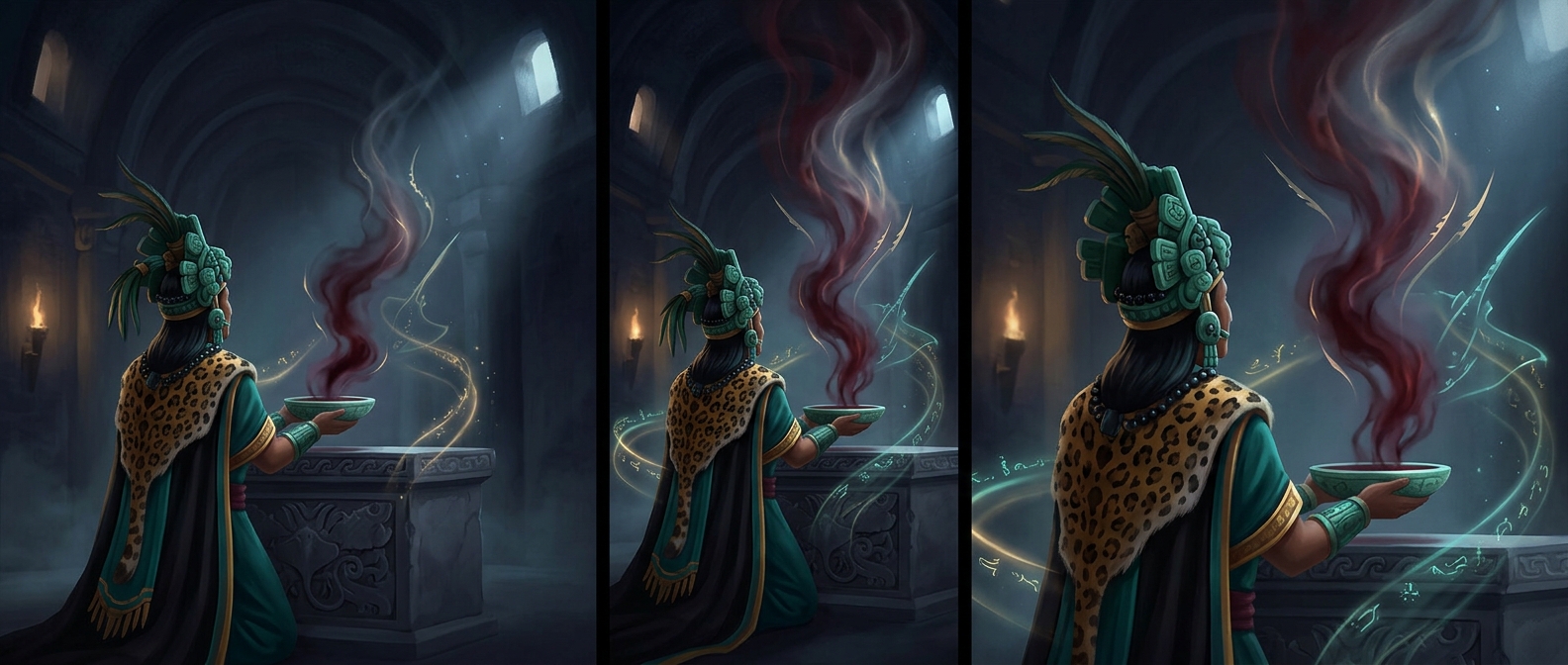
For Maya rulers, bloodletting was a public act of devotion and authority. They understood blood as a potent offering that could help maintain relations with divine beings and ancestors. By shedding their own blood, a ruler demonstrated that the community’s well-being rested partly on the ruler’s ability to carry out sacred obligations.
The act was also political. Rituals took place in a world where rulership and religion were closely connected, so a ruler’s visible participation helped present their authority as more than a matter of inheritance or force: it was part of a sacred order.
How a stingray spine fit into the ritual
A stingray spine is a hard, tapered barb. In some Maya bloodletting rituals, barbs were used to pierce the body, including the genitals. The resulting blood was collected or allowed to fall onto paper, which could then be burned as an offering. Burning transformed the material gift into smoke rising toward the divine realm, according to the ritual’s religious meaning.
These practices are known through Maya images, inscriptions, and surviving ritual objects. They were not simply tests of toughness. The ruler’s pain and blood made devotion visible—and turned a private bodily act into a public statement about sacred responsibility.